Outdoor Faucet Winter Prep: A Calgary Homeowner's Checklist
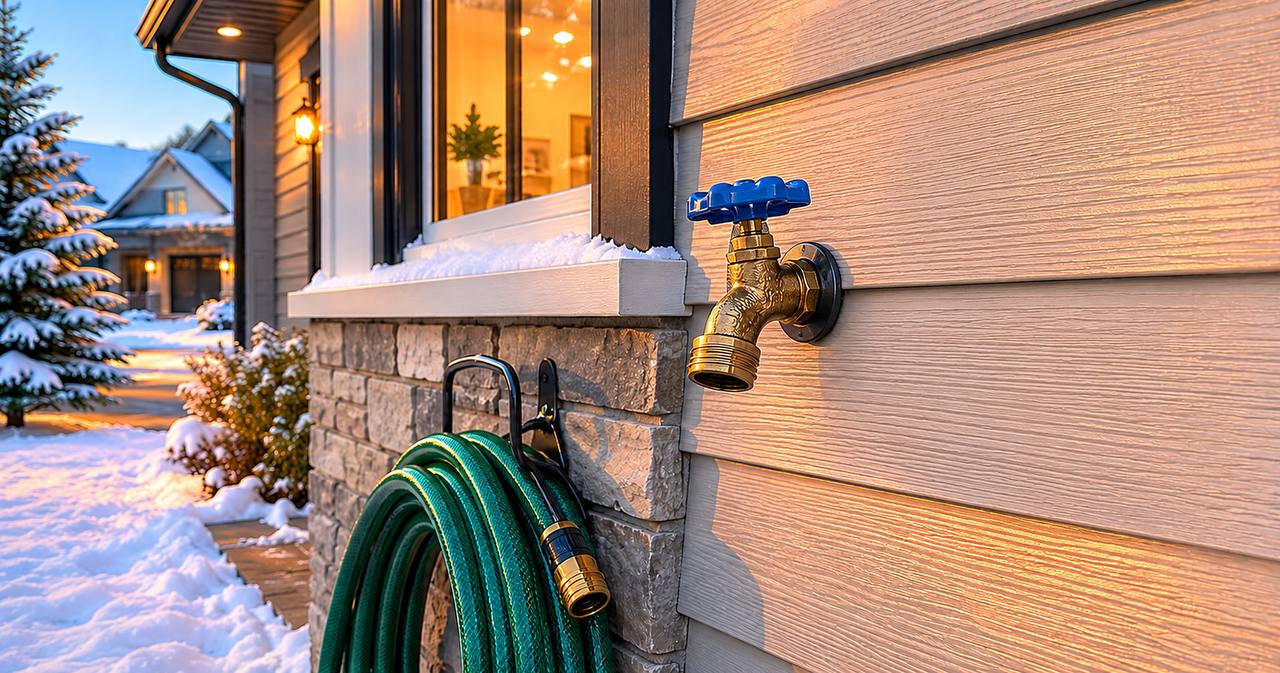
Every fall we get the same frantic calls: a sudden cold snap hits Calgary, somebody forgot to disconnect the garden hose, and now there's water dripping inside the basement wall — or the outdoor tap won't turn on at all. With Calgary's weather swinging from chinook to minus thirty in a week, winterizing your outdoor faucets isn't optional. It's 15 minutes of work that can save you a $500+ repair.
Here's exactly what to do, when to do it, and what can go wrong if you don't.
When to winterize in Calgary
Don't wait for the first snowfall. Calgary usually gets its first hard freeze by mid-to-late October, but nighttime temperatures can dip below zero as early as September. A good rule: winterize by Thanksgiving weekend (early October). If a cold snap is in the forecast, do it that day.
What happens if you skip it
The damage chain is simple:
- Water sits in the faucet or the hose.
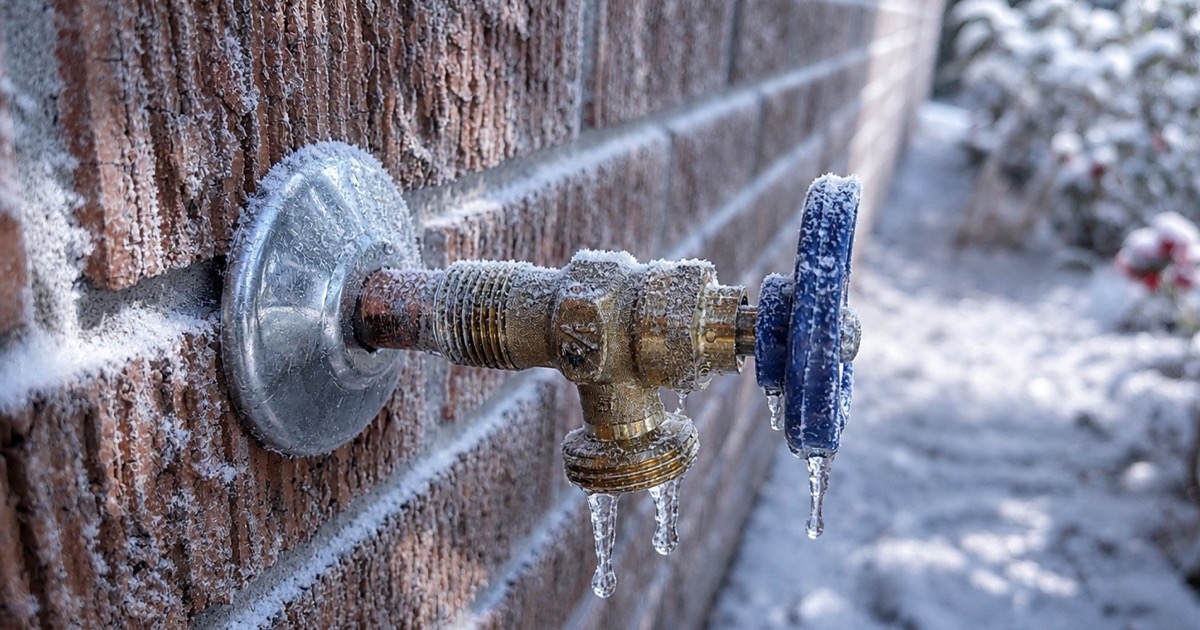
- It freezes and expands — ice can generate over 2,000 psi of pressure.
- The copper pipe or valve body cracks. You won't see it yet because the ice plugs its own leak.
- Come spring, the ice thaws and water sprays inside your wall — or through a cracked spigot outside.
The worst-case scenario: a pipe bursts behind the shut-off valve, inside the finished basement ceiling. That's not a faucet fix — that's drywall, insulation, and a plumber.
Step-by-step winter prep
1. Locate the indoor shut-off valve
Every outdoor faucet should have a dedicated shut-off inside — usually in the basement, near where the pipe exits through the wall. It'll be a small lever or a round gate valve. If you can't find one, your outdoor line may be tied directly to the main line, which means you'll want an insulated cover at minimum (step 3).
Label it. A piece of masking tape with "OUTSIDE TAP" saves you from hunting for it next year.
2. Close the shut-off and drain the line
Turn the indoor shut-off clockwise until it stops. Then go outside, open the outdoor faucet fully, and let any remaining water drain out. Leave the outdoor tap open for a few minutes — you want the pipe empty.
If you have a bleeder cap on the indoor valve (a small knurled cap on the side), open it with a bucket underneath to drain the last few inches of water from the line. Not all shut-offs have one — that's fine, just leave the outdoor tap slightly open for the winter.
3. Disconnect everything from the spigot
Garden hose, spray nozzle, splitter, timer — everything comes off. A hose left connected traps water in the faucet body, which is exactly what you're trying to prevent. Coil the hose and store it in the garage or shed so it doesn't crack in the cold.
4. Install an insulated faucet cover
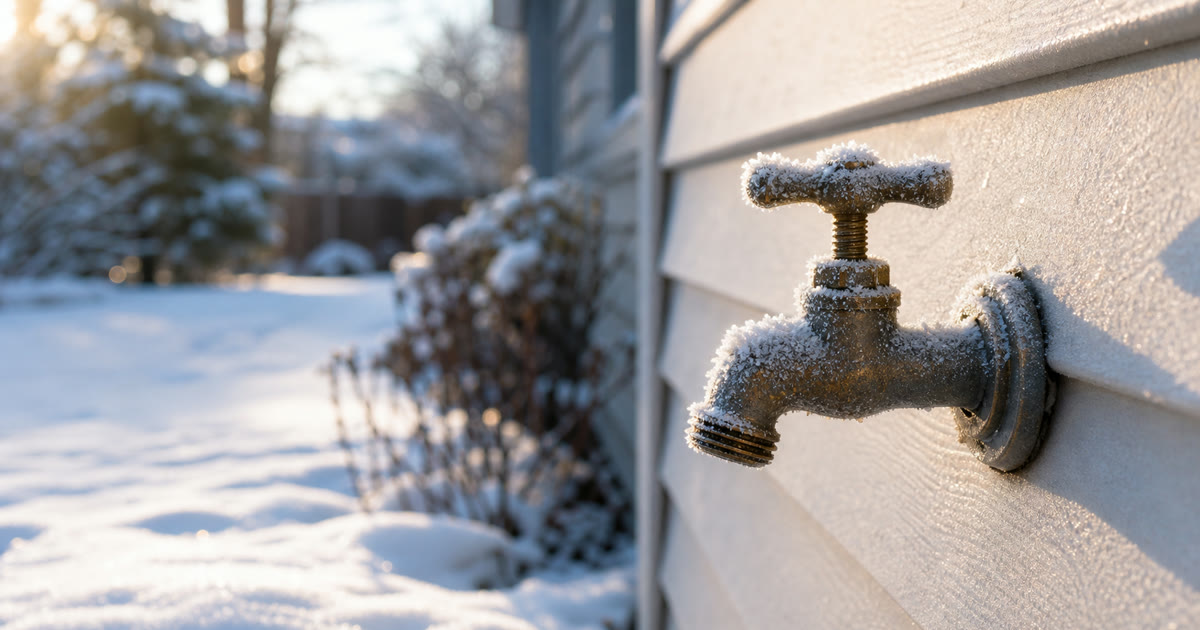
For standard (non-frost-free) faucets, a foam insulated cover is essential. It's a $6–12 dome that slips over the spigot and secures with a drawstring or elastic. This is your last line of defense if the shut-off leaks slightly or the pipe isn't fully drained.
Hardware stores across Calgary (Home Depot, Lowe's, Canadian Tire) stock these every fall. Grab one per outdoor faucet.
5. If you have a frost-free faucet
Frost-free (or "freeze-proof") hose bibs are designed to drain themselves when you turn them off — the actual valve sits 10–14 inches inside the warm wall, not at the spigot end. They work well in Calgary if installed correctly with a slight downward pitch toward the outside.
But: frost-free doesn't mean idiot-proof. You still need to disconnect the hose. A hose left on a frost-free faucet prevents the self-draining feature from working, trapping water right where it can freeze.
6. Know where your main water shut-off is
If something goes wrong despite your prep, you'll want to kill water to the whole house in seconds. Calgary homes typically have the main shut-off in the basement near the front wall, often close to the water meter. Make sure you can reach it quickly and that it turns freely.
Calgary-specific pitfalls
Chinooks don't save you. A warm spell in January melts the snow but won't thaw the water trapped inside an uninsulated faucet body — especially on the north side of the house, which never gets direct sun. Then the next freeze hits and stress-cracks the pipe further.
Detached garages with water lines are a separate beast. If you have a sink or tap in an unheated garage, it needs its own winter plan — often a full drain-down or heat trace cable. That's "call a pro" territory.
Newer homes in the deep suburbs (Mahogany, Nolan Hill, Cornerstone) may have frost-free bibs by code. Older inner-city homes (Kensington, Inglewood, Mount Pleasant) often have standard spigots that need covers. Know what you have.
When to call YOFF
Most winter prep is DIY-friendly. But call us if:
- The indoor shut-off valve is seized, corroded, or leaking.
- You turn the shut-off and water keeps flowing from the outdoor tap (valve has failed).
- You already see cracks or splits in the outdoor faucet body.
- You need a frost-free bib installed to replace an old standard spigot.
We handle outdoor faucet prep, valve replacement, and frost-free bib installs across Calgary. No plumbing ticket needed for faucet work — and we'll make sure it's done before the cold hits.
Book early. October fills up fast. → Get in touch with YOFF
Rather have YOFF handle it?
We cover faucets and more across Calgary and nearby communities — booked fast, done right. No Fix — No Fee.