Bathtub Faucet Dripping Calgary: Fix the Tub Spout
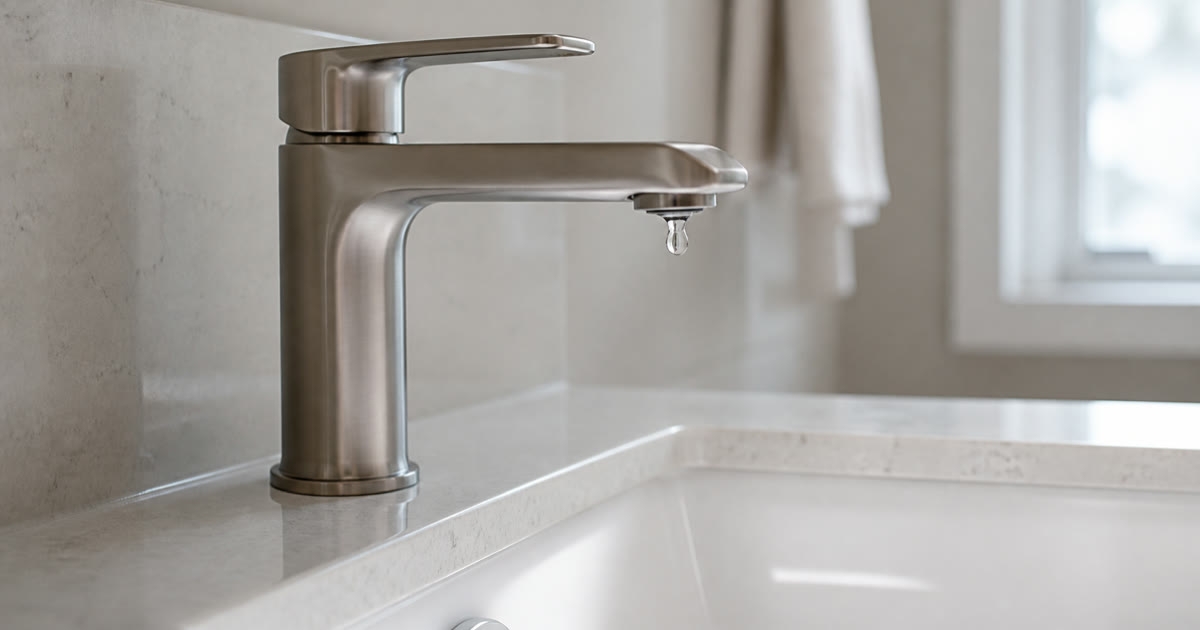
A bathtub faucet that drips after you shut it off is easy to ignore, until you notice the rust-coloured streak on the tub or the water bill creeping up. In most Calgary homes the drip comes from one worn part, and the fix is small. The trick is working out which part it is before you buy anything.
This guide walks you through the three usual suspects, a simple way to tell them apart, and what a technician does when the DIY route doesn't cut it.
Where the drip is coming from
A tub faucet is really three things working together: the handle (with a valve or cartridge behind it), the spout, and often a diverter that sends water to the shower head. Each one can drip for a different reason.
Watch where the water appears:
- Drips from the spout tip after the handle is off: usually a worn cartridge, washer or valve seat behind the handle.
- Water keeps running from the spout when the shower is on: the diverter isn't sealing.
- Water leaks where the spout meets the wall: a loose or worn spout connection.
- Drip or ooze around the handle itself: worn O-rings or packing inside the handle stem.
Write down which one matches. It decides every step below.
Why Calgary homes see this a lot
Calgary has hard water, and the minerals show up as white scale on fixtures. Those minerals build up on the soft parts inside a faucet, stiffen rubber seals and scratch the surfaces that should seal tight.
Age matters too. In older neighbourhoods like Acadia, Haysboro, Brentwood and Bowness, many bathrooms still have original tub faucets that are decades old. Rubber washers and O-rings simply wear out. Add dry winter air, which can harden seals, and faucets start dripping in the cold months.
If you've already been fighting scale elsewhere, our guide on hard water faucet buildup in Calgary explains what's happening inside the fixture.
Step 1: Test the diverter
If the water keeps running out of the tub spout while the shower is on, the diverter is the culprit.
Diverters come in two common styles:
- Pull-up knob on top of the spout: a small gate inside the spout seals against the opening. When the gate seal wears, water leaks past it.
- Lever or knob on the wall: a separate valve handles the switch, and it has its own cartridge or seat.
For the spout style, check the underside of the spout. A worn gate seal often means the whole spout is replaced, because the part is built in. It's a cheap part, and it often takes only a few minutes.
Step 2: Check the spout connection
Look under the tub spout. Two designs are common in Alberta homes:
- Slip-on spout: has a small hex set screw underneath. It slides over a smooth copper pipe and the screw locks it in place.
- Threaded spout: has no screw. It screws onto a threaded pipe stub in the wall.
If your spout leaks at the wall, try gently tightening the set screw, or snug the threaded spout by hand. Don't force it. Over-tightening can crack a spout or strip the pipe stub.
When you replace a spout, it must match the pipe type. A slip-on spout generally shouldn't go on threaded, galvanized or PEX pipe without the right adapter. That mismatch is one of the most common DIY mistakes.
Step 3: Look at the cartridge or valve
If the spout drips steadily with the handle fully off, the problem is inside the wall-mounted valve. The usual causes:
- Worn cartridge: typical on single-handle tub faucets. The rubber seals inside no longer close fully.
- Worn washers and seats: typical on older two-handle faucets, where a rubber washer presses against a brass seat.
- Scale on the seat: mineral buildup keeps the seal from closing, even when the washer looks fine.
The cartridge style differs between brands, so replacing it means identifying the exact model. If you want a deeper look at the repair-or-replace decision, read cartridge or whole faucet: which to replace.
A basic DIY sequence
If you're comfortable with basic tools, here's a safe order of attack:
- Shut off the water. Use the shutoff for the bathroom or the main. If you aren't sure where the main is, see how to find your main water shutoff valve in Calgary.
- Plug the tub drain so no small screws fall in.
- Open the faucet to relieve pressure and confirm the water is off.
- Remove the handle (small cap, then a screw; some have a set screw).
- Remove the trim plate and, if needed, the retaining clip or nut on the cartridge.
- Take the old part to a hardware store so you can match it exactly.
- Install the new cartridge or washer, reassemble, then turn the water on slowly.
- Test with the handle both fully on and fully off.
Photograph each step as you go. It makes reassembly much easier.
When to stop and call a technician
Some jobs go from simple to messy quickly. Call a technician if:
- The handle is seized and won't come off without force.
- The cartridge is stuck, or the faucet is an unusual brand with no easy replacement part.
- There's visible corrosion, or water appears at the wall around the faucet.
- Water doesn't fully shut off at the valve, so you can't safely work.
- The faucet is old enough that replacing it entirely makes more sense.
Any work that means opening the wall or changing pipes inside it isn't a quick fix. We don't handle that kind of job at YOFF, but we can tell you what you're dealing with.
What it costs to ignore it
A dripping tub faucet doesn't look dramatic, but it adds up. Over a month, a steady drip can waste a surprising amount of water. It also leaves mineral stains on the tub, and in older Calgary homes a slow leak behind the handle can damage the wall around it.
Fixing it early is usually a small job. Waiting turns it into a repair of the surrounding wall.
Our approach at YOFF
When a Calgary customer calls about a dripping tub faucet, our technician first works out which part is failing: the cartridge, the diverter or the spout. We replace the worn part, or the whole faucet if the repair doesn't make sense. For the second case, see bathroom faucet replacement in Calgary.
We back our work with No Fix, No Fee: if we can't fix it, you don't pay.
FAQ
Why is my bathtub faucet dripping when it's turned off? Usually a worn cartridge, washer or seat inside the valve. In Calgary, hard water scale can also stop the seal from closing fully.
How do I stop my tub spout from leaking at the wall? First check the type. Tighten the set screw on a slip-on spout, or snug a threaded spout by hand. If it still leaks, the spout or its seal likely needs replacing.
Can I replace a tub spout myself? Often yes, if you match the spout type to your pipe (slip-on or threaded). If the pipe is damaged or you aren't sure what's in the wall, call a technician.
Why does water keep coming out of the tub spout when the shower is on? The diverter isn't sealing. On a pull-up spout the gate seal has worn, and replacing the spout usually fixes it.
Does YOFF repair bathtub faucets in Calgary? Yes. Our technician repairs or replaces tub faucet cartridges, spouts and handles.
Get the drip fixed
If your tub faucet is still dripping, don't wait for a stained tub or a damaged wall. Book YOFF Home Services in Calgary and our technician will find the cause and fix it, with No Fix, No Fee.
Rather have YOFF handle it?
We cover faucets and more across Calgary and nearby communities — booked fast, done right. No Fix — No Fee.