How to Find and Shut Off Your Home's Main Water Valve in Calgary
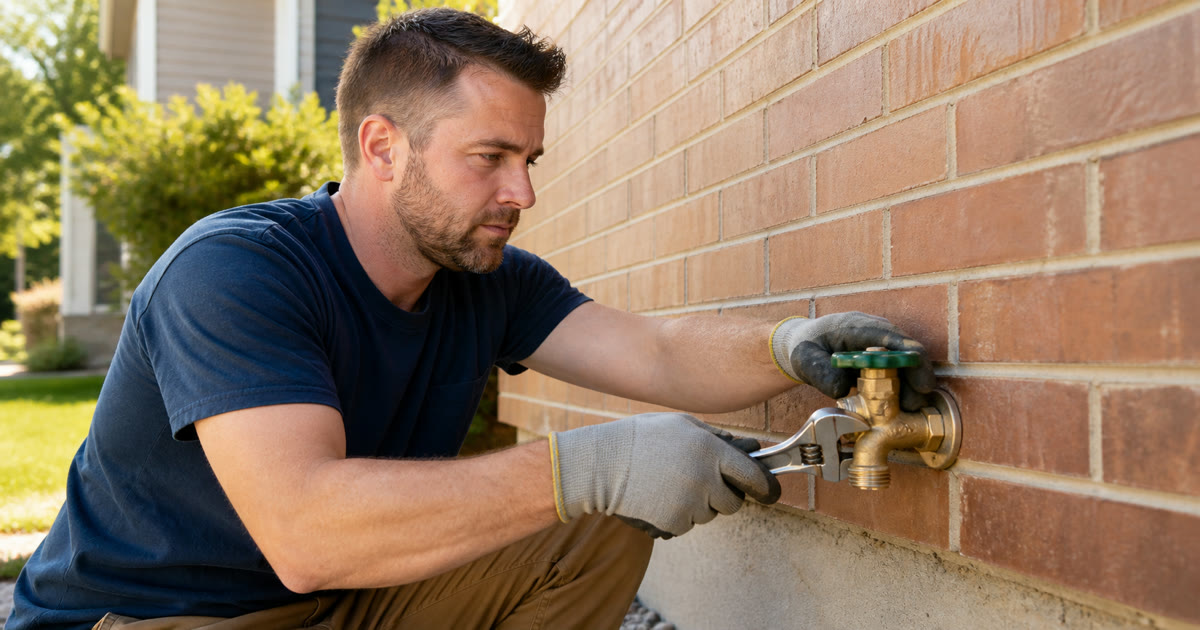
Here's a test every Calgary homeowner should try tonight: go to your basement, your mechanical room, or wherever your water line enters the house — and try to find the valve that shuts off all the water to your home. If you can't put your hand on it in under two minutes, you have a problem you don't know about yet.
Because when a pipe bursts at 2 a.m. during a Calgary cold snap, you don't have time to hunt for the valve. You have minutes. Knowing where the main shut-off is — and that it actually turns — is the single most valuable piece of home knowledge you can have. Here's everything you need to find, test, and use yours.
Why the main shut-off matters more in Calgary
Calgary's climate is unusually hard on water lines. Deep winter cold, followed by chinooks that swing the temperature 15–20°C in a day, creates repeated freeze-thaw cycles that stress pipes all season long. A line that survived last winter can still split on the tenth cycle this year.
When a pipe does let go, water flows at full pressure until somebody stops it. Burst pipes are one of the most common and costly water-damage insurance claims in Canada — soaked flooring, ruined drywall, damaged wiring — and the damage grows by the minute until the main valve is closed.
The math is simple, and it's the same across Alberta: knowing your shut-off is free. Not knowing it is one of the most expensive mistakes a homeowner in Calgary can make.
Where to find the main water valve
The main shut-off sits where the municipal water line first enters the house, before it branches off to the rest of the pipes in your home. In Calgary, that's almost always one of these spots:
- The basement, near the front wall. In older Calgary bungalows — think Inglewood, Kensington, Mount Pleasant, or Bowness — the water line enters through the front foundation wall, so the valve sits on that wall, often right beside the water meter.
- The mechanical room or utility closet. In newer homes, the water, furnace, and water heater are clustered in one room. The main valve is usually on the wall, above or beside the meter.
- Behind an access panel. Some townhomes and condos hide the valve behind a small metal or plastic panel in a hallway or laundry closet.
- The crawlspace or utility corridor. A few split-levels and older builds in Alberta route the line through a crawlspace, where the valve lives on a low wall or floor joist.
Start at the water meter. The main shut-off is almost always within arm's reach of it — the meter measures what comes in, and the valve controls it. If you find the meter, you've found the valve.
Two types of valves — and how to tell the difference
Calgary homes have one of two styles, and they behave very differently:
- Ball valve. A lever handle that turns 90 degrees. When the lever is in line with the pipe, water is on; when it's perpendicular, water is off. Ball valves are modern, reliable, and rarely stick. If you have one, you're lucky — it will almost always work when you need it.
- Gate valve. A round wheel you spin several full turns, like an outdoor hose tap. Gate valves are common in older Calgary homes. They work fine when used regularly, but the internal stem corrodes and the valve seizes when left untouched for years — which is exactly what happens in a home where nobody touches it until an emergency.
It's worth knowing which one you have, because a gate valve that hasn't been turned in a decade is a valve that may not turn at all when you need it most.
How to shut off the water: step by step
Do this as a practice run now, not during an emergency:
1. Locate the valve and clear a path. Move boxes, storage, and clutter away so you can reach it in seconds. In a winter emergency, every minute counts.
2. Turn it slowly. For a ball valve, push the lever a quarter-turn to perpendicular. For a gate valve, spin the wheel clockwise until it stops — but gently. If it resists, don't force it; a snapped valve stem is a worse problem than the one you're trying to solve.
3. Confirm the water is off. Open the lowest faucet in the house — often the basement laundry tub or a floor-level tap — and let it run. It should sputter and stop within a minute or two as the pipes drain. Then turn off the water heater to avoid running it dry if the shut-off will be off for a while.
4. Turn it back on and re-test. Open a faucet on an upper floor to let air out, then slowly reopen the main valve. Run a tap until the sputtering clears.
The point of the dry run is to learn that the valve actually works — before you need to rely on it at 2 a.m. in a frozen basement.
Make it easy on future-you
- Label the valve. A simple tag or piece of red tape saying "MAIN WATER" saves minutes of confusion in a crisis — for you, and for a partner or neighbour trying to help.
- Turn it once or twice a year. Give a gate valve a gentle full cycle annually to keep the stem from seizing. It's thirty seconds of insurance.
- Show everyone in the house. Every adult in the home should know where the valve is and which way is off.
- Know the street-side shut-off too. Most homes have a curb-stop at the property line under a small metal cover. It needs a special key and is operated by the city, but it's worth knowing it exists.
When to get help in Calgary
Finding and testing the valve is DIY. But get help if you hit any of these:
- The valve is seized or won't fully close. A stuck gate valve in an older Calgary home often needs replacing. Because the water has to be shut off at the curb first, that's a job for a specialized company working with the city — not a DIY project.
- You can't find a shut-off inside at all. Some older Alberta builds only have a curb-stop. Our technician can help you trace where the line comes in; adding an indoor valve on the main line is work for a specialized company.
- You want to upgrade a gate valve to a ball valve. A modern quarter-turn ball valve is faster and more reliable in an emergency — a genuinely worthwhile upgrade for Calgary's freeze-thaw winters, done by a specialized company.
- The valve itself is leaking or corroded. Green corrosion or a drip at the stem means the valve is failing, and it will not get better on its own. Put a bucket under it and book a repair soon.
YOFF helps with finding and labelling your shut-off, a careful valve test, and the small jobs around it — leaking faucets, running toilets, outdoor faucets. We serve homeowners across Calgary, from the northwest (Varsity, Brentwood) to the deep south (Seton, Walden) and everywhere in between. We keep the job simple, and we stand behind it with No Fix, No Fee.
Related Calgary Home Guides
- Basement Water Seepage Calgary: 7 Early Warning Signs
- Dishwasher Not Cleaning? The Calgary Hard Water Fix That Works
- How to Descale a Shower Head: Calgary Hard Water Fix
Frequently Asked Questions
Where is the main water shut-off valve in most Calgary homes?
Start at the water meter — the main valve is almost always within arm's reach of it. In older bungalows it's usually on the basement's front foundation wall; in newer homes it's in the mechanical room near the furnace and water heater. Some townhomes and condos hide it behind an access panel in a hallway or laundry closet.
Which way do I turn the valve to shut off the water?
For a ball valve, turn the lever a quarter-turn so it sits perpendicular to the pipe. For a gate valve with a round wheel, turn it clockwise until it stops. Go slowly and don't force a stiff valve, because a snapped stem makes things worse.
What should I do if my main water valve won't turn?
Stop before you force it. A seized gate valve is common in older Calgary homes where nobody has turned it in years. Get it looked at soon so you're not stuck in an emergency, and in the meantime know that there is usually a curb-stop at the property line that the city can operate.
How often should I test my main water shut-off?
Turn it gently through a full cycle once or twice a year. That keeps the stem of a gate valve from seizing and confirms the valve still works. Label it clearly and make sure every adult in the house knows where it is.
Know it before you need it
The main water shut-off is the one piece of home infrastructure you hope to never use — but you absolutely need to know exactly where it is and that it works. In a city where freeze-thaw cycles and hard winters make burst pipes a real risk, the difference between a mopped-up puddle and a major insurance claim often comes down to one turn of a handle.
Take five minutes this week. Find the valve, test it, label it. If you'd like a hand finding, testing and labelling it — or fixing the dripping faucet or running toilet you noticed on the way — give YOFF a call. If the valve turns out to be seized or missing, we'll tell you straight and point you to the right specialist.
Rather have YOFF handle it?
We cover seasonal and more across Calgary and nearby communities — booked fast, done right. No Fix — No Fee.