Clogged Drain Vent Pipe: Why Your Drains Gurgle and Run Slow in an Older Calgary Home
You hear a glug-glug from the toilet after a flush. The kitchen sink takes forever to empty. And there's a faint sewer smell you can't trace. Most people blame a clog in the drain line — and sometimes that's right. But in older Calgary homes, the real culprit is often the vent pipe: the overlooked part of your drain system that runs up through the roof. When it gets blocked, every drain in the house pays the price.
What a drain vent pipe actually does
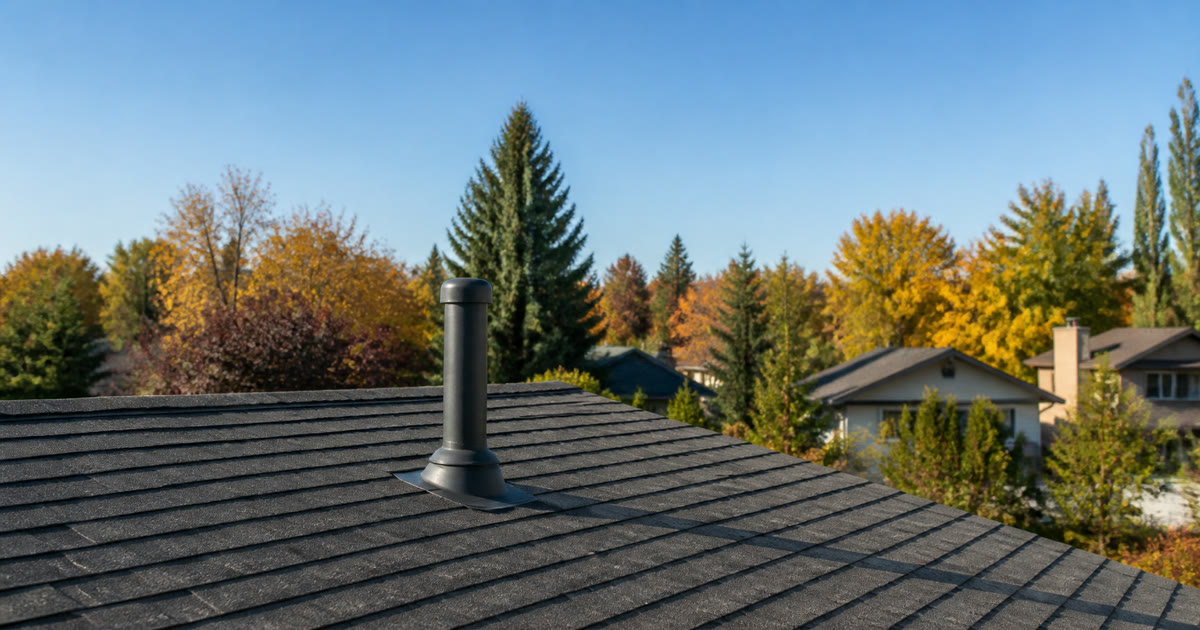
A drain is not just a pipe that water flows down. It's a system that needs air to work. The vent pipe — a vertical stack that runs through your roof — lets air into the drain system so water can flow freely. Without it, you'd be pouring water into a sealed container. The water would chug, then stop.
Here's the simple physics: as water moves down a drain, it pushes air ahead of it and pulls air behind it. The vent supplies that air. It equalizes pressure so water flows smoothly and the water seal in your P-traps — the U-shaped bend under every sink and shower — stays intact. That water seal is what blocks sewer gas from entering your home.
A blocked vent breaks this balance. Negative pressure builds. Traps get sucked dry. Air gets pulled backward through fixtures. The symptoms are unmistakable once you know them.
Symptoms of a clogged vent pipe
Unlike a local drain clog, vent problems show up across multiple fixtures at once:
- Gurgling sounds — the classic sign. A drained tub or flushed toilet makes a glug-glug noise as air is pulled through water in the traps.
- Slow drainage everywhere — the kitchen sink, bathroom sink, and shower all drain sluggishly at the same time. That's not three clogs; that's one vent problem.
- Sewer odours indoors — when negative pressure sucks the water out of a trap, nothing blocks sewer gas. You smell it in the room with the dried-out trap.
- Water rising in a different fixture — run the washing machine and the toilet bubbles. That's air fighting its way through the wrong opening.
- Fluctuating water levels in toilet bowls — the water oscillates or drops below normal after a flush.
If you notice two or more of these together, the vent is likely the problem — not individual drain clogs.
Why older Calgary homes get vent problems
Calgary neighbourhoods built in the 1960s through 1980s — places like Brentwood, Haysboro, Acadia, and Falconridge — have drain systems that are five to six decades old. Several things change in that time:
- Cast-iron vent stacks corrode internally. The rough, scaly surface collects debris, narrowing the airway over time.
- Rooftop exposure. Calgary gets chinooks, freeze-thaw cycles, hail, and snow accumulation. A vent cap that was tight in 1975 may be loose, rusted, or missing today.
- Animal and debris intrusion. Squirrels, birds, and wasps build nests in vent openings. Leaves and pine needles drop in when the cap is damaged — Calgary's mature neighbourhoods have the tree canopy to make this a real risk.
- Snow blocking the vent pipe. During a heavy Calgary snow dump, the vent opening on the roof can get buried, temporarily choking the whole system until it melts.
Older homes don't have "bad venting" by design — but decades of exposure and neglect turn a working vent into a constricted one.
What happens if you ignore it
A sluggish vent doesn't fix itself. The symptoms get worse, and the side effects stack:
- Chronic slow drainage — fixtures drain slower and slower as the vent restriction tightens.
- Dry traps — once sewer gas enters the home, it's not just a smell issue. Methane and hydrogen sulphide are health hazards at sustained levels.
- Backup risk increases. A drain system that can't breathe also can't push water through efficiently. Partial clogs form faster, and existing clogs become full blockages sooner.
- Water damage from overflows — when a fixture backs up because air can't escape, you get standing water where you don't want it.
The vent pipe is not an optional accessory. It's a functional part of gravity-fed drainage, and when it fails, the whole system degrades.
Can you fix it yourself? (Probably not)
A blocked vent pipe requires roof access, safety equipment, and a pro-grade auger to clear from the top down. It's not a kitchen-sink project. Here's what you can do before calling someone:
- Listen. Flush a toilet or drain a full sink while standing near another fixture. Gurgling = vent issue.
- Check the easiest fixture. If only one fixture is slow, start with the trap. A single slow sink is rarely the vent. Multiple slow drains are.
- Inspect what you can see. Look at exposed vent pipes in the basement or attic — if they're cast iron with visible rust flakes, internal corrosion is likely.
- Roof check from ground level. Use binoculars to see if the vent cap is intact, bent, or missing. In winter, look for a snow cap on the vent opening.
If the symptoms match — multiple slow drains, gurgling, sewer smells — the next step is professional clearing.
How a professional clears a clogged vent
A drain technician addresses a blocked vent in two stages:
- Diagnose with a camera or by process of elimination. If every fixture is affected, the vent stack is the prime suspect. A snake camera can confirm the restriction.
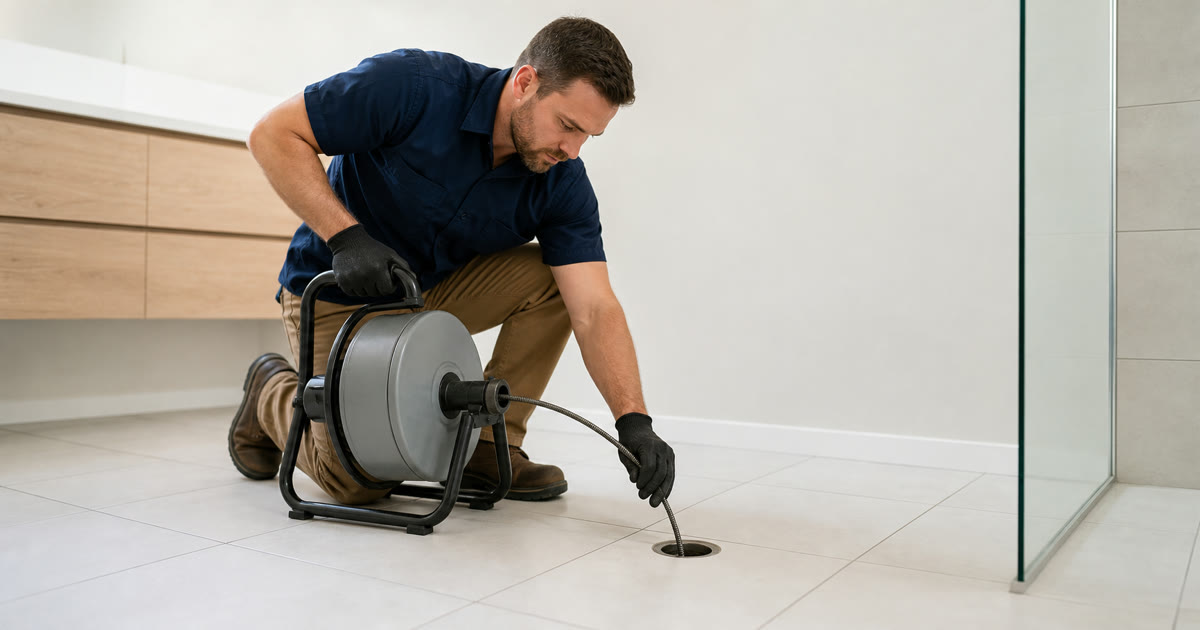
- Clear from the roof. A power auger fed down the vent stack cuts through the blockage — whether it's organic debris, a nest, or internal scale. In cases of heavy rust constriction, a hydro-jetter clears the pipe walls.
In a Calgary home with original cast-iron venting, the long-term fix may involve replacing a section with PVC — but clearing the airway is the immediate priority.
Preventing vent problems
A few habits keep the vent stack breathing freely:
- Annual roof check. In autumn, after the leaves drop, confirm the vent cap is secure and clear of debris.
- After a heavy snow. If drains suddenly slow across the house, the vent opening may be buried. Snow removal on the roof is a pro's job — don't do it yourself, but know it's a likely cause during a Calgary cold snap.
- Trim overhanging branches. Less debris near the roof means less finding its way into the vent opening.
- Don't ignore gurgling. A single gurgle is a yellow light. A month of gurgling is a red light with a future emergency behind it.
When to call YOFF
Gurgling drains, slow flow across the house, and sewer smells don't go away on their own. If you're in an older Calgary home and your drains have been acting up across multiple fixtures, the vent pipe is the most likely missing piece of the puzzle.
YOFF drain cleaning handles vent clearing, drain augering, and full-system diagnosis for Calgary homeowners. We work with cast iron, PVC, and everything in between — and we'll tell you honestly whether the fix is a clearing or a bigger repair. Get a free quote — you only pay if we fix it. No Fix — No Fee.
Rather have YOFF handle it?
We cover drains and more across Calgary and nearby communities — booked fast, done right. No Fix — No Fee.