How to Care for Your Garburator (and Keep the Drain Clear)
A garburator is one of those appliances you never think about — until it hums, stinks, or backs the sink up on a weeknight. The good news: almost every garburator problem we get called for in Calgary is preventable with a few thirty-second habits. Look after it, and it keeps your kitchen drain clear for years.
How it actually works (30-second version)
Your garburator doesn't have blades. Two blunt metal lugs (impellers) spin on a plate and fling food against a grind ring, breaking it into bits small enough to wash down the drain with water. That's the key point: it needs lots of cold water to carry the ground food all the way through the pipe — not just to the trap, where it can settle and clog.
The daily habits that prevent 90% of problems
- Run cold water — always, and keep it running. Start the water before the disposal, and let it run 15–20 seconds after you switch off. Cold (not hot) keeps any grease firm so it gets ground and flushed instead of coating the pipe.
- Feed it slowly. Small amounts with the water running, not one big handful. Overloading is the number-one cause of jams.
- Run it regularly. Even with nothing to grind, a quick run with cold water every couple of days stops the impellers from seizing and rust from setting in.
What NOT to put in a garburator
It can handle soft food scraps. It cannot handle these — and they're what cause the jams and clogs:
- Grease, oil, and fat — they don't grind, they congeal down the cold pipe. A Calgary winter sets them even faster.
- Bones, fruit pits, and shells — too hard; they bounce, dull the grind ring, and jam the impellers.
- Fibrous and stringy foods — celery, corn husks, onion skins, artichokes. The strings wrap the impellers like rope.
- Starchy foods — potato peels, rice, pasta. They turn to paste and gum up the chamber and trap.
- Coffee grounds and eggshells — they pack into the trap like wet sand and build a dam grease sticks to.
When in doubt, it goes in the green bin, not the disposal.
Keep it clean and odour-free
That sour smell isn't the drain — it's food film on the grind ring and splash guard. Twice a month:
- Ice + coarse salt (or vinegar ice cubes). Drop a couple of handfuls of ice with a spoon of coarse salt down the running disposal. The ice scours the grind ring; the salt scrubs.
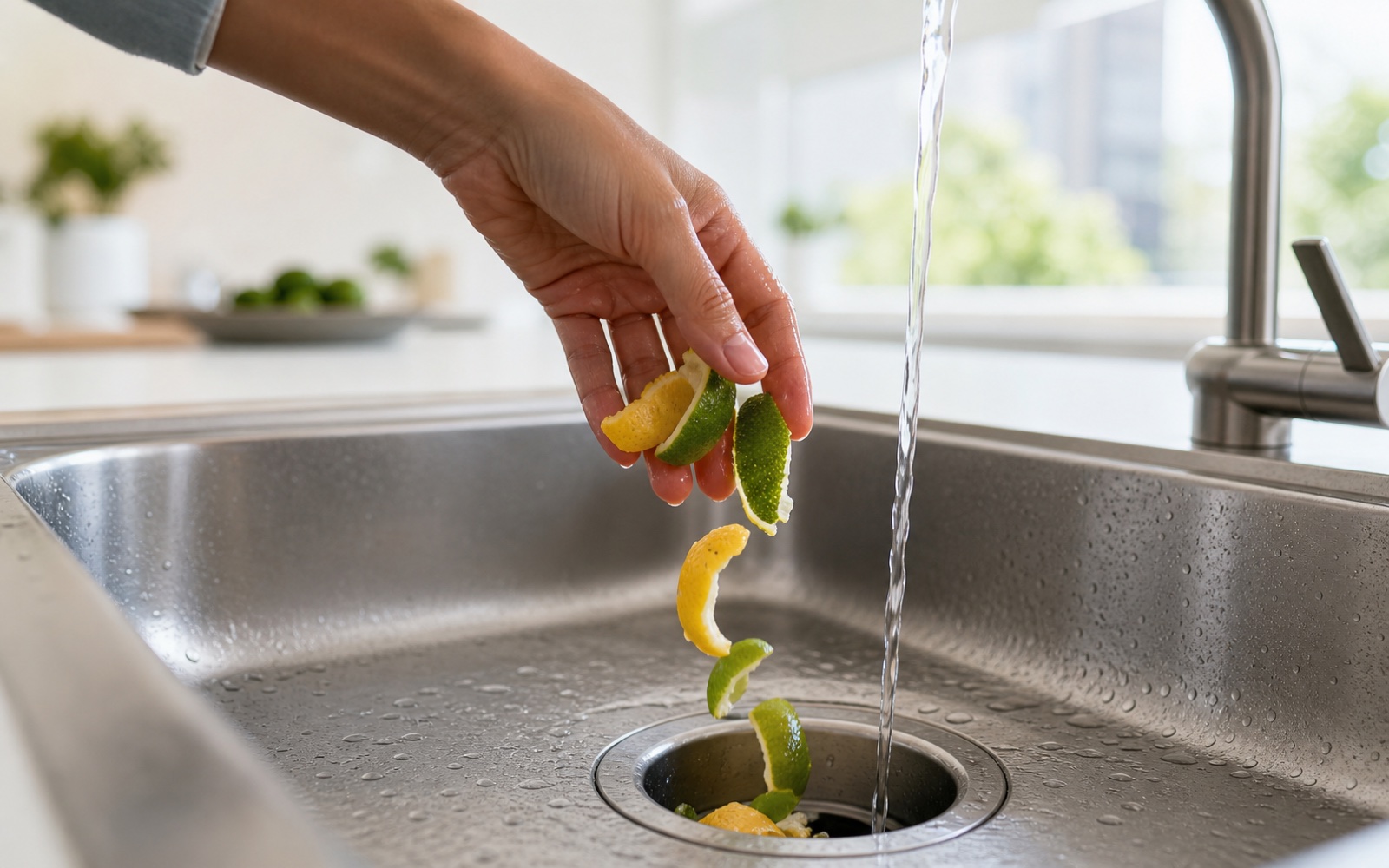
- Citrus peels. Run a few lemon, lime, or orange peels through with cold water. They leave the chamber smelling fresh.
- Scrub the splash guard. Lift it (or wipe its underside) — most of the smell hides on the rubber flaps. An old toothbrush and a little dish soap does it.
Skip pouring bleach or chemical drain cleaner in — it doesn't dissolve the food film and it's hard on the seals.
Troubleshooting the three common ones
- It hums but won't spin — it's jammed. Switch it OFF. Most units have a hex slot on the bottom centre: turn an Allen key back and forth to free the impellers. Then press the small red reset button underneath. Never put your hand inside.
- It's dead — no sound. Check the reset button underneath first, then the breaker. If both are fine, the motor's likely done.
- It leaks underneath. Usually a worn seal or the connection — and it won't fix itself. This one's worth a service call before the cabinet gets damaged.
When to call us in Calgary
If it's leaking, burned out, or jams no matter what, a replacement is usually cheaper and cleaner than chasing repairs on an old unit. YOFF installs the InSinkErator Badger 5 across Calgary — done in under an hour, and we haul the old one away.
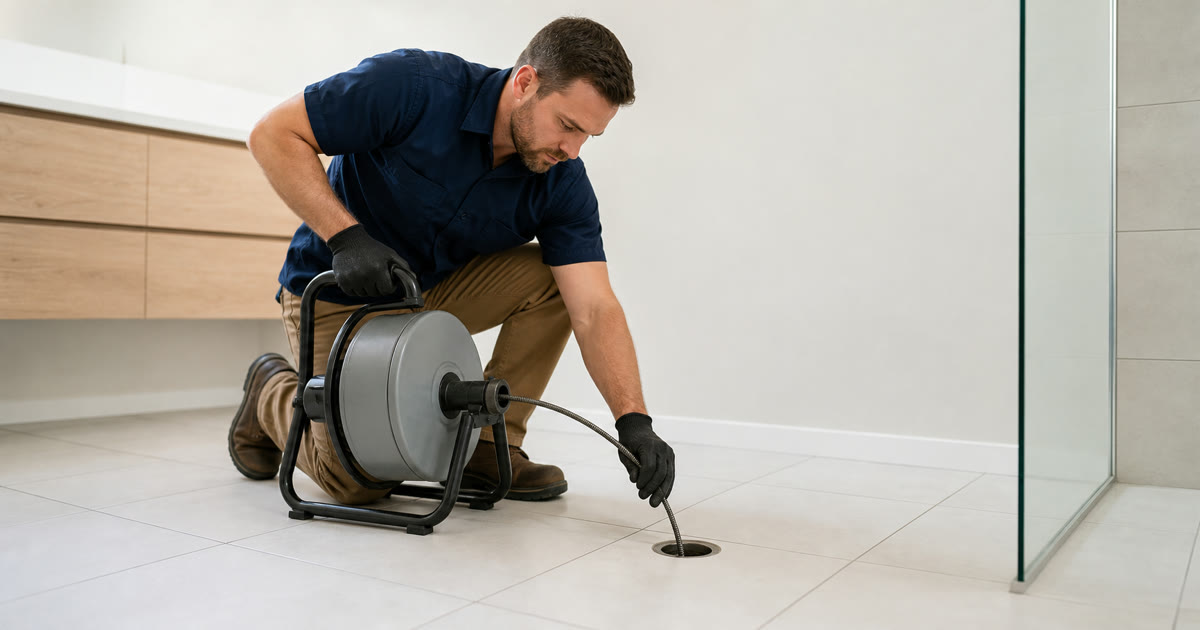
And if the sink backs up even though the disposal runs fine, the clog is downstream in the drain, not the unit — YOFF clears it properly and checks what caused it. Get a free quote — No Fix — No Fee.
Rather have YOFF handle it?
We cover drains and more across Calgary and nearby communities — booked fast, done right. No Fix — No Fee.