Repairing Concrete Cracks in Your Driveway and Patio: A Calgary Homeowner's Guide
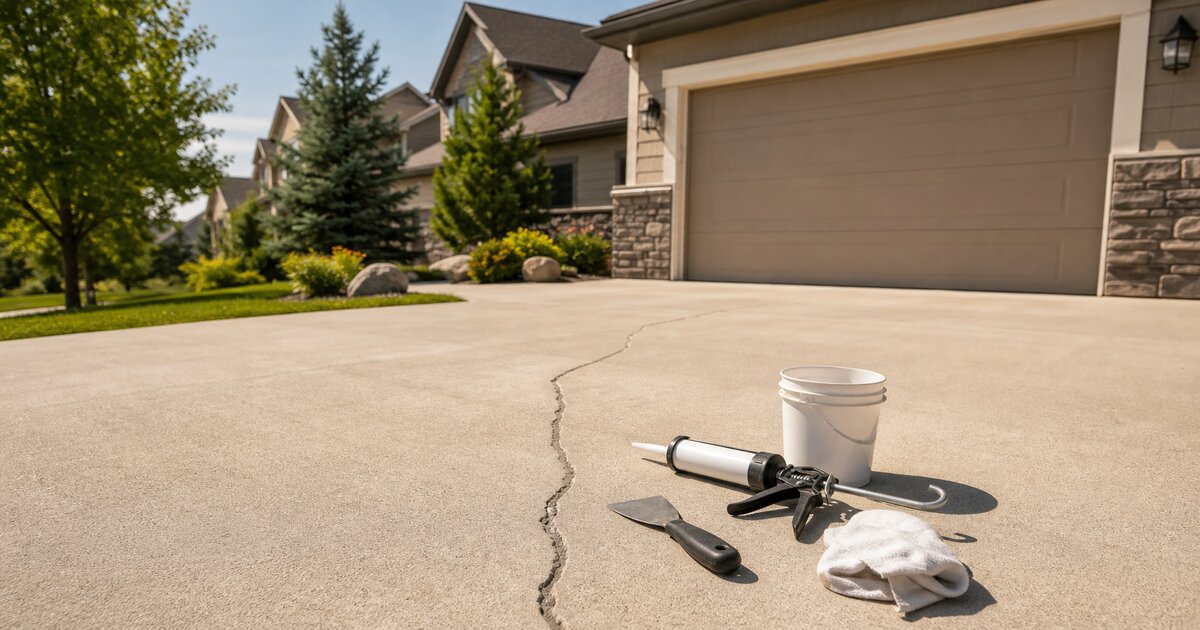
If you've walked around your Calgary property this June, you've probably spotted them: fresh cracks in the driveway, a split in the patio slab, or a gap opening up between the walkway and the foundation. You're not alone. Calgary's climate — with 40 to 60 freeze-thaw cycles every winter, violent chinook temperature swings, and expansive clay soils in many Alberta neighbourhoods — is among the hardest in Canada on concrete. The good news: most cracks are repairable by a handy homeowner, and catching them in summer before they widen can save you thousands down the road.
Why Calgary concrete cracks so aggressively
Concrete is porous. When water seeps into tiny surface pores, freezes at night, and expands by roughly 9%, it creates internal pressure that the concrete can't relieve. Do that 50 times in a single Calgary winter and hairline cracks become structural ones. Then a chinook rolls through — raising the air temperature from −15°C to +8°C in an afternoon — and the slab expands unevenly, stressing the already-weakened areas.
Calgary's geology adds a second punch. Much of the city sits on glacial till and clay-rich soil that swells when wet and shrinks when dry. In older Calgary neighbourhoods like Brentwood, Acadia, and Haysboro — where homes were built in the 1960s and 70s — you'll often find driveways that have been shifting for decades on this reactive soil. Even in newer communities like Mahogany, Nolan Hill, or Cornerstone, where subgrades are engineered to modern standards, Calgary's extreme temperature swings still push concrete past its design limits within a few seasons.
Crack types: which ones matter
Not every crack needs professional attention. Here's how to triage what you're seeing on your Calgary driveway or patio:
Hairline cracks (under 3 mm wide). These are cosmetic but worth sealing. Water enters and the freeze-thaw cycle in Calgary will turn a hairline crack into a wider one within two or three winters. A simple polyurethane sealant — available at any hardware store in Calgary — will stop the progression.
Medium cracks (3 mm to 12 mm). These need filling, not just sealing. The crack is wide enough that water pools inside, and Calgary's overnight freezes as early as October will start prying it open. Use a polymer-modified concrete patch or a pourable crack filler. Clean the crack thoroughly first: pressure-wash or blow out debris, let it dry completely in the Calgary summer sun, then fill.
Wide or offset cracks (over 12 mm, or one side higher than the other). This is structural. In Calgary, an offset crack often means the subgrade underneath has heaved or settled — common in areas of the city with reactive clay soil, like parts of Falconridge or Forest Lawn. Patching the surface won't fix it; the slab will keep moving. This is the point where you call a pro for slabjacking or partial replacement.
Cracks along the foundation or garage slab edge. These are common in Calgary bungalows and split-levels from the 1970s and 80s. If the gap is widening year over year, have it assessed — it may be a drainage issue directing runoff under the slab, something Calgary's sudden summer downpours can aggravate quickly.
When to do the repair: Calgary's short window
Concrete repair products have temperature requirements, and Calgary's season is tighter than most cities. Most patching compounds and sealants need surface temperatures above 10°C to cure properly, and ideally they want 24 hours without rain. In Calgary, that gives you a reliable window from mid-May through late September — roughly four and a half months.
June and July are ideal in Alberta: warm days, long daylight hours (sunset after 9:30 p.m. near the solstice), and generally lower rainfall than August, when Calgary gets more frequent thunderstorms. If you're sealing a large driveway, start early in the morning so the product skins over before the intense Calgary afternoon sun hits. Concrete surface temperatures on a 28°C July day in Calgary can exceed 50°C, which causes sealants to cure too fast and lose adhesion.
Avoid repair work in October even if the forecast looks mild. Calgary weather is famous for surprising you — an October chinook might give you 15°C at noon, but overnight lows can dip below zero and ruin uncured patch material.
Step-by-step: repairing a patio or driveway crack in Calgary
Here's a practical sequence that works for most Calgary homes, whether you're in a 1950s bungalow in Brentwood or a 2010s two-storey in Evanston.
1. Clean the crack. Use a pressure washer or a stiff wire brush and a garden hose. Get all loose concrete chips, dirt, and old sealant out. For Calgary driveways that have been through several winters, you'll often find a layer of silt and sand packed into the crack — this must come out. Let the crack dry fully. In Calgary's dry summer air (relative humidity often below 30%), a sunny afternoon is usually enough.
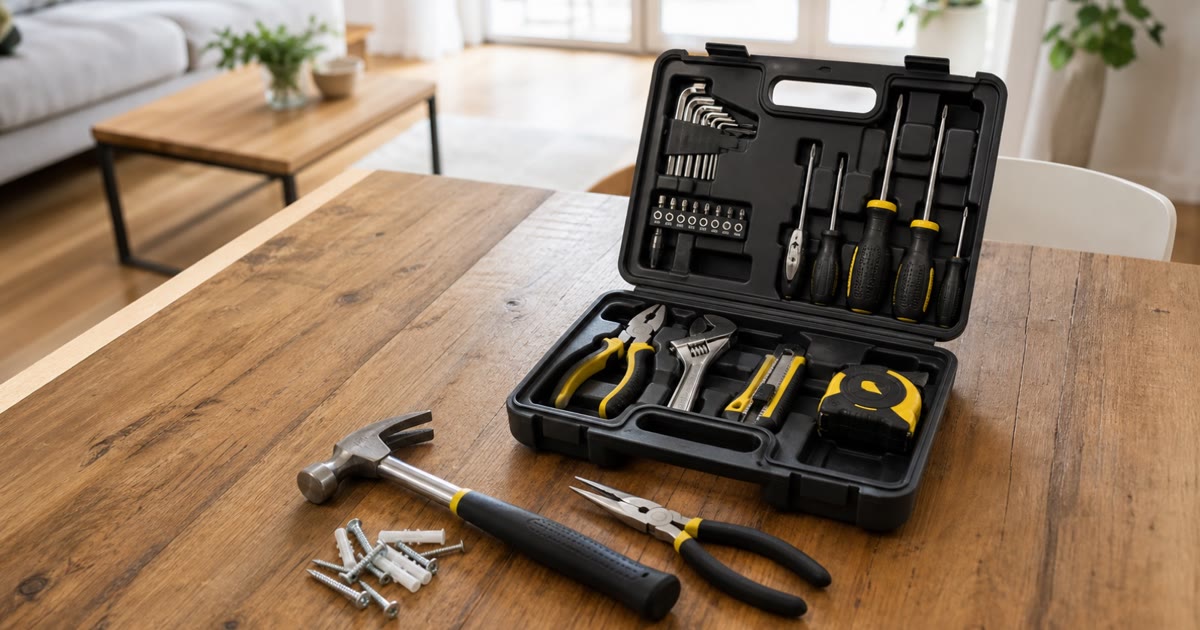
2. Undercut if needed. For cracks wider than 6 mm, use a cold chisel and hammer to slightly widen the bottom of the crack — this creates a mechanical key that helps the patch material lock in. Safety glasses on: Calgary concrete from the 60s and 70s can be brittle and chip unpredictably.
3. Apply bonding adhesive. Brush a concrete bonding agent into the clean, dry crack. This step skips easily but makes a significant difference in Calgary, where freeze-thaw cycles will test the bond every winter. Let it go tacky — about 10 to 15 minutes in Calgary's summer conditions.
4. Fill the crack. For cracks under 6 mm, a polyurethane self-leveling sealant in a caulk tube works well. For wider cracks, mix a polymer-modified concrete patch according to the package — use slightly less water than recommended if you're working in Calgary's dry heat, as the mix can stiffen faster than expected. Trowel it in, press out air pockets, and smooth the surface level with the surrounding slab.
5. Cure and seal. Keep the repair damp for 24 hours if possible (spray with water mist a few times — the dry Calgary air can pull moisture out of fresh patch too quickly). After a full cure (typically 3 to 7 days depending on the product), apply a concrete sealer over the entire slab. This is the long-term defence against Calgary winters: a quality acrylic or penetrating silane-siloxane sealer stops water from ever entering the concrete in the first place.
Sealing: the prevention Calgary homeowners often skip
Sealing is the single most effective thing you can do for concrete longevity in Alberta. A penetrating sealer — not a film-forming paint, which traps moisture — soaks into the concrete's pores and repels water from the inside. In Calgary, a silane-siloxane sealer applied every two to three years can prevent most freeze-thaw cracking before it starts.
Application is straightforward: clean the slab, let it dry, spray or roll on the sealer on a warm June or July day, and let it cure for 24 hours. One five-gallon pail covers roughly 400 to 500 square feet — enough for a typical Calgary double-car driveway. The cost runs about $80 to $120 for the sealer itself at Calgary retailers, versus several thousand dollars to replace a heaved driveway section.
When to call a Calgary handyman instead
Some concrete jobs are firmly in DIY territory. Others are not. Here's when to call YOFF:
- Offset slabs. If one side of a crack sits higher than the other, the subgrade has moved. Slabjacking — injecting expanding foam or grout under the slab to lift it back — requires specialized equipment and experience with Calgary's specific soil conditions.
- Multiple interconnected cracks resembling a spiderweb. This often indicates a failing subbase, common in older Calgary neighbourhoods where the original gravel base has eroded over 40 or 50 years.
- Water pooling that doesn't drain. Calgary building code requires positive drainage away from foundations, but older driveways in communities like Haysboro or Acadia were sometimes poured without adequate slope. A handyman can assess whether grinding, resurfacing, or installing a channel drain is the right fix.
- Any crack near a foundation that is actively growing. This needs eyes on it — it could be a drainage issue or, in rare cases in Alberta, soil movement that affects the home itself.
A quick word on Calgary's summer storms
One thing that surprises newcomers to Calgary: a summer thunderstorm can dump 30 to 50 mm of rain in under an hour. If you've just filled cracks and the sealant hasn't cured, a sudden downpour can wash out your work. Always check the Calgary forecast before starting concrete repair, and have a tarp ready. If a storm catches you mid-job — which happens often in Calgary's unpredictable June and July afternoons — cover the area and weigh the tarp down with bricks or lumber.
Concrete cracks are a fact of life in Calgary and Alberta — the climate guarantees it. But small cracks don't have to become big problems. With an afternoon, the right materials, and a dry summer day, most Calgary homeowners can seal and patch their own driveways and patios, extending their life by years. For cracks that go beyond DIY — offset slabs, failing subgrades, or drainage issues — YOFF's handyman team is here. We work in Calgary neighbourhoods across the city, and we know how Alberta winters treat concrete. If you'd rather spend your Saturday on a patio than repairing one, give us a call.
Rather have YOFF handle it?
We cover seasonal and more across Calgary and nearby communities — booked fast, done right. No Fix — No Fee.