Sump Pump Maintenance Calgary: Test It and Prevent Floods
Your sump pump is the last line of defence between your basement and a flood — and in Calgary, that line gets tested hard. Between July thunderstorms that dump a huge amount of rain in an hour, spring snowmelt that saturates the soil for weeks, and the freeze-thaw cycle that shifts the ground around your foundation, a typical sump pump here works harder than most Canadian homeowners realize. The catch: most people never think about it until the water is already rising. A quick bucket test twice a year is all it takes to know your pump will fire when it counts.
Why Calgary basements need a working sump pump
Calgary's geography and climate create a perfect storm for basement moisture. The city sits on clay-heavy glacial till — great for structural bearing, but slow-draining. When heavy rain hits (and summer thunderstorms here can deliver a lot of rain in a few hours), water doesn't soak away quickly. It pools in the saturated soil around your foundation walls and finds the path of least resistance: through floor cracks, cove joints, and weeping tile into your sump pit.
Older neighbourhoods face particular risk. In communities like Brentwood, Haysboro, Bowness, and Acadia, where homes were built between the 1960s and 1980s, original sump pumps — if they were installed at all — are often decades past their rated lifespan. Many homeowners don't discover their pump has failed until the worst possible moment: midnight during a July downpour, with the basement carpet already soaking through.
How to test your sump pump (the 5-minute check)
Testing a sump pump is straightforward. You don't need tools, just a bucket of water. Here's how to do it in a typical home:
-
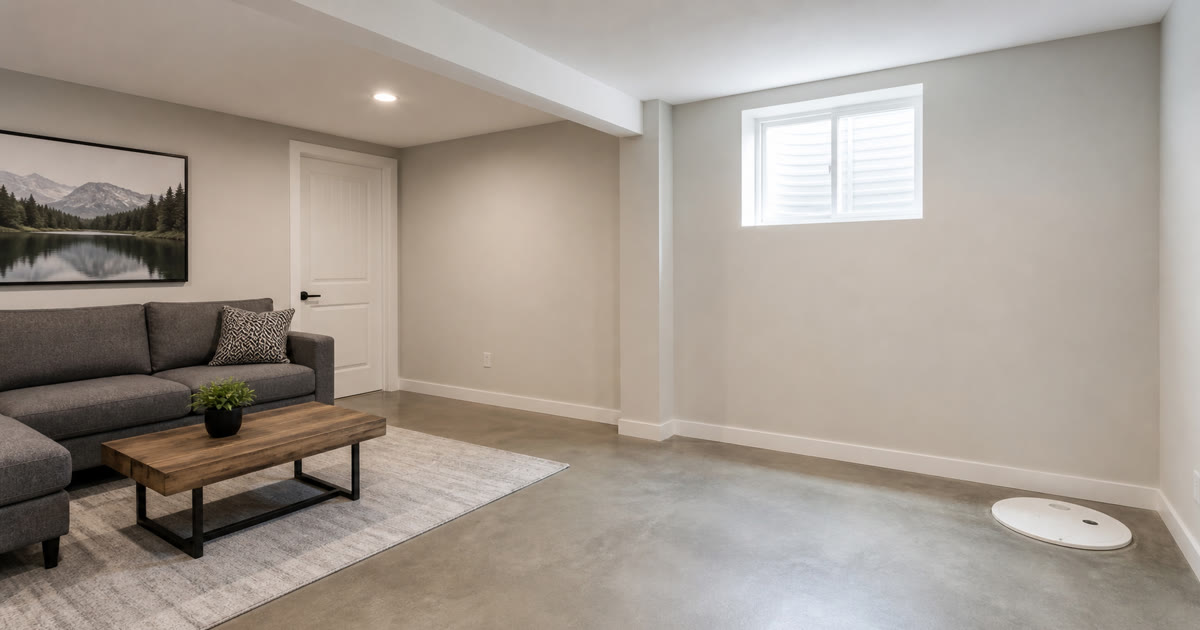
Find the sump pit. Usually in the utility corner of the basement, near the furnace or water heater. The pit has a plastic or metal cover, often sealed if you have a radon mitigation system (increasingly common in local homes).
-
Lift the cover gently. If you see a sealed radon cap, don't break the seal — ask a radon mitigation company to handle the test without compromising your system.
-
Pour a bucket of water slowly into the pit. A full bucket or two is usually enough to lift the float. Pour steadily, not all at once, and watch the float switch. It should rise with the water level.
-
The pump should activate. You'll hear the motor hum, water moving through the discharge pipe, and then the pump should shut off automatically once the water level drops. The whole cycle should be short.
-
Go outside and check the discharge. Walk to where the pipe exits your home — usually this is a flexible black hose or white PVC pipe extending from the foundation wall toward the yard or a storm drain. Confirm water is actually coming out. A pump that runs but doesn't move water has a clogged impeller or a frozen/stuck check valve.
What to watch for during the test:
- Pump runs but no water exits → clogged intake, stuck check valve, or impeller damage. Needs cleaning or replacement.
- Pump doesn't start → failed float switch (they get stuck against the pit wall), tripped GFCI breaker, or burned-out motor.
- Pump starts and stops rapidly (short-cycling) → float switch needs adjustment or the check valve isn't closing and water is flowing back into the pit.
- Pump hums but doesn't pump → jammed impeller or a seized motor bearing.
Quarterly maintenance your sump pump needs
Chinook dust, construction silt, and hard water mineral deposits are rough on sump pump mechanisms. Here's what to do each season:
Every 3-4 months (quarterly test)
- Run the water-bucket test described above.
- Inspect the power cord for cracks or rodent damage (field mice find basements cosy in fall).
- Check that the GFCI outlet hasn't tripped. In older homes — particularly in Falconridge, Dover, and Forest Lawn — ungrounded outlets or nuisance tripping on shared circuits is common, and that's a job for an electrician.
- Confirm the discharge pipe outside slopes away from the foundation. In deep winter, discharge lines that don't slope properly can freeze solid, back up, and split the pipe.
Once a year (annual cleaning)
- Unplug the pump, pull it out of the pit, and clean the intake screen at the bottom. Grit, small stones, and mineral scale from hard water accumulate on the screen and reduce flow.
- Scoop out any debris from the bottom of the pit — gravel, mud, small items that fell in.
- Inspect the check valve (the one-way valve on the discharge pipe above the pump). In hard-water conditions, mineral deposits build up inside the valve and prevent it from closing fully, letting water drain back into the pit. A failing check valve is a common cause of a pump that cycles on and off repeatedly.
- Wipe down the float switch and confirm it moves freely without catching on the pit wall or power cord.
Every 7-10 years
- Replace the pump. A typical submersible sump pump lasts about 7 to 10 years. In homes where the pump runs heavily during spring melt and summer storms, lean toward the 7-year side. (Pedestal pumps, which sit above the water, are less common in local basements.) A planned replacement costs far less than drying out and repairing a flooded basement.
Battery backup: why Calgary storm season demands one
This is the step most homeowners skip — and regret. Sump pumps run on electricity. Thunderstorms that cause basement flooding also cause power outages. If the power goes out in the middle of a downpour (and prairie thunderstorms bring plenty of lightning), your pump is dead exactly when you need it most.
A battery backup sump pump sits next to your primary pump in the pit and runs on a deep-cycle marine battery. It activates automatically when the main pump loses power or when water inflow exceeds the primary pump's capacity. For a finished basement with carpet, drywall, and stored belongings, a battery backup is the cheapest insurance you'll ever buy.
For homeowners with finished basements in neighbourhoods like Tuscany, Signal Hill, or Evergreen, a backup system costs a small fraction of what it protects. Install one.
Common Calgary sump pump mistakes
1. Discharging water too close to the foundation. Sump discharge should end well away from the foundation wall — check the City of Calgary's current guidance for the required distance. In practice, many installations in older homes have a short stub pipe dumping water right against the concrete — water that soaks down and right back into the weeping tile, creating a loop. Extend the discharge several metres out with a flexible hose.
2. Discharging onto a neighbour's property. City bylaw prohibits directing sump water onto adjacent properties or into alleyways where it can create ice in winter. Discharge should go toward your own lawn or garden, or to a storm drain if available.
3. Connecting the sump to your home's sewer line. This isn't allowed under City of Calgary bylaws. Sump pumps must discharge to the surface (lawn, garden, storm drain), never into the sewer line that carries your household wastewater. Illegal connections overload the city's wastewater treatment system during storms and can back sewage into your own basement — a far worse problem than a sump failure.
4. Using an extension cord. A sump pump draws a surge of current at startup. A long, undersized extension cord causes voltage drop, the motor runs hot, and the pump can stall under load. Plug it into a dedicated GFCI outlet within cord reach — if there isn't one, have an electrician add it.
When to call for help in Calgary
Some sump pump tasks are safe DIY. Others aren't worth the risk:
DIY-safe: quarterly water-bucket tests, cleaning the intake screen, scooping debris from the pit, extending the discharge hose, replacing a clogged check valve, buying and connecting a battery backup unit.
Call a sump pump specialist for: replacing the pump itself (lifting a heavy submersible pump from a deep, narrow pit while reaching into murky water is awkward), cutting and fitting rigid PVC discharge pipes, or any situation where the pit is full of water and you don't know why it stopped working.
Call an electrician for: nuisance GFCI trips, no power at the outlet, or adding a dedicated outlet.
Related Calgary Home Guides
- Sump Pump Maintenance in Calgary: Pre-Rainy-Season Checklist
- Sump Pump Maintenance in Calgary: Get Ready for Storm Season
- Furnace Humidifier Maintenance in Calgary: Fix Dry Air & Scale
Frequently Asked Questions
How often should I test my sump pump in Calgary?
Run the bucket test at least twice a year — in mid-April once the frost is out of the ground, and around July 1 at the start of storm season. A quarterly test is even better. It takes about five minutes and a bucket or two of water.
How long does a sump pump last?
A typical submersible sump pump lasts about 7 to 10 years. In Calgary homes where the pump runs hard during spring melt and summer storms, plan for the shorter end of that range. If yours is original to an older home, it's worth checking or replacing before the next storm.
Why does my sump pump run but not pump water out?
Usually the intake screen is clogged, the check valve is stuck, or the impeller is jammed or damaged. Unplug the pump before you inspect it, then clean the intake screen and check that the check valve opens and closes freely. If it still won't move water, the pump may need replacing.
Do I really need a battery backup sump pump?
If your basement is finished, it's strongly recommended. The same thunderstorms that flood basements often knock out power, and a standard pump stops working the moment the power goes. A battery backup takes over automatically and costs far less than repairing a flooded basement.
A small habit that saves a Calgary basement
Set a recurring calendar reminder: test your sump pump on the first warm day of spring (mid-April in Calgary, once the frost is out of the ground) and again on July 1 — right at the start of summer storm season. Two tests a year, five minutes each, a bucket or two of water. That's the gap between "my basement is dry" and "I need a restoration crew at 2 AM."
If your pump hasn't been tested this year — or if you just realized you don't know where your sump pit is — make this the week you find it and run the bucket test. If it fails, call a sump pump specialist before the next storm.
Rather have YOFF handle it?
We cover seasonal and more across Calgary and nearby communities — booked fast, done right. No Fix — No Fee.