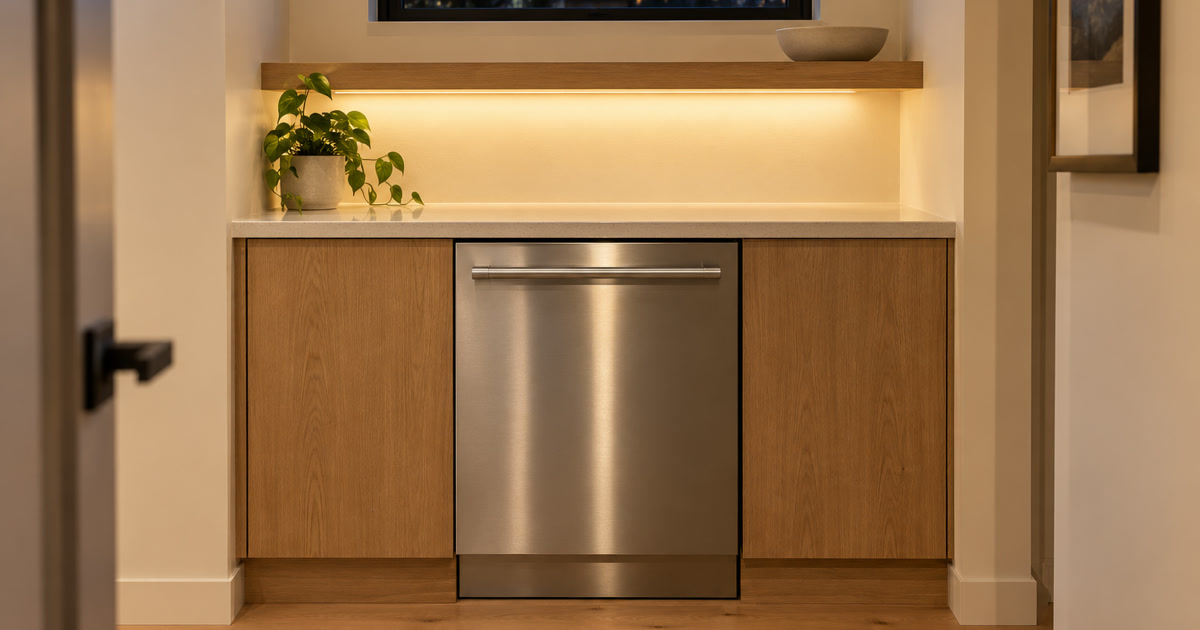
Dishwasher Leaking in Calgary: Install Mistakes That Cause It

A puddle in front of the dishwasher is rarely a mystery appliance failure. In many Calgary kitchens, a dishwasher leaking after a new install or a recent move traces back to a few small mistakes made when the machine was set in place. A kinked hose, a missing drain loop, a slightly crooked unit: each one is easy to fix once you know where to look.
This guide walks through the install errors that most often cause a dishwasher leak, how to check them safely, and when it is smarter to hand the job to a technician.
Stop the Water First
Before you diagnose anything, limit the damage. Water under a dishwasher can soak cabinet bases and flooring quickly, and Calgary homes with hardwood or laminate in the kitchen are especially unforgiving.
- Stop the cycle and unplug the machine, or switch off its breaker if the cord is hidden.
- Close the small water supply valve, usually under the kitchen sink.
- Soak up standing water with towels and run a fan or dehumidifier for a day.
- Take a photo of the puddle and note when it appears: at the start of a cycle, during the wash, or at the drain stage. That timing is your best clue.
If water is spreading into the cabinet or flooring, treat it as a leak emergency and get help the same day. Our kitchen sink cabinet leak-check guide shows how to inspect the space under the sink for slow, hidden moisture.
Mistake 1: No Proper Drain Loop
The drain hose carries dirty water from the dishwasher to the sink drain or garburator. A well-installed hose rises into a "high loop" against the underside of the countertop before it drops down to its connection. That loop helps keep sink water from flowing backward into the machine.
Without it, you may see:
- Water seeping out of the door after the sink is used
- Murky water standing in the tub after a cycle
- A damp smell around the base of the dishwasher
Manufacturers publish the correct drain hose height in the installation instructions, so check the sheet for your model. Many Calgary condos and older bungalows in areas like Acadia or Haysboro have tight cabinet layouts where it is tempting to let the hose sag. A hose lying low under the machine is a common reason leaks show up weeks after an install.
Mistake 2: Kinked, Crushed, or Loose Hoses
Dishwashers are pushed back into a narrow opening, and hoses get pinched in the process. A kink in the drain hose can force water back out through the wrong path. A crushed supply line may drip steadily at its connection.
Look for:
- Hoses folded sharply behind the unit or squeezed against the cabinet wall
- Clamps that are loose or were never tightened on the drain connection
- Water marks, rust, or mineral crust at the supply fitting
Do not over-tighten a fitting to stop a drip. That can crack the fitting and make the leak worse. If a connection is wet, close the supply valve and have it redone correctly.
If your kitchen sink drains slowly, that matters too. A restricted drain can push water back toward the dishwasher. Our guide to clearing a kitchen sink drain explains how to tell a simple buildup from a bigger drain problem.
Mistake 3: An Unlevel or Poorly Secured Machine
A dishwasher that sits crooked can send water toward the door seal instead of keeping it inside the tub. This often happens when the leveling feet are not adjusted after the machine is slid in, or when the floor is uneven. Older Calgary homes in Brentwood and similar established neighbourhoods often have kitchen floors that have shifted slightly over decades.
Signs of an unlevel unit:
- The door does not close with a firm, even latch
- Dishes shift or slide during the wash
- Water appears at one side of the door, not across the whole bottom
A technician levels the machine front to back and side to side, then secures it to the countertop or cabinet using the brackets provided. A dishwasher that can rock or lift slightly is not secured properly.
Mistake 4: Door Seal and Door Alignment Problems
The rubber door seal does a lot of work. Installation mistakes can damage it: a tub edge pinched during positioning, a seal folded under, or a door that has been forced shut against a misaligned cabinet. Over time a worn seal can also harden and crack.
Check the seal by running a clean fingertip along it. Remove any debris, then look for flat spots, tears, or a twisted section. Mineral buildup can add to the problem, and Calgary's hard water leaves its mark on appliance parts. If scale is part of what you are seeing, our dishwasher hard-water cleaning guide covers the filter, spray arms, and seals.
Mistake 5: Loose Supply Connection or Wrong Fittings
The supply line brings fresh water into the dishwasher, and it is under pressure whenever the valve is open. A fitting that was only hand-snug, a worn washer, or mismatched parts can drip slowly, which makes it easy to miss until the cabinet floor is damaged.
A slow drip at the inlet area often appears as a small puddle under the front-left or front-right of the machine. If you spot a damp connection, close the valve, dry it, and check again after a short test. A persistent drip means the connection needs redoing with the right fittings.
Mistake 6: Overlooking the Cabinet and Countertop
The surroundings matter as much as the machine. Water that seems to be coming from the dishwasher may actually be:
- A leaking sink drain or faucet above it
- A garburator connection dripping down the cabinet wall
- Condensation running off a countertop edge
To tell the difference, run the dishwasher alone while the sink is unused, then run the sink alone with the dishwasher off. If the puddle only appears when the sink runs, the problem is not the dishwasher at all. Our article on what an install should include lists the checks a technician makes before closing everything up.
A Simple Leak Test You Can Do
After any adjustment, test before you trust it:
- Lay a dry towel or sheet of cardboard in front of the unit.
- Run a short cycle with the supply valve fully open.
- Watch the first few minutes at the start of filling.
- Check again during the drain stage, when the pump is working.
- Inspect the towel and the cabinet floor afterward.
Repeat for a second full cycle. Some leaks only show up during the drain stage.
When to Call a YOFF Technician
DIY checks are reasonable for visible hose positions and a quick level check. Call a technician when:
- The leak returns after you have checked the basics
- The machine was installed by someone else and you are unsure what was done
- The floor or cabinet base is already swollen, stained, or soft
- You need to pull the dishwasher out of its opening to see the connections
- A new dishwasher is leaking and you want it set right before warranty questions arise
Across Calgary and Alberta, a good installation is about patience and details. A YOFF technician can reseat, level, and reconnect your dishwasher, set the drain loop, and run a proper test before leaving. If a repair is needed, we cover it under our No Fix, No Fee approach.
Some jobs are outside our scope. If the leak is caused by a problem in the walls or main lines, we will say so and point you to the right specialist.
FAQ
Why is my new dishwasher leaking in Calgary?
The most common causes are an incorrect drain hose loop, a pinched or kinked hose, a loose supply connection, or a machine that is not level. New units often leak because of how they were installed, not because the appliance is faulty.
Can a dishwasher leak from the bottom of the door?
Yes. A worn or twisted door seal, an unlevel machine, or too much detergent causing suds can all push water out under the door. Check the seal and level first, then consider whether the detergent type is right for your model.
Is it safe to keep using a leaking dishwasher?
It is best not to. Even a small leak can soak the cabinet base and flooring, and Calgary homes with laminate or hardwood can swell quickly. Close the supply valve and stop using it until the cause is found.
How can I tell if the leak is from the dishwasher or the sink?
Run the dishwasher alone, then run the sink alone with the dishwasher off. Whichever test produces the puddle points to the source. A leak that only appears when the sink runs usually comes from the sink drain, faucet, or garburator connection.
Should I hire someone or fix it myself?
You can safely check hose positions, door seals, and leveling. Anything that requires pulling the machine out or redoing a connection is better handled by a technician, especially if there is existing water damage.
Get Your Dishwasher Set Right
A dishwasher leaking in your Calgary kitchen is stressful, but most causes are simple and fixable. If you would rather have it checked by someone who does these jobs every week, message YOFF Home Services. We will find the cause, correct the install, and test it before we leave.
Rather have YOFF handle it?
We cover handyman and more across Calgary and nearby communities — booked fast, done right. No Fix — No Fee.