Door Won't Close Right? Fixing Sticking & Misaligned Doors
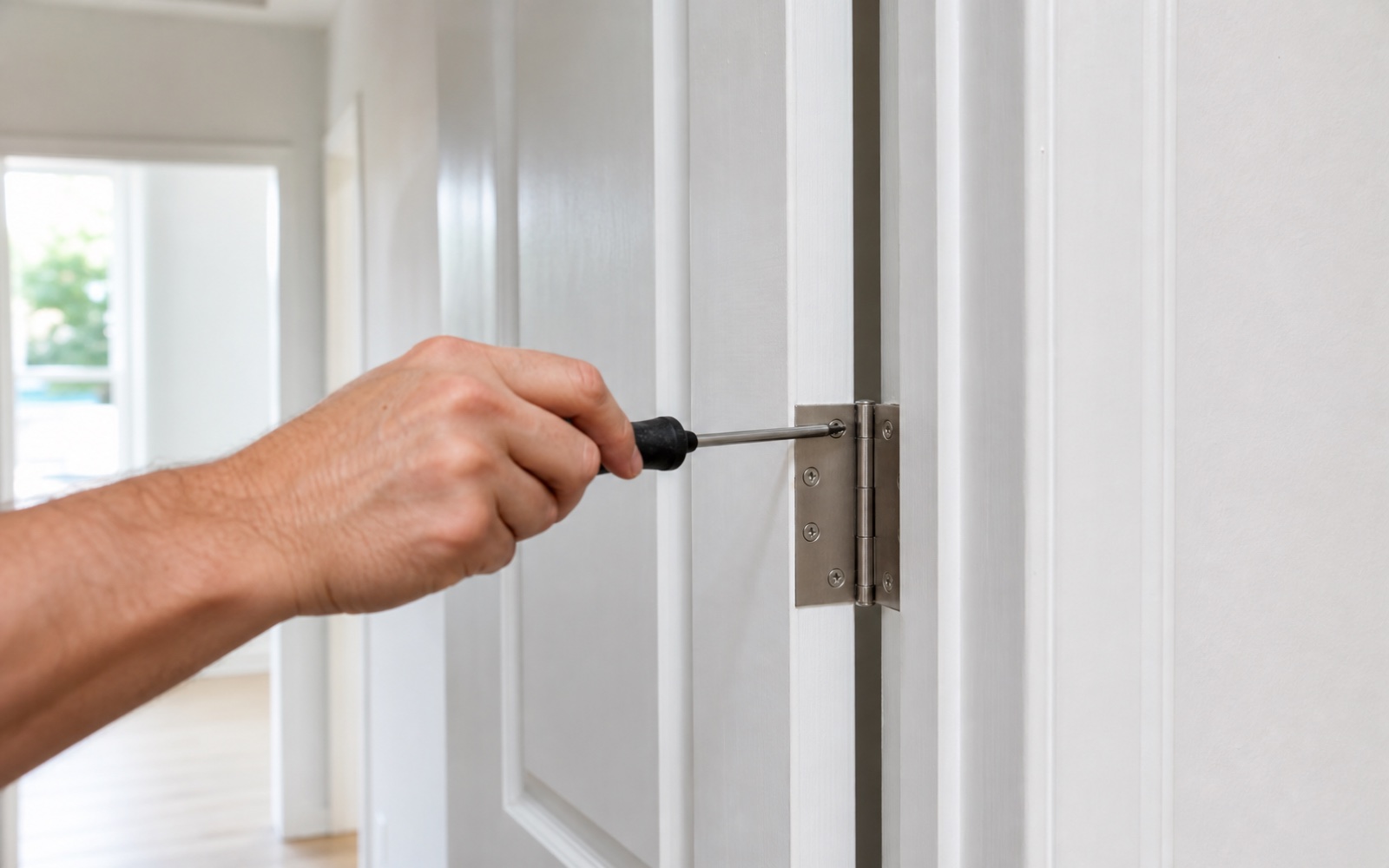
Before you reach for a planer, know this: most doors that stick or won't latch aren't warped — they've just sagged on loose hinges, or the strike plate has drifted a few millimetres out of line. In Calgary, the freeze–thaw swing of a chinook can nudge a frame just enough to throw a door off too. Both are five-minute fixes. Planing the door is the last resort, not the first move. Here's how to diagnose it the way a pro does.
Start by watching where it binds. Open and close it slowly and note exactly where it catches and where the gaps are uneven. That tells you what's actually wrong.
Read the gaps first
The even gap around a door (the "reveal") is your best diagnostic tool. Close the door most of the way and look at the line between the door and the frame on all three sides:
- Tight at the top of the latch side, wide at the bottom — the door has dropped on its hinges. Tighten them.
- Rubbing along the latch edge top to bottom — the door or frame has swollen, or the door sits too far into the opening.
- Latch bolt sitting above or below its hole — strike-plate alignment.
Two minutes reading the gaps saves you from sanding a door that only needed a screw tightened.
Tighten the hinges first
A door that drags on the floor or rubs the top of the frame on the latch side is almost always sagging from loose hinge screws.
- Open the door and tighten every hinge screw, top hinge first — it carries the most weight.
- If a screw just spins and won't bite, the hole is stripped. Tap in a few wooden toothpicks with a dab of glue, or use a longer screw (7–8 cm) that reaches into the framing behind the jamb.
That longer top-hinge screw alone fixes a huge share of sagging doors by pulling the frame back square.
When the latch misses the hole
If the door swings shut but won't catch, the latch bolt and the strike plate aren't lining up.
- Smear a little lipstick or marker on the latch bolt, close the door, and see where it hits the strike plate.
- Off by a hair: file the strike-plate opening slightly in that direction.
- Off by more: unscrew the strike plate and move it a few millimetres, then fill the old screw holes.
- Still missing low or high? It's usually the hinge sag from above — go back and fix that first.
Doors that swing open or shut on their own
A door that won't stay put is hung out of plumb — the frame leans. Quick fix without rehanging:
- Pull the centre hinge pin, lay it on something solid, and give it a gentle bend with a hammer. The added friction holds the door where you leave it.
Sticking from Calgary's humidity and weather swings
Calgary is dry most of the year, but a humid summer stretch or a damp basement can swell a wooden door so it binds along an edge.
- Find the rub mark, sand or plane only that spot — take off less than you think.
- Seal the bare edge with primer or paint afterward, or it'll just soak up moisture and swell again.
Don't plane a door during a humid spell. It'll fit perfectly now, then leave a gap you can see daylight through once it dries out and shrinks back. Wait for normal conditions, or take off the bare minimum.
When to call someone
Most door trouble is genuinely DIY. Call for help when:
- The frame itself is out of square from house settling — common in older Calgary homes, and rehanging or reframing is fiddly work.
- An exterior door won't seal and you're losing heat — worth getting the weatherstripping and alignment right before winter.
- A steel or fire-rated door is involved — those shouldn't be planed or modified.
If you've got a door (or three) that won't behave, YOFF handyman services adjust, shim, and re-hang doors across Calgary so they close clean and latch every time. Get a free quote — No Fix, No Fee.
Rather have YOFF handle it?
We cover handyman and more across Calgary and nearby communities — booked fast, done right. No Fix — No Fee.