
Basement Water Seepage Calgary: 7 Early Warning Signs
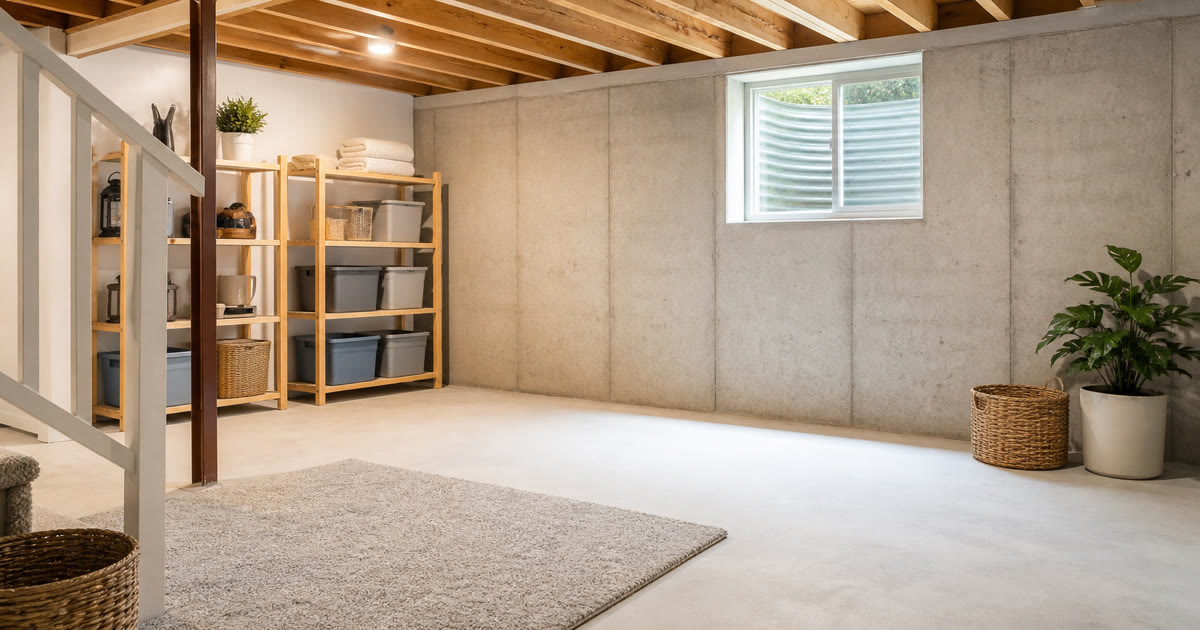
A damp basement in Calgary doesn't announce itself with a flood. Most of the time, water sneaks in quietly — a faint musty smell you get used to, a chalky white stain behind the storage boxes, a baseboard that looks slightly darker than it should. By the time you see a puddle on the floor, the problem has been brewing for weeks or months.
Calgary homes face a perfect storm for basement seepage: heavy clay soil that holds water, sudden summer thunderstorms, and a freeze-thaw cycle that works on foundation cracks all winter. The good news? You don't need to wait for a full-blown flood to act. Here are the seven early signs that water is finding its way into your basement — and what to do about each one.
1. Efflorescence — that white, chalky powder on concrete walls
If you've noticed a white, crusty or powdery deposit on your basement's concrete walls or floor, that's efflorescence. It's not mould — it's salt. When water seeps through concrete and evaporates on the inside surface, it leaves behind mineral salts dissolved from the concrete and the surrounding soil. Wherever water keeps moving through the wall, the deposit keeps growing.
One small patch might not be an emergency. But if you see it spreading — especially in a horizontal line about a foot above the floor — water is actively moving through your foundation. In older Calgary neighbourhoods like Haysboro, Brentwood, or Acadia, where foundations are forty to sixty years old, this is one of the most common early seepage signals.
What to do: Mark the edges of the patch with a pencil and a date. Check back in a week. If it's growing, you have active water movement. Our technician can assess whether the fix is exterior (grading, downspouts) or if the wall itself needs sealing.
2. A persistent musty or earthy smell — even after cleaning
Basements naturally smell a bit different from the rest of the house — cooler air, less circulation. But a musty, earthy, or "wet cardboard" odour that doesn't go away after you air things out? That's almost always moisture. In Calgary's dry climate, a properly sealed basement shouldn't smell damp at all.
Pay attention to where the smell is strongest. If it's concentrated near one wall — especially a north-facing wall that rarely gets direct sun — that's your seepage spot. In split-level homes common in communities like Falconridge or Marlborough, the lower-level "basement" sections are particularly prone because of how they interface with backfilled clay soil.
What to do: Run a dehumidifier for 48 hours. If the smell returns immediately after you turn it off, moisture is entering faster than it evaporates. Time to investigate the foundation.
3. Dark or stained baseboards and drywall near the floor
Staining doesn't always look like a water spot. Sometimes it's subtle: a baseboard that's slightly darker along the bottom edge, or drywall that looks "shadowed" about two inches above the floor. In finished basements, the first water damage often appears where the baseboard meets the floor — because water wicks upward through the bottom plate of the framing.
This is especially common after the June and July storm season, when a single intense downpour can saturate the soil around the foundation and hydrostatic pressure pushes moisture through tiny cracks. If you have carpet in your basement, the padding acts like a sponge — you may not see the water, but the baseboard will tell you it's there.
What to do: Gently press the baseboard with your thumb. If it feels soft or spongy, water has been present for a while. Remove a small section and check the drywall behind it. If the drywall is stained, you have active seepage.
4. Peeling paint or bubbling drywall compound
Paint doesn't peel in a dry basement. If you see bubbles, blisters, or flakes on a painted concrete wall or on drywall near the floor, water vapour is pushing through from behind. This is hydrostatic pressure in action: water in the soil outside your foundation is forcing moisture through the wall, and the vapour pressure lifts the paint film.
This problem is especially common in Calgary homes built on the valley slopes — areas like Bridgeland, Crescent Heights, or along the Bow River escarpment — where groundwater naturally moves downhill and collects against downhill-facing foundation walls.
What to do: Don't just repaint. The moisture will push through the new paint too. The source — grading, downspouts, or a foundation crack — needs to be addressed first.
5. Rust on appliances, furnace panels, or metal shelving
Rust needs moisture. If your basement is dry, the metal surfaces stay clean. If you start seeing rust on the bottom panel of your furnace, on the legs of metal shelving units, or on tools stored on the floor — there's excess humidity, and in most homes, that humidity is coming from the ground.
This is a slow-burn warning sign. It might take a full year before rust becomes obvious, by which point the seepage has been active the entire time. Calgary's chinook cycles accelerate the process: warm air raises the basement temperature, increasing evaporation from damp concrete, then the cold snap returns and condensation forms on cold metal surfaces.
What to do: Measure humidity with a basic hygrometer (an inexpensive gauge from any hardware store). If your basement stays above 60% relative humidity in summer without a humidifier running, you're fighting groundwater vapour.
6. Cracks in the concrete floor or cove joint gap
Not every crack leaks — but in Calgary, with our expansive clay soil that swells when wet and shrinks when dry, floor cracks are worth watching. The most vulnerable spot in any basement is the cove joint — the seam where the concrete floor meets the foundation wall. Water rises through the soil and finds this gap first.
In neighbourhoods like Ogden or Forest Lawn, where many homes date from the 1950s and 1960s, original concrete floors have had decades of soil movement beneath them. A hairline crack that stays dry through three rainstorms is probably stable. A crack that darkens or feels damp after rain is an active water path.
What to do: After the next heavy rainstorm, go down with a flashlight and check every visible crack and the entire cove joint perimeter. Touch them. If any spot feels cool and damp, water is getting through.
7. Warped or cupped laminate and vinyl plank flooring
Modern basements are often finished with laminate or luxury vinyl plank — and both materials tell you exactly where water is coming from. Laminate swells at the seams and develops a "cupped" edge profile. Vinyl plank might lift slightly at the joints or feel "squishy" underfoot.
The key detail: if flooring damage is in the middle of the room, it's more likely a leaking pipe or appliance supply line. If it's along the perimeter walls, it's foundation seepage. Summer storms here hit hard and fast, and perimeter seepage typically shows up within 24 to 48 hours of a heavy rainfall event.
What to do: If you catch it within the first day or two, you may be able to dry out the flooring with fans and a dehumidifier. But the water source — the foundation — still needs attention.
Why Calgary basements are particularly vulnerable
Calgary sits on a thick layer of glacial till — a dense, clay-rich soil that drains poorly. When a July thunderstorm dumps a heavy load of rain in a single afternoon, the water has nowhere to go. It sits against foundation walls, building hydrostatic pressure until it finds a way in.
Add to that the chinook cycle — rapid temperature swings of 15 to 20 degrees in a day — and you get foundation walls that expand and contract constantly, widening hairline cracks year after year. Homes in communities with mature trees (like Elbow Park, Altadore, or Mount Pleasant) face the additional challenge of tree roots creating soil paths that channel water toward the foundation.
What YOFF can do (and what needs a specialist)
Many early-stage seepage fixes are straightforward jobs for our technician:
- Downspout extensions — redirecting roof water at least six feet from the foundation
- Grading correction — building up soil so the ground slopes away from the house
- Cove joint sealing — injecting polyurethane sealant into the floor-wall gap
- Interior crack injection — epoxy or polyurethane fill for accessible wall cracks
- Window well cleaning and re-grading — keeping below-grade windows from becoming water collectors
If you have a crack wider than 3 millimetres, a visibly bowing wall, or water coming in at multiple points simultaneously during every rain, that is a job for a foundation specialist. But for the typical homeowner noticing early seepage signs — efflorescence, damp baseboards, a musty smell — our technician can assess and fix the problem before it escalates.
Related Calgary Home Guides
- Dishwasher Not Cleaning? The Calgary Hard Water Fix That Works
- How to Find and Shut Off Your Home's Main Water Valve in Calgary
- How to Protect Exposed Basement Pipes Before a Calgary Winter
Frequently Asked Questions
Is white powder on my basement wall a sign of mould?
Usually not. White, chalky powder on concrete is efflorescence — mineral salts left behind when water seeps through the wall and evaporates. It isn't harmful on its own, but if the patch keeps growing, water is actively moving through your foundation and the source should be addressed.
Why does my basement leak only after heavy rain?
Calgary's clay-rich soil drains poorly, so a heavy summer storm leaves water sitting against the foundation. That builds hydrostatic pressure, which pushes moisture through cracks and the cove joint where the floor meets the wall. Perimeter seepage often shows up within 24 to 48 hours of a big rainfall.
What basement humidity level is too high?
If a basement stays above 60% relative humidity in summer, excess moisture is likely coming from the ground. A basic hygrometer from a hardware store will tell you where you stand. A dehumidifier helps with symptoms, but grading, downspouts or crack sealing deal with the cause.
When is basement seepage a job for a foundation specialist?
Cracks wider than 3 millimetres, a wall that is visibly bowing, or water entering at several points during every rain may point to a structural problem that needs a foundation specialist. Early signs such as efflorescence, damp baseboards or a musty smell can usually be handled with grading, downspout extensions and crack sealing.
The bottom line
Basement water seepage in Calgary is common, but it's not something you have to live with. The earliest signs — a white powder on the wall, a lingering smell, a discoloured baseboard — are cheap and easy to address. Left alone, they become a flooded basement, ruined flooring, and a mould problem that costs far more to remediate.
If you've spotted any of these seven signs in your home, don't wait for the next big storm. YOFF Home Services handles basement seepage assessment, grading fixes, crack sealing, and downspout work for homeowners across Calgary and the surrounding area. A half-hour inspection beats a weekend of mopping.
Get in touch with YOFF today to book a seepage check — downspout extensions, grading, cove joint and crack sealing for your Calgary basement.
Rather have YOFF handle it?
We cover handyman and more across Calgary and nearby communities — booked fast, done right. No Fix — No Fee.