How to Clean Chrome Surfaces Without Damaging Them: A Calgary Homeowner's Guide
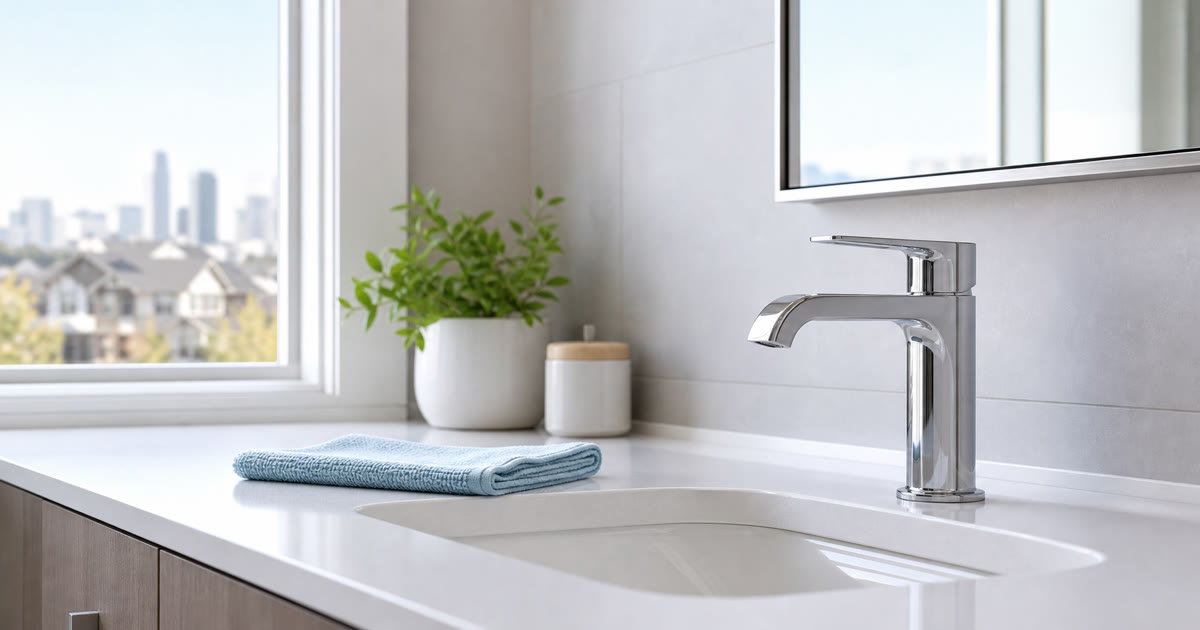
Chrome fixtures look clean, modern, and expensive — until they don't. A hazy faucet, white mineral spots on the shower trim, or that greenish-blue corrosion starting around the base plate: these problems show up fast in Calgary homes, especially with our hard water. The fix is usually simple, but using the wrong cleaner can turn a cosmetic issue into permanent damage.
Here's what actually works, what destroys chrome, and why Calgary's water makes this worth paying attention to.
What Chrome Actually Is
Automotive chrome is solid metal plating — thick, durable, built for weather. Household chrome is different. Most modern faucets and bathroom fixtures use a thin layer of chromium electroplated over nickel, over brass or zinc. The chrome layer is typically measured in microns. It looks brilliant, but it is chemically vulnerable.
Once the chrome layer is compromised — scratched, etched, or oxidized through — the nickel underneath can show through as a yellowish or dull grey patch. There is no DIY fix for that. The fixture needs replating or replacement.
The Enemies of Chrome
Abrasives (the fastest way to ruin chrome)
Steel wool, scouring pads, powdered cleansers, even a "gentle" scrub with the rough side of a sponge — all of these create micro-scratches in the chrome. Each scratch is a place where moisture and minerals can get under the plating. Over months, those scratches become cloudy patches and then corrosion spots.
Never use: steel wool, Scotch-Brite pads, Comet, Ajax, baking soda as a paste scrub, magic erasers on chrome (they are micro-abrasive).
Acids (slow chrome death)
Vinegar is the one most Calgary homeowners reach for because it works brilliantly on hard water deposits — and it is genuinely effective at dissolving calcium and lime scale. The problem is that vinegar is acetic acid, and chrome does not handle prolonged acid contact well. A quick wipe is usually fine. Soaking a rag in vinegar and leaving it wrapped around the faucet for an hour while you do other chores? That can etch the chrome permanently.
Similarly, citric acid cleaners, lemon juice, and toilet bowl cleaners should stay far from chrome fixtures. Acidic toilet bowl cleaners splashed onto a chrome flush handle or trim ring can pit the surface in seconds.
Avoid prolonged contact with: vinegar, citric acid, lemon-based cleaners, muriatic acid, CLR on chrome (check the label — many formulations are not chrome-safe).
Bleach and Ammonia (discoloration and pitting)
Bleach-based bathroom sprays and ammonia-based glass cleaners can discolour chrome over time, turning it yellowish or creating a permanent haze. If you use them in the same room, rinse chrome surfaces with plain water afterward.
The Combination Trap
The most common Calgary bathroom mistake: spray a bleach-based cleaner on the counter, it drifts onto the chrome faucet, and an hour later you wipe everything with a vinegar-dampened cloth. Bleach + acid = chlorine gas (dangerous to breathe) and accelerated chrome etching. Never mix cleaning chemicals, and always rinse chrome with plain water between products.
What Actually Works: The Safe Cleaning Routine
Everyday Cleaning
For regular maintenance — fingerprints, water spots, light dust — all you need is warm water and a microfiber cloth. Wipe the chrome dry after cleaning. Standing water is the enemy of chrome because it leaves mineral deposits as it evaporates.
Weekly Cleaning in Calgary Hard Water
Calgary's water hardness typically ranges from 150 to 200 mg/L, which means mineral buildup on chrome happens faster here than in soft-water cities. A weekly wipe-down prevents scale from hardening into that white crust that tempts people to reach for vinegar.
Safe method:
- Dampen a microfiber cloth with warm water and a few drops of mild dish soap (Dawn or similar — non-abrasive, pH-neutral in dilution).
- Wipe the chrome surface, paying attention to crevices around handles and the base plate.
- Rinse with a cloth dampened with plain water.
- Dry immediately with a clean, dry microfiber cloth. This step is what prevents water spots.
Removing Hard Water Spots
If mineral spots have already built up, try this first before reaching for anything stronger:
- Soak a cloth in warm water (no soap) and lay it over the spots for 10–15 minutes. The water itself can soften calcium deposits.
- Wipe and dry. If the spots are gone, stop there.
- If spots remain, use a dedicated chrome polish — something labelled as safe for chrome bathroom fixtures (Flitz, Mother's Chrome Polish, or similar). Follow the product instructions exactly. These products contain mild abrasives that are fine for chrome but only when used as directed.
Removing Early-Stage Oxidation
That greenish-blue corrosion starting where the chrome meets the counter or around the base of the faucet — this is common in older Calgary homes where bathroom ventilation is poor. It usually means the chrome layer has been compromised and moisture is reaching the nickel or brass underneath.
You can clean it off with mild dish soap and a soft cloth, but it will come back. The real fix is to address the source of moisture — improve bathroom ventilation, fix any slow leaks at the base, and recaulk around the fixture if the seal is cracked.
When Chrome Is Beyond Cleaning
If your Calgary bathroom or kitchen faucet shows these signs, cleaning won't help — the fixture needs replacement:
- Pitting: small, dark, rough holes in the surface. The chrome is gone and the base metal is showing through.
- Peeling or flaking: the chrome layer is separating from the nickel underneath. Water gets in, more flakes off, and the cycle accelerates.
- Persistent green corrosion: especially around handles and the spout base. It returns within days of cleaning.
- Rough texture: if the once-smooth surface feels like fine sandpaper, the plating has failed.
Replacing a chrome faucet is usually a straightforward job. YOFF handles faucet replacement across Calgary — from inner-city bathrooms in Hillhurst to powder rooms in Evergreen. A new faucet with a quality chrome finish, properly installed, will last years in Calgary's hard water as long as you stick with mild soap, water, and a microfiber cloth.
The Bottom Line
Chrome is low-maintenance but not no-maintenance — especially in Calgary, where hard water minerals attack finishes faster than you'd expect. Skip the abrasives, avoid soaking chrome in vinegar, and dry it after cleaning. A microfiber cloth and mild dish soap cover 95% of what your chrome fixtures need.
If your chrome is already beyond cleaning, or you need a faucet replaced and don't want to deal with corroded shut-off valves and seized nuts, YOFF handles it. We'll swap it out, test it, and you only pay if we fix it.
Rather have YOFF handle it?
We cover handyman and more across Calgary and nearby communities — booked fast, done right. No Fix — No Fee.