Nail Pops in Drywall: Why Newer Calgary Homes Get Them
Two years after move-in, a small bump appears on your living room ceiling. Then another on the hallway wall. You didn't hit the wall with anything — and yet there it is: a round lump with a tiny crack around it, sometimes with the nail or screw head actually poking through the paint. These are nail pops, and they're one of the most common drywall issues in newer Calgary homes. Here's what's actually going on, how to fix one in about an hour, and when it's worth calling a Calgary handyman instead.
Why nail pops happen (and why newer Calgary homes are prone to them)
A nail pop is a fastener — usually a nail, sometimes a drywall screw — that has lost its grip on the wood framing behind the drywall. The framing lumber shrinks and twists as it dries out, and the fastener gets pushed outward, taking a chunk of drywall and finish with it.
Several local factors make this a familiar sight in Alberta:
New-build framing is often "wet" lumber. A large share of Calgary's housing stock is new: entire communities like Legacy, Seton, Cranston, and Mahogany have been built out in the last two decades. Framing lumber is often installed before it has fully dried, and over the first couple of heating seasons it shrinks and can twist slightly. Fasteners loosen. Pops appear — usually on ceilings first, where gravity and lumber crown work against the fastener.
Dry indoor winters. Alberta's winter air is famously dry, and indoor humidity in a Calgary home drops sharply once the furnace is running. Wood gives up moisture faster in that environment, which speeds up the shrinkage in the first winters after construction.
Big temperature swings. Calgary's chinook cycles bring rapid swings in temperature and humidity, adding a little extra movement to the mix.
The key reassurance: nail pops are almost always cosmetic. They are a normal part of a new house drying out, not a sign of structural failure. But they won't fix themselves, and each pop is a small hole waiting to grow.
What you need
- Drywall screws (1¼" or 1⅝" coarse thread)
- Drill or screwdriver
- Joint compound (drywall mud)
- Putty knife (4" is ideal)
- Fine sandpaper (120–150 grit)
- Primer and matching paint
Everything on the list is available at any Calgary hardware store. One pop takes about an hour of active work, plus drying time.
How to fix a nail pop, step by step
1. Drive it back and add a second screw. Press on the bump. If it moves, drive a drywall screw about 5 cm (2") above and below the popped fastener, sinking each screw slightly below the drywall surface without tearing the paper. If the original fastener is a nail sitting proud of the surface, either drive it in or pull it and replace it with a screw — nails are what caused the problem.
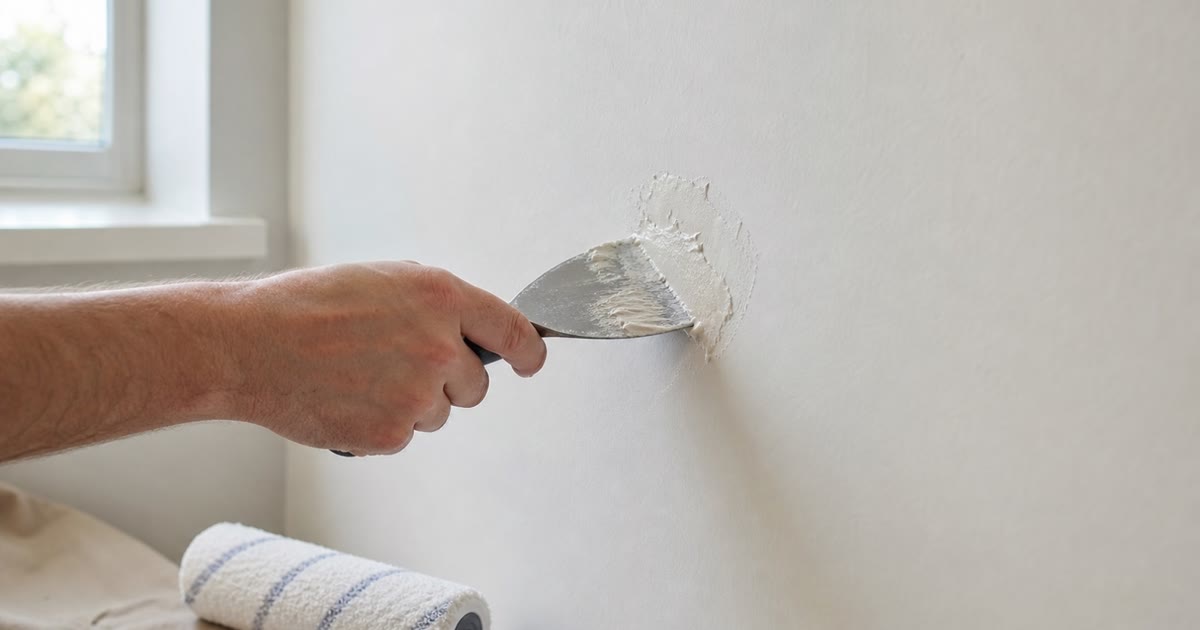
2. Fill. Apply joint compound over the screw heads and the popped area with your putty knife. Thin coats beat thick ones. Let it dry fully — in Calgary's dry air this is often faster than the 24 hours the pail suggests, but don't rush it.
3. Sand and repeat if needed. Sand flat, wipe off dust, and apply a second thin coat if you can still feel an edge. Feather the edges wider than the patch so the repair disappears under paint.
4. Prime, then paint. Joint compound absorbs paint differently than the surrounding wall — skipping primer means the patch will show as a shiny or dull spot forever. Prime the spot, then paint.
When to DIY and when to call a handyman
Do it yourself if: it's one or two pops, they're within easy reach, and you're comfortable on a stepladder.
Call for help if:
- There are many pops or long cracks, especially along ceiling lines — that can point to truss uplift or framing movement worth assessing properly.
- The pop is on a textured ceiling (common in Calgary new builds with stipple or knockdown finishes) — matching texture is a skill.
- Cracks keep coming back after repair — patching repeatedly without addressing the movement just wastes weekends.
- You'd rather not climb — ladder falls are one of the most common DIY injuries.
Our technician can typically fix a batch of pops in one visit, texture-match the ceiling, and leave you with a paint-ready surface.
Related Calgary Home Guides
- Asphalt Driveway Sealing in Calgary: Fall Crack Repair Guide
- Concrete Crack Repair Calgary: Fix Your Driveway and Patio
- Fence Repair in Calgary: Fix Leaning Posts and Sagging Gates
Frequently Asked Questions
Are nail pops a sign of a structural problem?
Almost never. Nail pops are usually cosmetic and happen as framing lumber dries and shrinks in a newer home. Many pops or long cracks along ceiling lines can point to movement worth having assessed, though.
When do nail pops stop appearing in a new Calgary home?
Most appear during the first couple of heating seasons, while the framing lumber finishes drying. It often makes sense to wait until the house has settled a bit and then fix several pops at once.
Can I just push the popped nail back in and paint over it?
That rarely lasts. Drive a drywall screw above and below the popped fastener, fill with thin coats of joint compound, sand, prime, and then paint. Skipping the primer leaves a patch that shows through the finish.
Why do nail pops keep coming back after I fix them?
If the framing is still moving, the repair can crack again. Replacing nails with screws helps, but repeated pops in the same area suggest movement worth having a handyman look at before you patch again.
The takeaway
Nail pops in a newer Calgary home are annoying but normal — the house is simply drying out. Fix a single pop yourself with a screw, mud, and patience; call a professional when pops multiply, cracks run long, or ceilings are textured.
If you've got a handful of ceiling bumps in your Calgary home and would rather not spend your weekend on a ladder, a YOFF technician can re-secure the popped fasteners, patch and texture-match the spots, and prime them ready for paint — one visit, one clean result. Book a drywall repair online.
Rather have YOFF handle it?
We cover handyman and more across Calgary and nearby communities — booked fast, done right. No Fix — No Fee.