How to Refresh a Sofa: Upholstery Cleaning Basics
A sofa takes more abuse than almost anything in the house — daily sitting, spills, dust, and in Calgary, a constant film of fine prairie dust that settles into the weave. Most couches that look "done" aren't worn out; they're just dirty. A proper refresh can pull years of grime out of the fabric and bring the colour back. Here's how to do it right, starting with the one step everyone skips.
Read the tag first
Flip up the cushions and find the manufacturer's cleaning code, usually on a tag under a seat cushion. It tells you what the fabric can actually handle:
- W — water-based cleaner is safe.
- S — solvent only; water will stain or shrink it.
- WS — either water or solvent is fine.
- X — vacuum only, no liquid at all. Professional cleaning only.
Using water on an S-coded fabric is the fastest way to leave a ring you can't get out. If there's no tag, test any cleaner on a hidden patch first — the back corner or under the skirt.
The weekly-to-monthly refresh
Most of what dulls a sofa is dry soil, and you can remove a surprising amount with no liquid at all.
- Vacuum thoroughly. Use the upholstery attachment and get into the seams, under the cushions, and along the back. Crumbs and grit act like sandpaper on the fibres every time someone sits down.
- Brush the fabric. A soft-bristle brush lifts matted pile and pulls embedded dust to the surface so the vacuum can grab it.
- Deodorize. Sprinkle baking soda lightly over the whole surface, leave it 15–20 minutes, then vacuum. It pulls out the everyday smell that builds up over a long Calgary winter of closed windows and furnace heat.
Spot-treating stains in a dry Calgary home
Move fast and blot — never rub, which drives the stain deeper and frays the fibres.
- Fresh spills: blot with a clean white cloth from the outside of the spill inward.
- W or WS fabric: mix a few drops of dish soap in warm water, dampen a cloth (don't soak it), and blot. Follow with a clean damp cloth to lift the soap, then let it air dry.
- Grease or ink (S fabric): a small amount of dry-cleaning solvent on a cloth, dabbed gently.
Less liquid is always better. Over-wetting upholstery pushes moisture into the foam and frame, where it dries slowly and can turn musty — a real risk even in Calgary's dry climate, where you'd never expect a damp-smell problem.
When to bring in a pro
DIY handles surface dirt and small spills well. Call a professional when:
- The fabric is coded S or X, or has no tag and you're not sure.
- The whole sofa looks dull and flat — that's deep soil that home methods only smear around.
- There's a set-in stain, pet odour soaked into the cushions, or any sign of mould.
- It's a high-value or delicate piece (velvet, silk blends, antique frames).
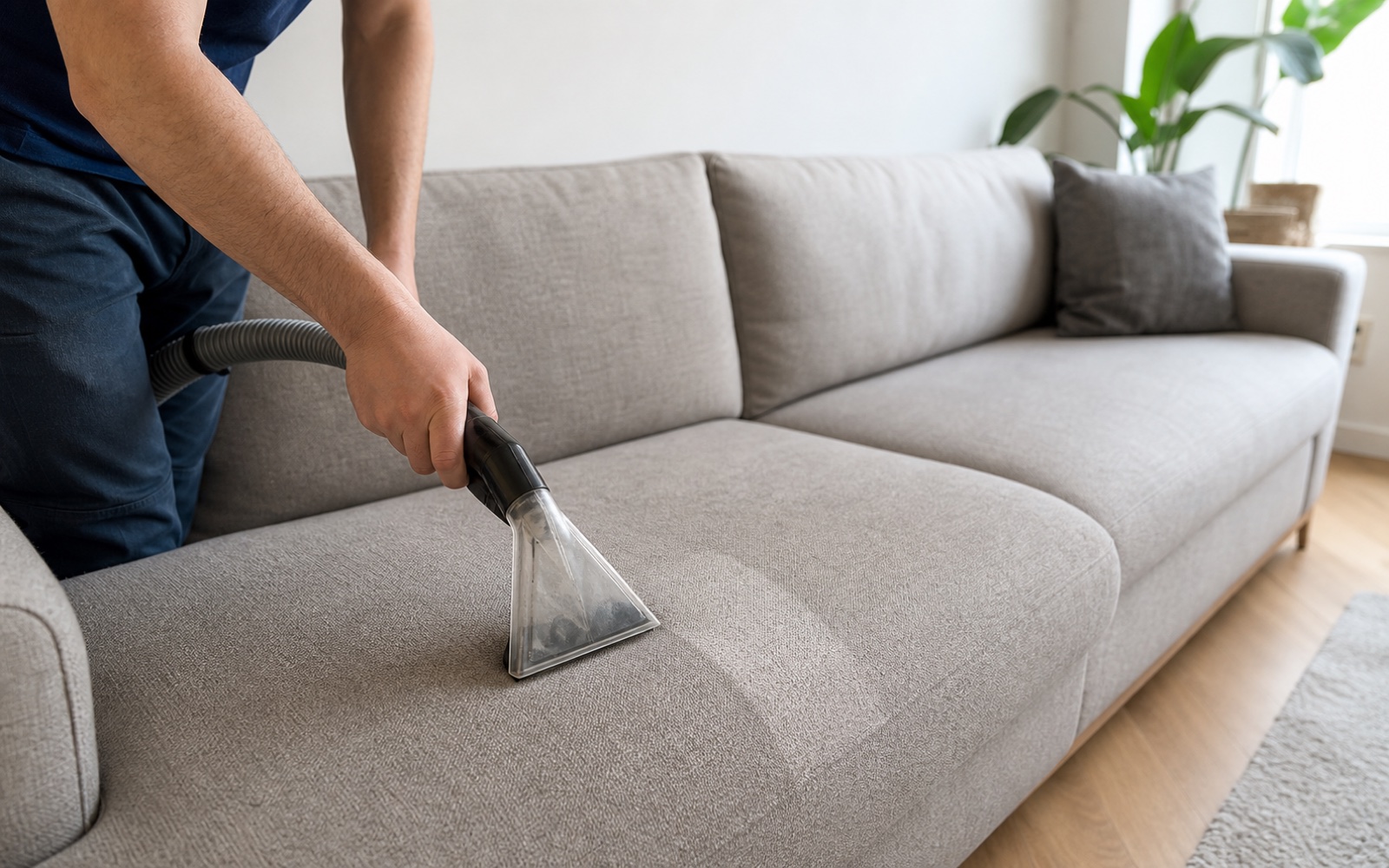
Professional upholstery cleaning uses hot-water extraction or low-moisture methods matched to your fabric, with equipment that rinses the soil out and pulls the water back so it dries fast — not the soak-and-hope you get with a rental machine. For Calgary homes, that fast dry-back matters: it prevents the trapped moisture that turns a refresh into a musty smell.
If your sofa has lost its colour or picked up a smell that won't quit, YOFF refreshes upholstery across Calgary and surrounding communities. We match the method to your fabric and leave it clean and dry, not damp. Get a free quote — No Fix, No Fee.
Rather have YOFF handle it?
We cover upholstery and more across Calgary and nearby communities — booked fast, done right. No Fix — No Fee.