Washing Machine Hose Replacement in Calgary: Prevent a Flood
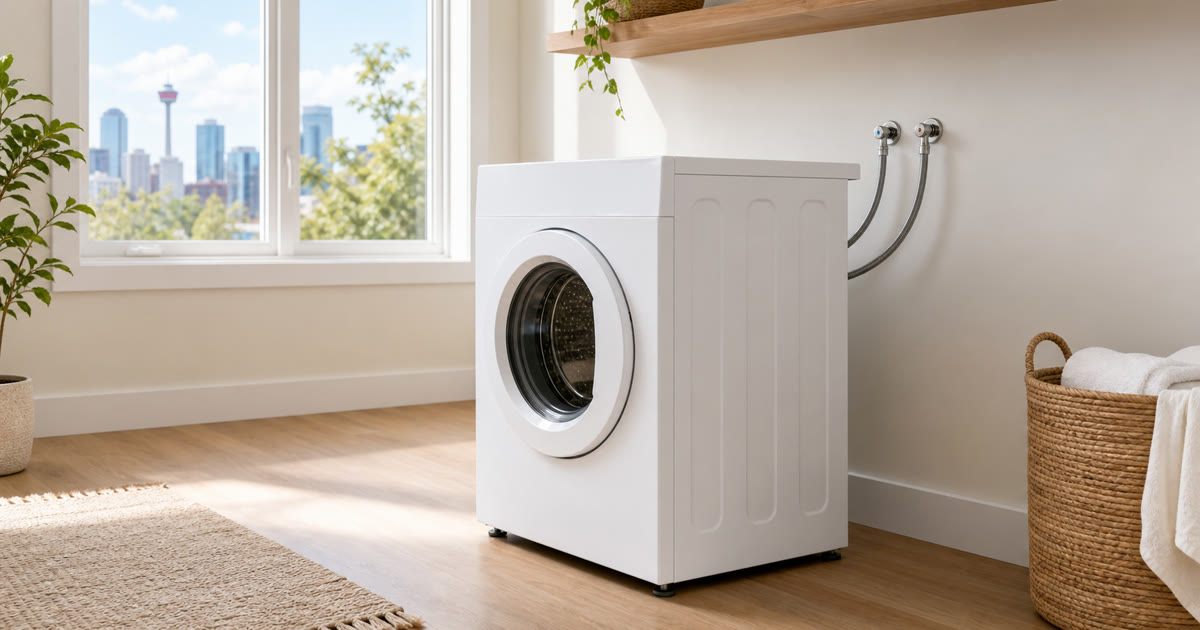
A burst washing machine hose keeps pouring out water at full household pressure until someone shuts it off. In a Calgary basement laundry room — where many of our washers live — that water has nowhere to go but into drywall, baseboards, carpet, and anything stored on the floor. Failed washer hoses are a well-known cause of preventable home water damage. The good news: swapping old rubber hoses for braided stainless steel takes about 20 minutes, costs little, and removes one of the most common failure points.
Why washing machine hoses fail
Rubber hoses — the black ones that probably came with your machine — degrade over time. Three things work against them in a typical Calgary home:
Water pressure. A washer hose holds full household water pressure all day, every day, and every time the machine's valve snaps shut it sends a brief pressure spike down the line. Aged rubber eventually gives way under that constant load.
Hard water. Calgary's water is on the hard side, and mineral scale builds up at fittings and valves over the years. Crusty threads and stiff valves make connections harder to seal and more likely to seep.
Heat and age. Laundry rooms — especially basement ones near the furnace — cycle between warm and cool. That repeated expansion and contraction stiffens rubber until it can't flex under pressure anymore.
Rubber vs. braided stainless steel: the difference is real
| Rubber hoses | Braided stainless steel | |
|---|---|---|
| Typical replacement advice | About every 5 years | Longer life; still inspect regularly |
| Resistance to ballooning | Low once aged | High — the steel jacket contains the core |
| Typical failure | Can split suddenly | More often a slow leak at a fitting |
| Cost | Cheapest option | A little more, still an inexpensive part |
Braided stainless hoses have a rubber core wrapped in a woven stainless steel jacket. The jacket prevents the core from ballooning under pressure. If they fail, it's almost always a slow drip at the threaded fitting — not a geyser. With a basement laundry setup, that difference can mean the difference between wiping up a puddle and replacing flooring across an entire level.
How to inspect your current hoses
Go to your washer and look at the two hoses running from the wall valves to the machine. Look for:
-
Blisters or bulges. Any bubble in the rubber means the inner layer has separated. Replace it immediately — this hose could burst at any time.
-
Cracks at the crimp. Where the rubber meets the metal fitting — if you see hairline cracks, the hose is failing.
-
Corrosion on fittings. Green or white crust on the fittings can seize them onto the valve. If you see it, have our technician swap the hoses before the fittings become unremovable.
-
An old or missing date stamp. Many rubber hoses have a date stamp on the crimp collar. If yours is older than 5 years — or you don't see a date — it's time.
-
Kinks or twists. A hose that was installed twisted or forced into a sharp bend has a weakened spot that gets worse under pressure.
If you see any of these, don't wait. Washer floods happen year-round, and they usually come from hoses someone meant to replace "next week."
How to replace washing machine hoses yourself
This is a 20-minute job. You'll need: two braided stainless steel hoses (measure first — standard is 4 or 6 feet), a bucket, and a towel.
Step 1: Turn off the water
Both valves — hot and cold — on the wall behind the washer. Turn clockwise until snug. Then run the washer on a quick fill cycle for 10 seconds to bleed residual pressure. Turn the washer off.
Step 2: Disconnect the old hoses
Place the bucket under the connection. Unscrew each hose from the machine first, then from the wall valve. Expect some water — the bucket catches it. If the fittings are seized, wrap the brass nut in a rag and use slip-joint pliers gently. Don't crank the valve itself — you can twist copper pipe inside the wall.
Step 3: Check the washers
New hoses come with rubber washers already seated in the fittings. Confirm they're in place and seated flat. Never reuse old washers — they're compressed from years of use and will leak.
Step 4: Connect and hand-tighten
Attach hoses to the wall valves first, then to the machine. Hand-tighten firmly, then add a quarter-turn with pliers. Do not over-tighten — brass threads strip easily, and a stripped valve means cutting into the wall to replace it.
Step 5: Test
Turn both valves on slowly. Run your fingers along every connection. If you feel moisture, tighten another eighth-turn. Run a short wash cycle and check again.
One Calgary-specific tip
Many older Calgary homes in neighbourhoods like Haysboro, Acadia, or Brentwood have the washer in an unfinished basement with exposed copper pipes and decades-old shutoff valves. If your valves are original to a 1970s or 1980s build, they may not close fully. Test them before you start: turn the valve off, then run the washer — if water still flows, the valve is worn. At that point, don't start the hose swap: have the worn valve replaced first (we'll tell you honestly whether it's a quick swap or a job for a specialized company) — it saves you from a half-done hose job that still leaks.
When to call a Calgary handyman
You can replace hoses yourself in most setups. But call a pro if:
- Your valves don't shut off completely, which is common with older valves.
- The shutoff is in a tight or awkward spot — some condo laundry closets have the valves behind the machine with no clearance.
- You see water damage or mould already around the laundry area. That's a sign of a slow leak that's been going on for a while, and you need a broader fix.
- Your water hammer is severe. Hard thumps when the washer's valve closes mean pressure spikes that can stress even new braided hoses. Our technician can fit screw-on water hammer arrestors at the washer connections.
Five habits that extend hose life
- Don't push the washer tight against the wall. Leave at least 4 inches — kinked hoses fail at the bend.
- Inspect twice a year. A 60-second visual check in spring and fall — say, when you change the clocks — catches bulges, cracks, and drips early.
- Install a water alarm. An inexpensive battery-powered sensor placed on the floor behind the washer sounds the moment it detects moisture. In Calgary, where basements are common and laundry is often out of sight, this is some of the cheapest insurance you can buy.
- Replace rubber hoses every 5 years even if they look fine. Rubber degradation happens from the inside out. A hose that looks perfect can still burst next week.
- Know where your house main shutoff is. If a hose does blow, you have seconds, not minutes. Every adult in the house should know exactly where the main water valve is. Walk them through it today.
Related Calgary Home Guides
- Washing Machine Drain Overflowing? Calgary Causes and Fixes
- Furnace Filter Replacement Calgary: Better Air, Lower Bills
- Garden Hose Winterization in Calgary: Drain, Disconnect, Store
Frequently Asked Questions
How often should washing machine hoses be replaced?
Replace rubber hoses every five years, even if they look fine, because they degrade from the inside out. Braided stainless steel hoses last longer, but still deserve a quick look each spring and fall.
Are braided stainless steel washer hoses worth it?
Yes, for most homes. They cost a little more than rubber hoses, but the woven steel jacket stops the core from ballooning under pressure. When they do fail, it is usually a slow drip at the fitting rather than a sudden burst.
How do I know if my washing machine hose is about to burst?
Look for blisters or bulges in the rubber, hairline cracks where the hose meets the metal fitting, rust on the fittings, and kinks or twists. Also check the date stamp on the crimp collar; if the hose is over five years old or has no date, replace it.
What should I do if my washer shutoff valves won't close fully?
Do not start the hose swap. Have the worn valves replaced first; if you need to stop the water in the meantime, use the main shutoff for the house. Otherwise, you may end up with a half-finished job that still leaks.
The bigger picture for Calgary homeowners
Much of Calgary's housing stock is now decades old, and original valves and fittings don't last forever. Across Calgary neighbourhoods — from the mid-century builds of Glenbrook to the newer subdivisions of Mahogany — the story is the same: a small, preventable failure becomes an expensive disaster because nobody looked at the hoses.
A pair of new hoses and 20 minutes of work takes one of the most likely appliance flood risks off your to-do list. If you'd rather not do it yourself, book a YOFF visit: our technician will replace your washing machine hoses with braided stainless steel, check the connections for leaks, and haul the old ones away. If the shutoff valves themselves are worn out, we'll tell you so and point you to a specialized company.
Rather have YOFF handle it?
We cover handyman and more across Calgary and nearby communities — booked fast, done right. No Fix — No Fee.