
How to Fix Water Hammer and Banging Pipes in Your Calgary Home
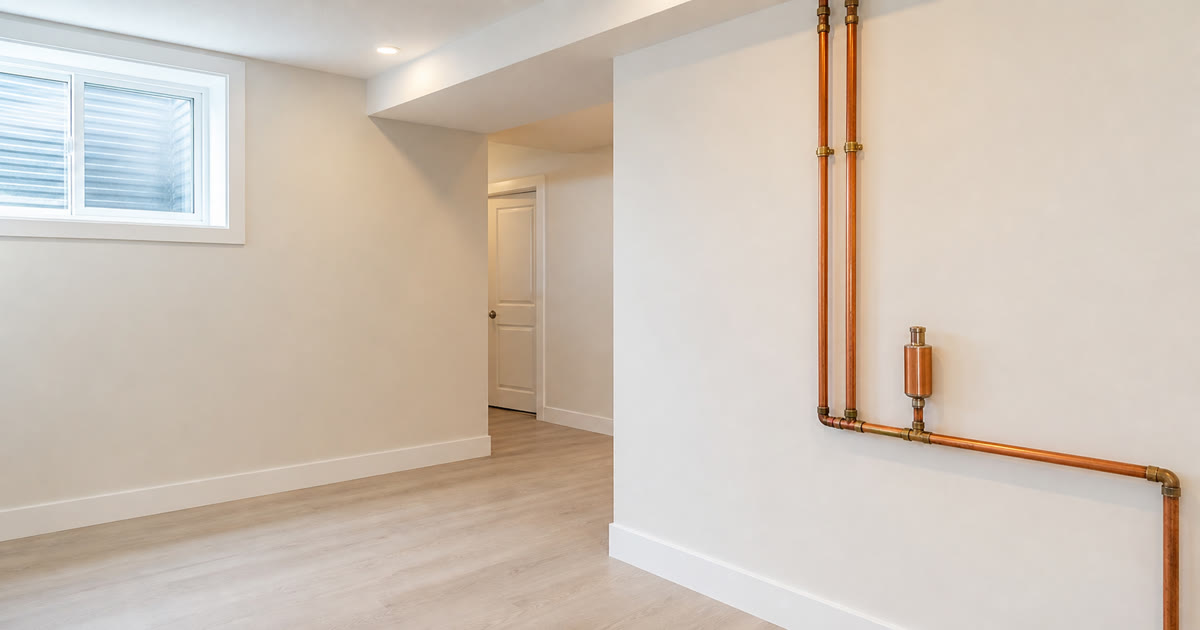
You're in the kitchen in your Calgary home, the dishwasher finishes its cycle, and — BANG — the pipes behind the wall throw a thunderclap. Or maybe it's the washing machine in the basement of your Acadia bungalow, or the toilet refilling in your Brentwood ensuite. Water hammer: loud, jarring, and easy to ignore until it isn't. The good news? In most homes, it can be fixed without opening a single wall.
What Water Hammer Actually Is (and Why Calgary Homes Get It)
Water hammer — called hydraulic shock in engineering terms — happens when water moving through a pipe slams to a stop. Think of a freight train hitting a wall. When a fast-closing valve (dishwasher, washing machine, ice maker, even a toilet fill valve) shuts off water flow in a fraction of a second, the entire column of water behind it — sometimes dozens of metres of pipe in a two-storey house — stops dead. The energy has nowhere to go, so it sends a pressure spike backward through the system. That spike is the bang you hear.
In Calgary homes, three things make water hammer more likely:
1. Older homes with original copper. Calgary neighbourhoods like Haysboro, Brentwood, Falconridge, and Acadia were built heavily in the 1960s through 1980s. Many still have their original copper supply lines, and copper is rigid — it transmits shockwaves efficiently. Over decades, pipe straps loosen, air chambers fill with water, and the system loses its built-in shock absorption.
2. High water pressure. Calgary is a hilly city, and incoming water pressure varies from one neighbourhood — and even one street — to the next. The higher the pressure, the faster the water moves and the stronger the shockwave when a valve snaps shut. A home with high, unregulated pressure will have a noticeably louder hammer than one with moderate pressure.
3. Decades of expansion and contraction. Hot water lines warm up and cool down every time you use them, and pipes in cold basements, garages, and exterior walls shift with the seasons. Copper expands and contracts with every change in temperature, and over the years that movement works pipe straps loose, letting pipes rattle inside walls and floor joists.
Step 1: Find Where the Bang Is Coming From
Before buying parts, isolate the culprit. Here's how to narrow it down:
- Turn on each fixture one at a time, then shut it off fast. Start with the appliance that triggers the noise — usually the washing machine in the basement or the dishwasher in the kitchen. Close the valve quickly (not gently). If you hear the bang, that's your problem circuit.
- Have a helper listen in the basement while you run fixtures upstairs. In a two-storey, pipes often run through the ceiling joists between the main floor and the basement. The bang you hear in the kitchen might originate from a pipe vibrating against a joist in the furnace room.
- Check for loose pipes in the mechanical room. In many homes, the main water line enters through the basement wall and runs along exposed joists. Grab a pipe (gently) and try to wiggle it. If it moves more than a few millimetres, the strapping has failed.
Step 2: Drain the System to Restore Air Chambers
Many homes built before 1990 have vertical air chambers — short lengths of capped pipe above each fixture's shut-off valve. They're designed to trap a cushion of air that absorbs shock. Over years, that air dissolves into the water and the chamber fills up. Restoring it is free and takes 20 minutes:
- Shut off your home's main water valve. In Calgary, this is typically in the basement, near the front foundation wall where the city line enters. If you're in a condo downtown or in the Beltline, the main shutoff might be in a utility closet — check with your building.
- Open every faucet in the house, hot and cold. Start from the highest floor (top of the stairs in a two-storey) and work down. Don't forget basement laundry sinks and outdoor hose bibs.
- Flush every toilet once to drain the tanks.
- Wait five minutes. This lets all the water drain down and air refill the air chambers.
- Close all faucets, starting from the lowest (basement) and working up.
- Turn the main valve back on slowly. Open it a quarter-turn, let the system fill partially, then open it fully.
- Go room to room and bleed air from each faucet until water flows smoothly.
Test your noisy fixture. If the bang is gone or significantly quieter, your air chambers were waterlogged. If it returns within a week, the chambers may be permanently failed — common in homes over 40 years old — and you need a mechanical fix.
Step 3: Install Water Hammer Arrestors
If draining didn't solve it, the definitive fix is a water hammer arrestor — a small device that screws inline at the problem fixture. Inside is a piston or diaphragm with a sealed air cushion behind it that absorbs the shockwave mechanically. They don't waterlog over time.
Arrestors are inexpensive and sold at most hardware stores. Installation at an accessible fixture is straightforward:
For a washing machine (the most common culprit):
- Unplug the washer and pull it away from the wall.
- Shut off the hot and cold valves at the wall box.
- Unscrew the supply hoses from the valve side (not the washer side).
- Thread the arrestors onto the valves — they go between the valve and the hose. Hand-tighten, then a quarter-turn with pliers. Don't overtighten.
- Reconnect the hoses, turn the valves on slowly, and check for drips.
For a dishwasher (common complaint after kitchen remodels): Dishwasher water hammer arrestors install at the shut-off valve under the kitchen sink. You'll need a tee-fitting arrestor or an inline arrestor on the dishwasher's hot water supply line. If your home has a cramped under-sink cabinet — common in older Brentwood and Haysboro kitchens — a compact arrestor that threads directly onto the shut-off valve is the easiest route.
For toilet fill valves (the "clunk" you hear in the middle of the night): Install a small threaded arrestor at the toilet's shut-off valve — the same thread size as a standard 3/8-inch compression fitting used in most homes.
Step 4: Secure Loose Pipes
If the bang persists after arrestors, the pipes themselves are moving. In many basements, copper lines run across open ceiling joists, held by plastic or metal pipe straps at regular intervals. Over 30–40 years, those straps can crack, pop loose, or simply slide.
In your basement, look up at the joist runs. Where a pipe passes through a joist hole without a strap nearby, add one — a simple two-piece pipe clamp costs a few dollars at any hardware store. Wrap the pipe with a thin rubber sleeve or felt where it contacts the clamp to prevent ticking as the pipe expands and contracts with hot water use.
If the pipes run inside finished walls — in a renovated kitchen, for example — and you can't reach them without cutting drywall, try the arrestor at the fixture first. That alone often eliminates the pressure spike that was moving the pipe.
Step 5: Check and Adjust Your Water Pressure
High pressure amplifies water hammer. The City of Calgary supplies water at enough pressure to reach upper floors without a booster pump, but if your home's incoming pressure exceeds 80 psi, you should already have a pressure-reducing valve (PRV) — building codes generally call for one when incoming pressure is that high.
To check your pressure:
- Buy a simple, inexpensive pressure gauge that threads onto a hose bib.
- Attach it to an outdoor faucet — your backyard hose bib, or the laundry sink tap in the basement.
- With no water running elsewhere in the house, the reading should be between 40 and 60 psi. Above 80 psi needs attention.
If your PRV has failed or was never installed (possible in older Calgary homes), replacing or installing one is a job for a specialized company, because it means cutting into the main supply line. The PRV sits on the main water line where it enters your home, before the first branch, and it protects every pipe, fixture, and appliance downstream — including your new arrestors.
When to Call a Calgary Handyman
Most homeowners can handle steps 1–3 in a Saturday afternoon. Call our technician when:
- You can't find the main shut-off valve, or it's seized. That's surprisingly common in 50-year-old homes.
- You suspect the PRV has failed. We can check your pressure and confirm the problem; replacing the valve itself means cutting into the main supply line, so that part goes to a specialized company. A mistake there means a flooded basement.
- The bang persists after arrestors and strapping. This may point to a deeper issue in the water lines — a partially closed gate valve, a failing water softener check valve, or mineral buildup creating a flow restriction that amplifies the shockwave.
- You simply don't want to wrestle a washing machine out of a tight laundry closet. We understand.
YOFF serves Calgary homeowners from Bowness to Cranston, Falconridge to Signal Hill. Our technician installs water hammer arrestors at the washer, dishwasher, and toilet, secures loose pipes in open basement ceilings, and checks your water pressure — so your home sounds as good as it looks.
Related Calgary Home Guides
- Basement Water Seepage Calgary: 7 Early Warning Signs
- Dishwasher Not Cleaning? The Calgary Hard Water Fix That Works
- How to Find and Shut Off Your Home's Main Water Valve in Calgary
Frequently Asked Questions
Is water hammer dangerous for my pipes?
It isn't an emergency, but it shouldn't be ignored. Repeated pressure spikes stress solder joints, compression fittings, and appliance valves over time, and a joint that fails inside a wall is far more expensive than fixing the bang now.
Why do my pipes bang when the washing machine shuts off?
Washing machines, dishwashers, and toilet fill valves close very quickly, stopping the moving column of water in a fraction of a second. The resulting pressure spike travels back through the pipes and makes them knock, especially if straps are loose or air chambers are waterlogged.
Will draining my water system stop water hammer?
It can if your home has older air chambers that have filled with water. Shutting off the main, draining every faucet, and refilling slowly restores the air cushion. If the bang returns within a week, a water hammer arrestor at the noisy fixture is the more lasting fix.
What water pressure is normal for a Calgary home?
With no water running elsewhere, a gauge on a hose bib should read roughly 40 to 60 psi. Readings above 80 psi need attention, because high pressure makes water hammer louder and puts extra strain on fixtures and appliances.
The Bottom Line
Water hammer isn't just noise. Over months and years, repeated pressure spikes stress every solder joint, compression fitting, and appliance valve in your Calgary home. A silent joint failure inside a wall is a much more expensive problem than an inexpensive arrestor and an hour of work. If it's been banging for months, take the Saturday and fix it — or book a water hammer visit with YOFF. Our technician will find the noisy fixture, fit the right arrestor, and strap down loose pipes, usually in a single visit.
Rather have YOFF handle it?
We cover handyman and more across Calgary and nearby communities — booked fast, done right. No Fix — No Fee.