Water Heater Maintenance Calgary: How to Flush Sediment and Extend Tank Life
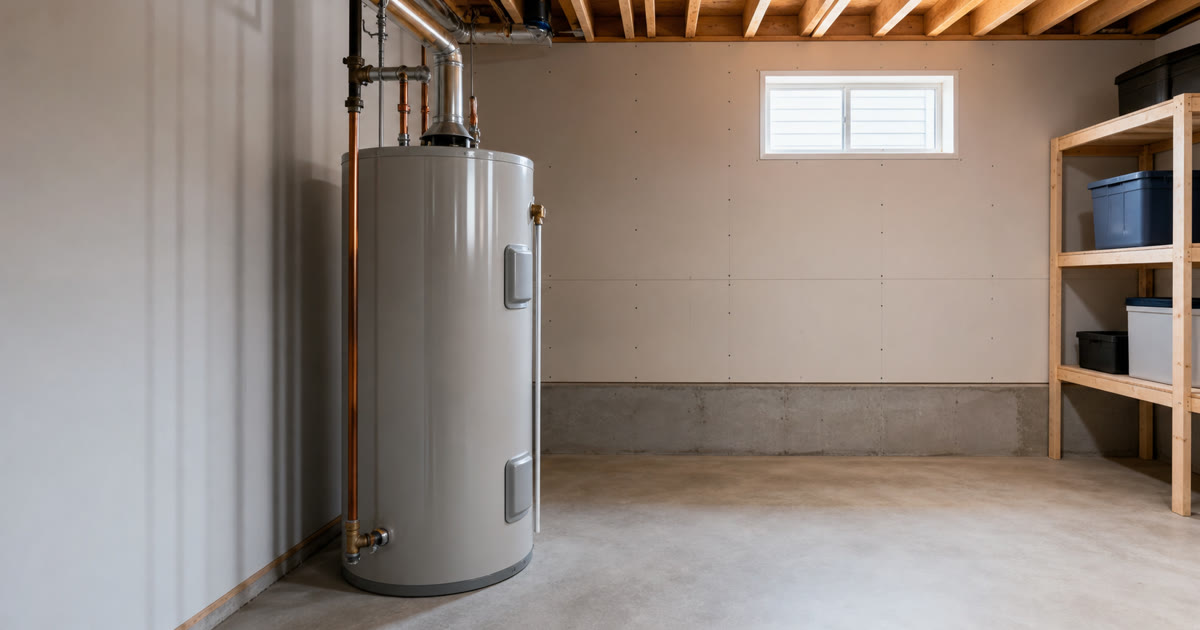
Your water heater works every day — morning showers, laundry, dishes — and in Calgary it has a quiet enemy: sediment. The Bow and Elbow rivers give us clean drinking water, but they also leave behind calcium and magnesium carbonates that settle at the bottom of every hot water tank in the city. Left alone, that layer of sediment robs efficiency, shortens the tank's life, and eventually leaves you with a cold shower and a replacement bill.
Flushing your water heater once a year is the simplest thing most Calgary homeowners never do. Here's how to do it right, when to tackle it yourself, and when a handyman call makes more sense.
Why Calgary's hard water is tough on water heaters
Calgary's water hardness ranges between 150 and 220 mg/L depending on the season — that's moderately hard to hard by any standard. Every time cold water enters your tank and gets heated, minerals precipitate out and sink to the bottom. Over a year, a typical Calgary household can accumulate an inch or more of sediment in a 40-gallon tank.
Here's what that sediment does:
- Acts like insulation — on the wrong side. Gas burners fire underneath the tank, but sediment blocks heat transfer. The burner runs longer to achieve the same water temperature. In older Calgary homes in neighbourhoods like Bowness or Forest Lawn where tanks may already be past their prime, this extra strain accelerates failure.
- Creates hot spots on the tank bottom. Trapped heat under a sediment layer can overheat the steel, causing microfractures. Once the glass lining cracks, rust follows — and a rusted tank is a replacement, not a repair.
- Reduces capacity. Sediment takes up physical space. A tank with half an inch of buildup isn't a 40-gallon tank anymore — it's closer to 35. In a busy Calgary household, that means the third shower runs cold.
- Clogs the drain valve. When sediment piles high enough, it blocks the very valve you'd use to flush it. At that point, a simple DIY job becomes a handyman call.
Alberta's water quality is consistent across the province, but Calgary homes with older copper plumbing and galvanized pipes (common in Acadia, Haysboro, and Brentwood) can introduce additional sediment from pipe corrosion. The combination of mineral hardness and aging infrastructure means Calgary water heaters work harder than average.
Signs your water heater needs a flush
You don't need to drain the tank to know there's a problem. Watch for these clues — they're common across Calgary homes:
- Popping or rumbling noises. As the burner heats sediment-trapped water, steam bubbles force their way through the mineral layer. It sounds like rocks rattling. If you hear this from your basement in Falconridge or Marlborough, sediment has already built up significantly.
- Water temperature fluctuates. The shower goes hot-cold-hot for no obvious reason. Sediment blocks consistent heating.
- Longer recovery time. After a bath or a laundry load, the tank takes noticeably longer to reheat.
- Rust-coloured hot water. Not to be confused with rusty cold water (which points to pipe issues). If only the hot side runs brown, the tank itself is corroding — a flush may help, but replacement is likely near.
- Sediment visible at faucets. Tiny white or tan particles in the aerator screens of your Calgary faucets indicate tank sediment is breaking loose and circulating through the system.
Any two of these together mean it's past time for maintenance.
How to flush a water heater — step by step
Flushing a water heater isn't technically complex, but it involves hot water, electrical shutoff, and a drain that may be stubborn. Set aside two hours the first time — experienced hands can do it in 45 minutes. This procedure works for both gas and electric tanks, which cover the vast majority of Calgary installations.
Tools you'll need:
- Garden hose (long enough to reach a floor drain or outside)
- Flathead screwdriver (for drain valve, if plastic)
- Bucket (to catch spillage at the valve)
- Work gloves (hot water risk)
Step 1: Turn off the energy source
For a gas water heater, turn the gas control knob to "Pilot." This keeps the pilot light lit but stops the main burner. For an electric tank, flip the breaker at the panel. This is non-negotiable — running an electric element dry will burn it out in under a minute.
Calgary tip: label your breakers during this process if they aren't already. Many Calgary homes built in the 70s through 90s in communities like Thorncliffe or Huntington Hills have faded or missing panel labels.
Step 2: Shut the cold water supply
The cold water inlet valve sits at the top of the tank — follow the pipe from the wall. Turn it clockwise fully. If the valve is stiff or corroded (common in Calgary basements with higher humidity), don't force it — that gate valve can snap. Stop and call a handyman.
Step 3: Connect the hose and open a hot faucet
Thread a garden hose onto the drain valve at the bottom of the tank. Run it to a floor drain, sump pit, or outside (gravity-fed only — don't aim uphill). Then open any hot faucet in the house — a bathroom sink works fine. This breaks the vacuum and lets the tank drain.
Step 4: Open the drain valve
Slowly open the drain valve. If it's a plastic valve (common on newer tanks), use a flathead screwdriver. Be ready with a bucket — the first few litres will be messy. The water coming out will look milky, brown, or even chunky with white sediment.
Step 5: Flush with cold water bursts
Once the tank drains fully, turn the cold water supply back on for 30 seconds with the drain still open. This stirs up remaining sediment and pushes it out. Repeat 2–3 times until the water runs clear. For Calgary tanks that haven't been flushed in several years, you may need 5–6 cycles.
Step 6: Close up and refill
Close the drain valve. Remove the hose. Make sure the hot faucet indoors is still open — this lets air escape as the tank refills. Turn the cold water supply back on. When water flows steadily from the open faucet (no sputtering), the tank is full and air is purged. Close the faucet.
Step 7: Restore power/gas
For gas: turn the control knob back from "Pilot" to "On." For electric: flip the breaker back. Wait 30–45 minutes for a full heat cycle before running hot water.
When to call a handyman instead
Some situations make DIY flushing risky. In Calgary, these are the most common:
- The drain valve is plastic and seized. Older plastic valves snap under torque. A handyman can replace it with a brass ball valve — better for future flushes in Calgary's mineral-heavy water.
- You have a tankless (on-demand) unit. These require a descaling procedure with a pump and vinegar solution, not a simple flush. Incorrect cleaning can damage the heat exchanger.
- Your tank is over 10 years old. In Calgary's hard water, the average tank lifespan is 8–12 years. An older tank may not survive a first-ever flush — the sediment may actually be plugging pinhole leaks. A handyman can assess whether flushing is safe or whether replacement is the smarter play.
- No accessible floor drain. If you're hauling buckets up the stairs from a basement in an older Calgary home without a floor drain (some wartime-era houses in the inner city), the labour isn't worth the risk of a spill.
- The TPR (temperature-pressure relief) valve needs testing or replacement. This is a safety device and worth having a professional look at during the same visit.
YOFF handles water heater flushing and drain valve replacement as part of standard handyman services across Calgary and surrounding Alberta communities.
How often should you flush?
Once a year is the sweet spot for Calgary water. If your household uses a water softener, you can stretch it to 18 months — softened water precipitates less mineral content. If you're on untreated well water outside the city (some acreages around Springbank or Bearspaw), flush every 6 months.
Pair the flush with an anode rod inspection every 2–3 years. The anode rod is a sacrificial magnesium or aluminum rod inside the tank that attracts corrosion so the steel walls don't rust. In Calgary's water, anode rods deplete faster than average — checking and replacing a spent rod can add 3–4 years to a tank's life.
The cost of skipping maintenance
A standard 40-gallon gas water heater replacement in Calgary runs roughly $1,200–$1,800 installed, depending on access and venting complexity. A tank that could last 12 years with annual flushing might fail at year 7 without it. That's the math: fifteen minutes of maintenance once a year versus an early $1,500 bill.
Energy cost is the hidden factor. Natural Resources Canada data shows that a sediment-filled tank can use 25–30% more energy to deliver the same hot water. Over a Calgary heating season, that's real dollars on your ATCO or Enmax bill — and with Alberta energy prices, efficiency matters.
Bottom line
Flushing your water heater is one of the highest-ROI maintenance tasks a Calgary homeowner can do. It's straightforward, costs nothing but time, and protects a major appliance that you rely on every single day. If the drain valve fights you, if the tank is older, or if you'd simply rather spend the afternoon on something else — call a handyman who knows Calgary water and Calgary tanks.
Need a hand with your water heater? YOFF Home Services does tank flushing, drain valve replacement, and water heater maintenance across Calgary and the surrounding area. Get in touch.
Rather have YOFF handle it?
We cover handyman and more across Calgary and nearby communities — booked fast, done right. No Fix — No Fee.