Loose Door Handle in Calgary? A Simple Fix Before It Fails
A loose door handle is easy to ignore—until the latch stops catching, the lever droops, or someone gets stuck turning it. In a Calgary home, this is usually a small hardware job, not a reason to replace the whole door. With a screwdriver, a careful inspection, and a few minutes, many homeowners can find out whether the handle simply needs tightening or whether a worn part needs attention.
Start by noticing how the handle is loose
Open the door and work on it while it is open. That removes the risk of closing a latch that is not working properly and makes it easier to see what moves.
Try the handle in a few ways:
- Lift and lower the lever without turning it. Movement at the round plate or trim usually points to loose mounting screws.
- Turn the lever slowly. If it turns but the latch barely moves, the problem may be inside the handle or spindle.
- Push the latch in with a finger, then release it. It should move smoothly and spring back fully.
- Close the door gently and check whether the latch meets the strike plate without lifting, pushing, or slamming the door.
That quick check separates a loose handle from a door-alignment problem. A handle can be tight while the latch still misses its opening because the door has sagged or the strike plate has shifted.
Find the screws before buying new hardware
Interior door hardware comes in several styles, and Calgary homes often have a mix—original knobs in an older Acadia bungalow, lever handles from a later renovation, and newer hardware in a Seton townhouse. Look closely before removing anything.
Visible mounting screws. Many handles have two screws on the inside plate. Tighten them a little at a time, alternating between screws so the plate sits evenly against the door.
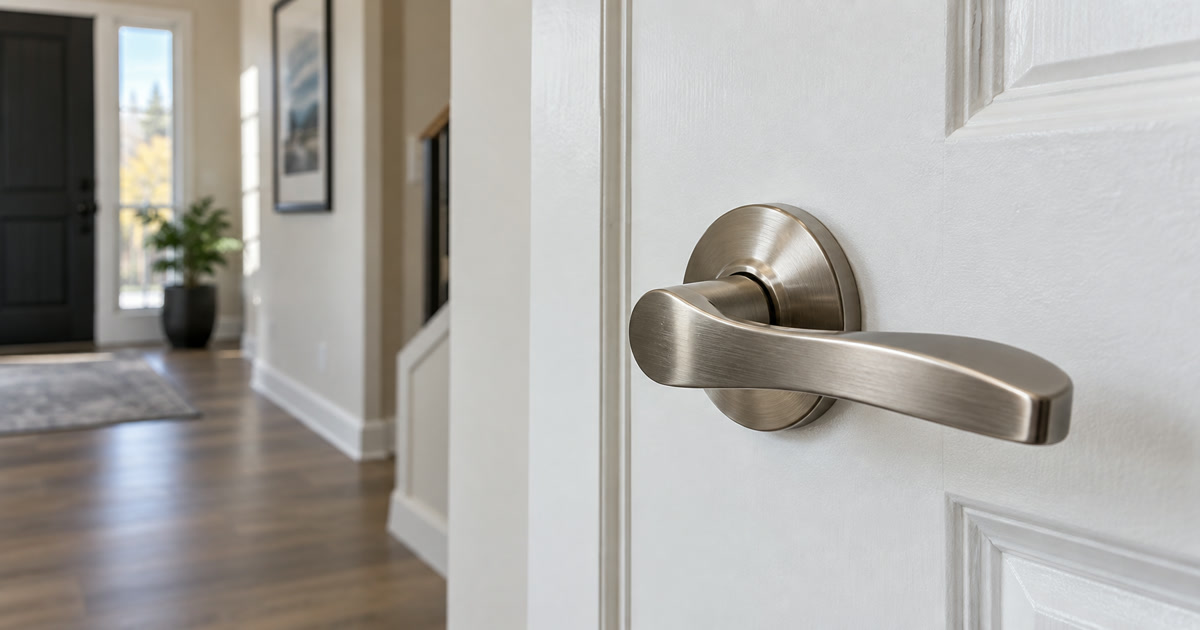
A hidden set screw. Lever handles often have a tiny screw on the underside of the lever neck. Use the correctly sized Allen key and tighten it gently. This small screw holds the lever to the square spindle; overtightening can damage the threads.
A decorative cover plate. Some handles hide their mounting screws behind a snap-on or twist-off trim ring. Look for a small release slot or seam. Use a thin flat tool carefully and protect the door finish with a piece of tape.
Latch faceplate screws. On the narrow edge of the door, the latch plate normally has two screws. If they are loose, the latch can sit proud of the door edge or shift slightly during use. Tighten these after the handle screws.
The useful rule is simple: tighten only the screws designed for the handle. Do not drill new holes or force a trim plate until you know what style of hardware you have.
A safe five-minute tightening sequence
For a standard interior lever or knob, follow this order:
- Keep the door open and place a towel under the handle to catch a dropped screw.
- Tighten the two mounting screws until the plate is snug—not crushing the door surface.
- Tighten the small set screw if the lever itself still wiggles.
- Tighten the two screws on the latch faceplate at the door edge.
- Turn the handle several times and make sure the latch retracts and springs out freely.
- Close the door gently and test that it latches without force.
Stop if the handle suddenly binds, the latch no longer returns, or a screw turns endlessly. Forcing a handle can turn a simple hardware adjustment into a damaged latch or marked-up door.
When tightening does not solve the problem
Repeatedly loose hardware usually means one of the parts has worn out. This is common on busy doors such as a basement bathroom, a bedroom used as a home office, or a garage-to-house entry that gets used all winter.
Look for these clues:
- A screw spins without tightening. The screw hole in the door or mounting plate may be stripped.
- The plate is tight but the lever moves. The set screw, spindle, or internal handle mechanism may be worn.
- The latch stays in or feels gritty. The latch body may be failing and should be replaced rather than lubricated heavily.
- The latch hits above, below, or beside the strike plate. This is an alignment issue, often related to hinges or the door frame rather than the handle itself.
- The handle is on an exterior or fire-rated door. Do not modify the door or swap hardware casually; these are often specific door assemblies where the correct hardware matters for safety and security.
If you remove a handle to inspect it, keep all screws together and take a clear photo before heading to a hardware store. The backset, door thickness, handing, and hole positions need to match a replacement. A similar-looking handle is not always a direct fit.
Avoid these common quick fixes
The aim is a handle that works smoothly and a door that closes normally. A few shortcuts tend to make the next repair harder.
- Do not spray heavy oil into the latch. It can collect household dust and leave a sticky residue.
- Do not keep tightening a stripped screw. It will not create new material for the threads to hold.
- Do not shave or sand the door because the latch misses once. Check the hinges and strike plate first.
- Do not force a stuck interior privacy lock. If it is a bathroom or bedroom lock, take care not to trap anyone on the other side.
- Do not use a mismatched long screw where it could interfere with a lockset or door construction.
These small precautions are particularly helpful in older Calgary homes in Bowness, Haysboro, and Mount Pleasant, where a door, frame, and hardware may each come from different renovation eras.
When a Calgary handyman is the better call
DIY is a good fit when the handle only needs its accessible screws tightened and the door already closes squarely. Bring in a Calgary handyman when the repair involves stripped holes, a failed latch, a damaged door edge, several mismatched handles, or a strike plate that needs careful adjustment.
It also makes sense to ask for help when several interior doors are acting up at once. Our technician can assess the hinges, latch alignment, and hardware together, then make minor repairs without turning each door into a separate weekend project. For exterior, fire-rated, or security-related doors, we'll also tell you when the job needs a specialized door company.
Related Calgary Home Guides
- Weatherstripping Calgary: Seal Door and Window Drafts
- Garage Door Maintenance in Calgary: A Homeowner's DIY Guide
- Kitchen Cabinet Hinge Repair Calgary: Fix Loose Doors Fast
Frequently Asked Questions
How do I tighten a loose interior door handle?
Keep the door open, then tighten the two mounting screws on the inside plate a little at a time, alternating between them. If the lever still wiggles, look for a small set screw under the lever neck and tighten it gently with the right Allen key. Finish by tightening the two latch faceplate screws on the door edge.
Why does my door handle keep coming loose?
Repeated loosening usually means a part is worn. A screw that spins without tightening points to a stripped hole, and a lever that moves while the plate is tight can mean a worn set screw, spindle, or internal mechanism. Busy doors, like a basement bathroom or garage entry, wear out faster.
Can I replace a door handle myself?
For a standard interior door, often yes, as long as the replacement matches the backset, door thickness, handing, and hole positions. Take a photo and bring the old parts to the store. Exterior, fire-rated, or security doors are better left to a professional.
Should I spray oil into a sticky door latch?
No. Heavy oil collects household dust and leaves a sticky residue. If the latch stays in or feels gritty, it is usually failing and should be replaced rather than oiled.
Put small door hardware on your Calgary maintenance list
Check handles when you do a seasonal walk-through of your Calgary home: turn each lever, test the latch, and tighten anything that has started to move. A handle usually gives plenty of warning before it fails completely. Catching it early keeps the repair simple and helps every door in the house close the way it should.
If a loose handle has become a stubborn latch or a misaligned door, YOFF can help. Our technician can repair stripped screw holes, tighten or replace interior door handles and latches, realign the strike plate, and give you a clear next step when a specialized door repair is the better fit. Book a handyman visit in Calgary.
Rather have YOFF handle it?
We cover handyman and more across Calgary and nearby communities — booked fast, done right. No Fix — No Fee.