Low Flow Toilet Upgrade Calgary: Save Water, Skip Clogs
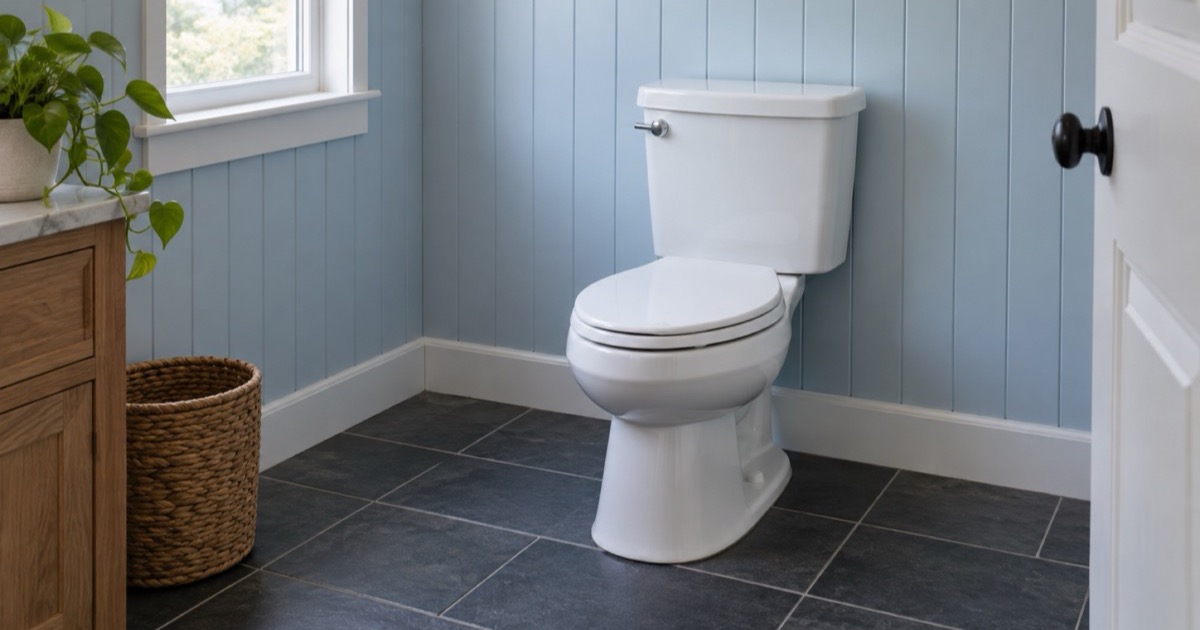
Low-flow toilets have a reputation: great for the water bill, terrible at actually flushing. That reputation is mostly left over from the first generation of models in the 1990s. If you're planning a low flow toilet upgrade in Calgary, the right model today saves a lot of water and still clears the bowl in one flush.
This guide covers how much water you can really save, what to look for so you don't end up double-flushing, and what the swap looks like in a typical Calgary home.
Why a low flow toilet upgrade makes sense in Calgary
Toilets are one of the biggest water users inside a house. The City of Calgary notes that the bathroom uses more water than all the other rooms combined, and that the average Calgarian uses about 7,000 litres of water per month (that figure includes outdoor watering).
The per-flush difference is where the savings come from:
- Toilets installed in Canadian homes before about 1996 commonly use 13 litres or more per flush, and some older ones use even more.
- A standard toilet flush in Calgary is often around 6 litres.
- A low-flow (high-efficiency) toilet uses 4.8 litres or less per flush, according to the City of Calgary.
If you live in an older part of the city, such as Acadia, Haysboro or Brentwood, there's a decent chance the original toilet is still in the bathroom. Swapping a 1980s tank for an efficient model can cut flush water by more than half.
Calgary's old toilet replacement rebate program ended in 2016, so there's no City rebate to count on. Check the City's website before you buy in case something new has launched. The savings are in the water bill and in not wasting water on every flush for the next 20 years.
The myth: low flow means more clogs
Early low-flow toilets simply took an old design and gave it less water. They relied on gravity alone and often couldn't push waste through the trap. That's where the clogging reputation comes from.
Modern toilets are redesigned from the inside out:
- Larger trapway and glazed passage. A wider, smoother path lets waste move through with less water.
- Better bowl shape and rim jets. Water is directed to scour the bowl, not just fill it.
- Pressure assist or tuned gravity flush. The water arrives faster, which matters more than raw volume.
When people have constant clogs with a new toilet, the cause is usually one of these, not the low-flow rating itself:
- A cheap model with poor flush performance.
- Too much toilet paper, or "flushable" wipes that aren't truly flushable.
- A partially blocked drain line or drain vent in the house.
- An installation problem, such as a poorly seated flange.
That third point matters in Calgary, where many homes from the 60s and 70s have aging drain lines. Our guide to drain vent problems in old homes explains why a toilet can flush sluggishly even when the toilet itself is fine.
How to pick a low-flow toilet that really flushes
Don't buy on the "4.8 L" sticker alone. Use this checklist.
Look at the flush performance rating
The MaP (Maximum Performance) test measures how much waste a toilet clears in a single flush. WaterSense tank-type toilets have to remove at least 350 grams of waste and use no more than 4.8 litres (1.28 gallons) per flush. Higher MaP scores mean fewer double flushes. Many manufacturers publish their MaP results, so look them up before you buy.
Choose the right flush type
- Single flush, gravity: Quiet, simple and easy to repair. A good middle ground for most homes.
- Dual flush: A small flush for liquid waste, a full one for solids. Saves more water but has more parts that can wear out.
- Pressure assist: Strong, fast flush. It's louder and the parts cost more if something fails.
Check the fit before you fall in love
- Rough-in distance: The measurement from the wall to the center of the floor drain. Most toilets are built for 12 inches. Older Calgary houses sometimes have 10 or 14 inch rough-ins.
- Round vs. elongated bowl: Elongated is more comfortable, but it needs a little more room in tight powder rooms.
- Height: A comfort-height bowl is easier for most adults and for anyone with sore knees.
Think about cleaning
A skirted (smooth-sided) toilet is easier to wipe down, and a fully glazed trapway resists buildup. If your water is hard, you'll also see mineral spots on the bowl and in the tank. Our post on hard water buildup in Calgary covers how that affects fixtures.
What a toilet upgrade involves
Replacing a toilet is a straightforward job for a trained technician, but small mistakes cause leaks that go unnoticed until the subfloor is damaged. A typical visit looks like this:
- Shut off the water at the toilet's supply valve and drain the tank and bowl.
- Disconnect the supply line and unbolt the old toilet from the floor.
- Lift it out and inspect the flange. The flange is the ring on the floor that the toilet bolts to. If it's cracked, rusted or sitting too low, it needs repair before the new toilet goes in.
- Clean the area and set a new wax ring or wax-free seal.
- Set the new toilet level, tighten the bolts evenly and cap them.
- Connect the water, replace the supply line if it's old, and check for leaks.
- Test several flushes and check the base, tank bolts and connection for drips.
Some of the hidden problems we see in Calgary homes: a loose flange from decades of rocking, a soft or stained floor around the base, and a supply shut-off valve that doesn't fully close. If your current toilet rocks, read our guide on fixing a wobbly toilet first. A reset and reseal may solve it without a new toilet.
For a deeper look at when replacement is the better choice, see toilet replacement in Calgary: signs it's time.
Repair or upgrade? A quick decision guide
Not every toilet needs replacing. Before you upgrade, think about the age and the problem:
- Constant running or phantom flushes: Often a worn flapper or fill valve. Check running toilet causes and fixes first.
- Cracks in the bowl or tank: Replace it. Repairs don't hold.
- Leaks at the base: Could be a failed seal, but a repeat leak points to a bad flange or damaged floor.
- Pre-1996 toilet in a house with a high water bill: This is the strongest upgrade case. The savings add up every day.
- Repeated clogs on a toilet that's already low-flow: Check the drain line before spending money on a new bowl.
Habits that keep a low-flow toilet clog-free
A good toilet still needs reasonable use. In Calgary's winter, when drain lines are colder and the household uses more water indoors, these habits help:
- Flush only toilet paper and human waste. Skip wipes, even the ones labelled flushable.
- Use less paper per flush, or flush twice for big loads instead of risking a clog.
- Keep the tank clean so mineral buildup doesn't slow the flush valve.
- Fix a running toilet quickly. It wastes more water in a day than you'd save with any upgrade.
See our list of what not to put down your drains for the full picture.
FAQ
Do low-flow toilets clog more than older toilets?
Not if you choose a good model. Modern low-flow toilets are designed with wider passages and stronger flush action. Clogs usually come from poor-quality models, too much paper, wipes or a blocked drain line.
How much water does a low-flow toilet save?
A low-flow toilet uses 4.8 litres or less per flush. Older Canadian toilets from before about 1996 commonly use 13 litres or more, so the savings per flush can be large. Your actual savings depend on how many people live in the home and how often you flush.
Is a dual-flush toilet worth it in Calgary?
It can be. Dual-flush models save extra water on liquid waste. They have more moving parts, so choose a reputable brand with easy-to-find replacement parts.
Can YOFF install the toilet I already bought?
Yes. Our technician can remove your old toilet and install the new one in Calgary, including a new wax ring, supply line and a leak test. It helps to confirm your rough-in size before you buy.
How long does a toilet replacement take?
Most standard swaps take around one to two hours. If the flange or floor needs repair, plan for more time.
Ready to upgrade your toilet?
If your toilet is old, running up your water bill or just not flushing well, a low flow toilet upgrade is one of the easiest ways to improve your Calgary bathroom. YOFF Home Services handles toilet replacement across Calgary and area, with No Fix, No Fee on our work. Get in touch for a quick quote and we'll help you choose a model that fits your home.
Rather have YOFF handle it?
We cover faucets and more across Calgary and nearby communities — booked fast, done right. No Fix — No Fee.