Frost-Free Hose Bib Replacement in Calgary: Is It Time?
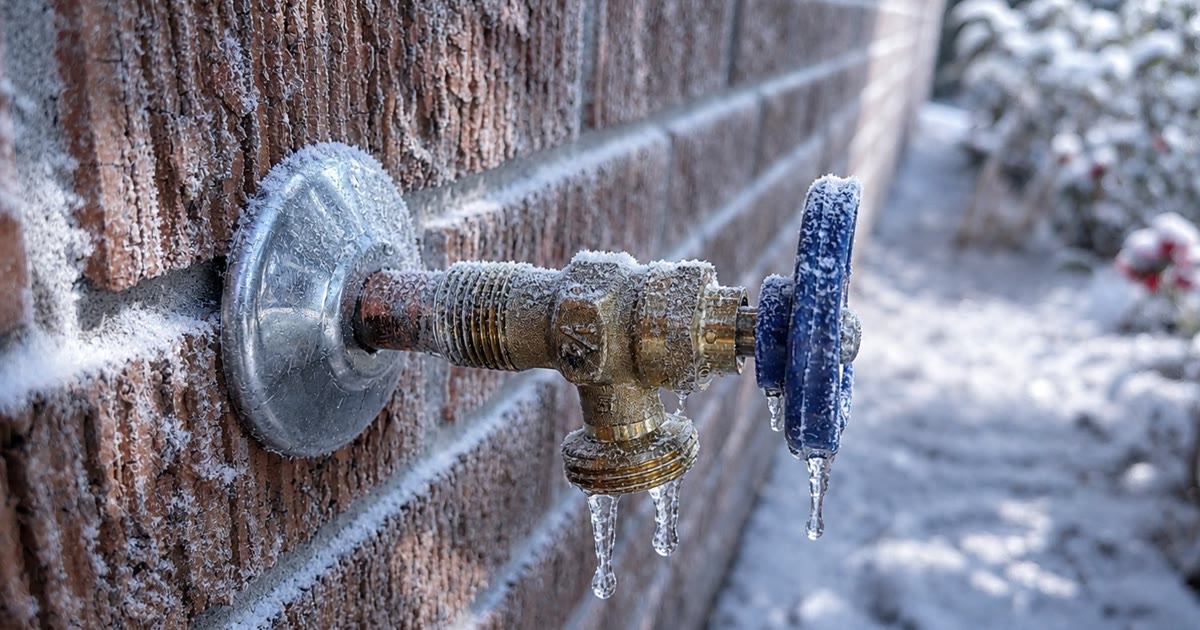
A frost-free hose bib is supposed to be the "install it and forget it" outdoor faucet. In a Calgary winter, though, even a good one can wear out, get installed wrong, or quietly leak inside the wall. The fall, before the deep cold arrives, is the best time to find out which one you have.
Here's how a frost-free hose bib works, the signs it's time to replace yours, and what the swap involves.
How a frost-free hose bib actually works
A regular outdoor spigot closes right at the outside wall. Any water sitting behind that valve is exposed to the cold, so it can freeze, expand and crack the pipe.
A frost-free hose bib uses a long stem instead. The valve seat sits several inches back inside the wall, in the warm part of the house. When you shut it off, the water left in the barrel drains out through the spout.
That draining part only works if the bib is installed with a slight downward slope toward the outside. If it points level or tilts upward, water stays trapped and can freeze, even though the faucet is labeled "frost-free."
A hose left attached in freezing weather causes the same problem. It stops the barrel from draining.
Why Calgary is tough on outdoor faucets
Calgary's winters are long, and the temperature can swing fast. A chinook can thaw everything midweek, and then an Arctic snap refreezes it overnight. Each cycle stresses the metal, the washer and the seals.
According to the City of Calgary, frost can reach deep into the ground in extreme winters, and frozen water services and broken pipes tend to spike during long cold stretches in late winter. Your hose bib sits in the most exposed spot of all: the outside wall.
That's true in older Calgary neighbourhoods like Acadia, Haysboro and Bridgeland, where hose bibs may be decades old. It's also true in newer Alberta builds in places like Evanston or Mahogany, where a bib that was set at the wrong angle during construction can fail in its first few winters.
7 signs it's time to replace your hose bib
You don't need to wait for a burst pipe. Watch for these:
- Dripping from the spout after you shut it off. A worn washer is one thing. A constant drip can also mean a damaged valve seat.
- Water leaking from behind the handle. The packing nut or stem seal is worn, and tightening it only helps for a while.
- A handle that is stiff, loose or spins freely. The stem or internal parts are failing.
- A bib that points level or tilts upward. Check by eye, or set a small level on the barrel. It should tilt slightly down toward the outside.
- Visible corrosion, green or white crust, or cracks on the body or the flange against the wall.
- Damp drywall, a stain, or a musty smell on the inside wall behind the bib. A pinhole leak behind the wall can run for months before you notice it. Our post on hidden damage from a frozen outdoor faucet covers what that looks like.
- Reduced water flow when it's fully open, which often means mineral buildup or a split inside the stem.
If you notice any of these, a replacement is usually smarter than another temporary fix.
Quick test: does your frost-free bib drain?
Try this on a mild day in October, before the first hard freeze:
- Disconnect the hose and any splitter or timer.
- Turn the faucet on for a few seconds, then shut it off at the handle.
- Watch the spout. Water should run out for a moment, then stop.
- If water stays inside the spout, or sits there for a long time, the bib is probably not draining. That's a sign of a bad slope or a blocked barrel.
- Go inside and check the wall around the pipe for dampness while the water is on.
Not sure where your indoor shut-off is? Our guide to finding your main water shut-off valve in Calgary is worth reading before you test anything.
Repair or replace?
Some bibs can be repaired. A new washer or packing often fixes a drip on a bib that is otherwise sound. But replacement makes more sense when:
- The bib is old and heavily corroded.
- It's an older non-frost-free spigot that you want to upgrade.
- The slope is wrong and water can't drain.
- You've had it freeze before. A bib that has frozen once is often cracked inside, even if it looks fine.
- There is any sign of a leak inside the wall.
Also consider an anti-siphon (vacuum breaker) style, which is common on modern bibs. It helps prevent dirty water from being pulled back into your house water, and it's a good feature on any new install.
For cartridge and valve problems on indoor fixtures, see how to decide between replacing a faucet cartridge or the whole faucet. The same repair-or-replace thinking applies outside.
What a replacement involves
A hose bib swap is a small job, but it has some details that matter:
- Water off first. The line to the bib is shut off and drained.
- Old bib removed. Depending on the house, it may be threaded, soldered or compression-fitted.
- Right length selected. The new bib needs to match your wall thickness so the valve seat sits in the warm interior.
- Slope set correctly. The barrel is tilted down toward the outside so it drains.
- Sealed and tested. The flange is sealed to the siding or brick, water is turned back on, and the bib is checked for leaks and for proper draining.
Soldered connections inside a wall, or any work that means opening up or rerouting pipes in the wall, can turn it into a bigger job. If the access is awkward, or the pipe behind the wall is damaged, the right call may be a specialized pipe repair company. A YOFF technician will tell you plainly if that's the case. Your outdoor faucet is a small piece of your home's winter defence, and it's worth doing right.
Fall checklist for Calgary homeowners
Whether you replace it or not, do these every year:
- Disconnect and drain every hose before the first frost.
- Store hoses and splitters indoors. Our garden hose winterization guide walks through it.
- Look at the faucet for drips, cracks and slope.
- Seal gaps around the bib where it meets the wall. Our outdoor faucet winter prep guide has the full list.
- Cover or insulate the area if it's very exposed to wind.
Need help with your hose bib in Calgary?
YOFF Home Services handles outdoor faucet and hose bib replacement across Calgary. We check the slope, replace the bib, and test it before we leave. Our No Fix, No Fee guarantee means you're not paying for a repair that doesn't hold.
Book a visit before the first hard freeze, and head into winter knowing your outdoor faucet is ready.
FAQ
Do frost-free hose bibs still freeze in Calgary?
Yes, they can, but usually because of a problem rather than the design. A hose left attached, a level or upward slope, or a bib that's too short for the wall can all trap water. If water can drain out of the barrel, a frost-free bib is much more resistant to freezing.
How long does a frost-free hose bib last?
There is no single number. It depends on the quality of the bib, the water and how often it's been through freeze and thaw cycles. If yours is leaking, corroded or has frozen before, don't wait for a set age to replace it.
Can I replace a hose bib myself?
If it's a simple threaded or compression swap and you can shut off the water, some homeowners do. But you need to match the length and set the slope correctly, and a mistake can cause a leak inside the wall. If the connection is soldered or access is tight, call a technician.
What if I find a leak inside the wall behind the bib?
Shut off the water to that line if you can, and call for help promptly. Water inside a wall can damage drywall, insulation and framing. Stopping the water is the first step, then checking how far the moisture has spread.
Should I leave the hose attached in winter?
No. Disconnect and drain every hose before the first frost in Calgary. A connected hose holds water in the bib barrel and can cause the very freeze damage a frost-free bib is meant to avoid.
Rather have YOFF handle it?
We cover faucets and more across Calgary and nearby communities — booked fast, done right. No Fix — No Fee.