First Frost in Calgary: The Deadline for Your Outdoor Faucet
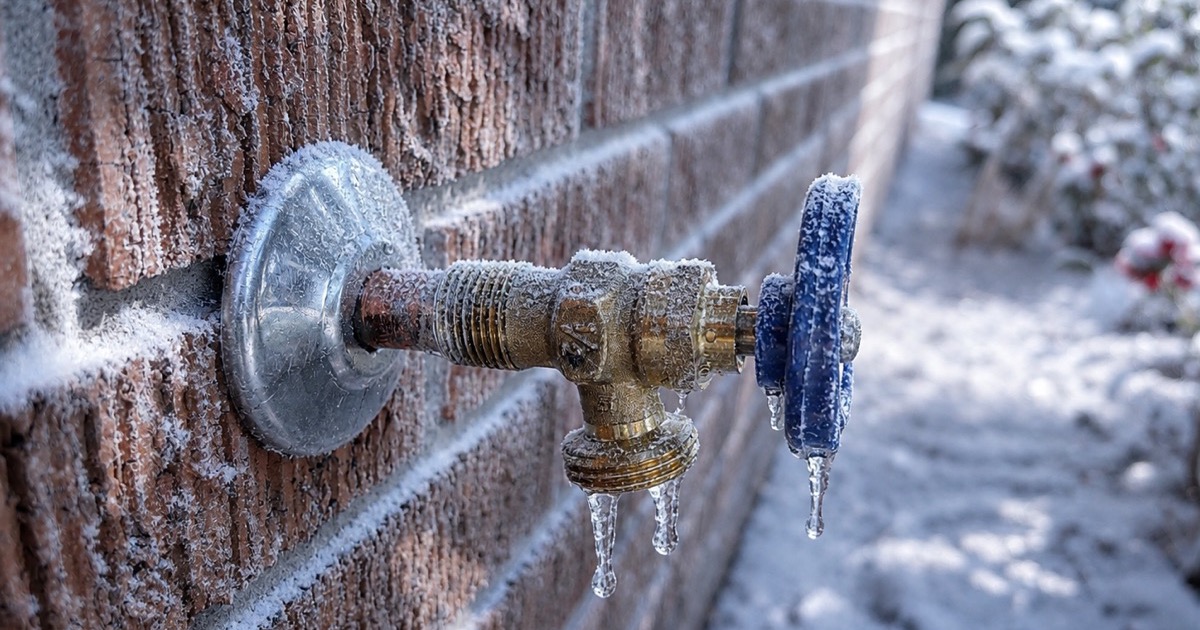
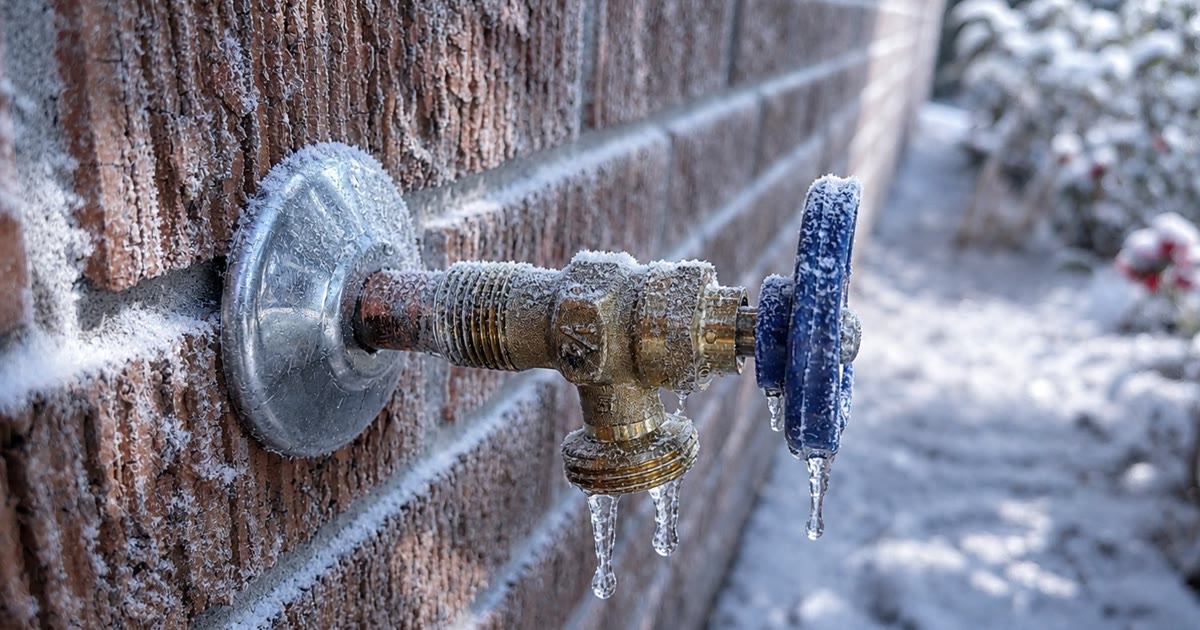
Most Calgary homeowners think they have until October to deal with the garden hose. They're wrong — by about three weeks. Calgary's first frost of the season typically arrives around mid-September, with some years seeing the thermometer touch 0°C as early as the second week of September. And once frost shows up, a proper cold snap is rarely far behind.
That first frost is not just a gardening nuisance. It's your deadline for the outdoor faucet. Here's why the hose bib is the most freeze-prone fixture on a Calgary home, and exactly what to do before the temperature drops for good.
Why the first frost is the real deadline
There's a gap between what the weather feels like and what's happening inside your pipes. A light frost — air at 0°C overnight — won't freeze a water line by itself. But it's the signal that the shoulder season is over. In the weeks after that first frost, Calgary routinely sees overnight lows well below zero. That's more than enough to freeze water trapped in an outdoor faucet.
The catch: the damage doesn't announce itself. When water freezes inside a hose bib, it expands and can split the brass or copper — but the ice plug holds the crack closed all winter. You see nothing, hear nothing, and assume the faucet survived. Then the spring thaw comes, you turn the tap on, and water sprays inside the wall.
A burst pipe from a frozen hose bib is one of the most common — and most preventable — water damage problems in Calgary homes. The repair often means opening the wall, replacing drywall and insulation, and drying out a soaked basement ceiling. The fix costs nothing but fifteen minutes in September.
Why Calgary is especially hard on outdoor faucets
Alberta's climate stacks the deck against your spigot in three specific ways:
Chinook freeze-thaw cycles. A Calgary chinook can push a January afternoon to +10°C, then a cold snap drops it to –20°C within 48 hours. Each partial thaw and refreeze stresses the metal further. Pipes that survive their first winter can still fail on the tenth cycle.
North and east exposures. Homes where the hose bib sits on the north or east wall never get direct winter sun. In neighbourhoods like Brentwood, Haysboro, Acadia, Falconridge — a shaded faucet stays cold through warm spells and is the first thing to freeze.
Older housing stock. Inner-city neighbourhoods like Inglewood, Kensington, Mount Pleasant, and Bowness are full of homes with standard (non-frost-free) spigots and shut-off valves that haven't been turned in a decade. A seized shut-off means the line can't be drained — and it's only a matter of time.
The Calgary outdoor faucet checklist: do it before the first frost
Aim to have this done by the second week of September. If a cold snap is in the forecast, drop everything and do it that evening. Here's the full sequence:
1. Shut off the water supply inside
Find the indoor shut-off valve for the outdoor line — usually in the basement, on the wall where the pipe exits the house, often near the water meter. Turn it fully clockwise until it stops. If it's seized or won't budge, don't force it — call us and our technician will take a look before winter.
2. Open the outdoor faucet and drain the line
Go outside, open the hose bib all the way, and let the remaining water drain out. Leave it open for a few minutes so the pipe empties. If your indoor shut-off has a bleeder cap (a small knurled cap on the side), open it with a bucket underneath to drain the last few inches — this is the water most likely to freeze.
3. Remove the hose, splitter, and nozzle — everything
This is the step homeowners skip most often, and it's the one that causes the most damage. A hose left connected traps water inside the faucet body, which defeats the whole point of draining. Take off the garden hose, any Y-splitter, spray nozzle, and timer. Coil the hose and store it in the garage or shed so it doesn't crack.
4. Leave the outdoor tap open for the winter
A slightly open spigot gives any residual water a place to expand without bursting the fixture. This is standard practice — a closed, half-full faucet is a future burst pipe.
5. Add an insulated faucet cover
For a standard (non-frost-free) hose bib, a foam insulated cover from any hardware store is cheap insurance. It slips over the spigot and secures with a drawstring. It's your last line of defence if the shut-off leaks slightly or the line didn't fully drain.
What about frost-free faucets?
If your home has a frost-free (freeze-proof) hose bib, the valve sits several inches inside the warm wall, and the fixture self-drains when you turn it off. Newer suburbs like Mahogany, Nolan Hill and Cornerstone usually have them.
But frost-free does not mean maintenance-free. You still have to remove the hose. A hose left on a frost-free faucet blocks the self-draining mechanism, trapping water exactly where it can freeze. The rule is the same either way: disconnect everything, every fall, no exceptions.
When to call YOFF
Most of this prep is a DIY job. But call YOFF if you hit any of these:
- The indoor shut-off valve is seized or corroded, or you close it and water keeps flowing from the outdoor tap.
- The outdoor faucet drips, or you can see cracks, splits, or green corrosion on the spigot body.
- You want a frost-free hose bib installed to replace an old standard spigot.
- The faucet is on a hard-to-reach wall and you'd rather have it done right than risk it.
Our technician handles outdoor faucet winterizing, repair and replacement — including swapping an old spigot for a frost-free hose bib — for homeowners across Calgary and the surrounding area. Outdoor faucet service starts from $105. No Fix, No Fee.
Related Calgary Home Guides
- Frozen Outdoor Faucet: Hidden Damage You Won't See Until Spring
- Outdoor Faucet Leaking After Winter? A Calgary Spring Checklist
- Outdoor Faucet Winter Prep: A Calgary Homeowner's Checklist
Frequently Asked Questions
When is the average first frost in Calgary?
Calgary's first frost usually arrives around mid-September, and some years it comes in the second week of the month. Treat that as your deadline for shutting off and draining the outdoor faucet.
Do I need to winterize a frost-free hose bib?
Yes, at least partly. A frost-free faucet drains itself, but only if the hose is disconnected. Leave a hose attached and water gets trapped where it can freeze and split the valve.
Should I leave my outdoor tap open or closed over winter?
After shutting off the indoor valve and draining the line, leave the outdoor tap open. That gives any leftover water room to expand instead of cracking the faucet body.
How do I know if my outdoor faucet froze and cracked?
Often you won't know until spring. The ice holds the crack closed all winter, and the leak only shows when you turn the tap back on. Watch for water inside the wall or on the basement ceiling the first time you use it, and shut it off right away if you see any.
The bottom line
Calgary's first frost is your alarm clock. It usually rings in mid-September, and every year it catches somebody mid-project, hose still attached, shut-off valve still open. Don't let it be your house. Shut the water off, drain the line, pull the hose, cover the spigot — fifteen minutes of work that sidesteps a burst pipe and a flooded basement come spring.
Book your outdoor faucet winterizing or frost-free hose bib replacement early — our calendar fills up fast once frost is in the forecast. → Book with YOFF
Rather have YOFF handle it?
We cover faucets and more across Calgary and nearby communities — booked fast, done right. No Fix — No Fee.