How to Prepare Your Backyard Shed for a Calgary Winter
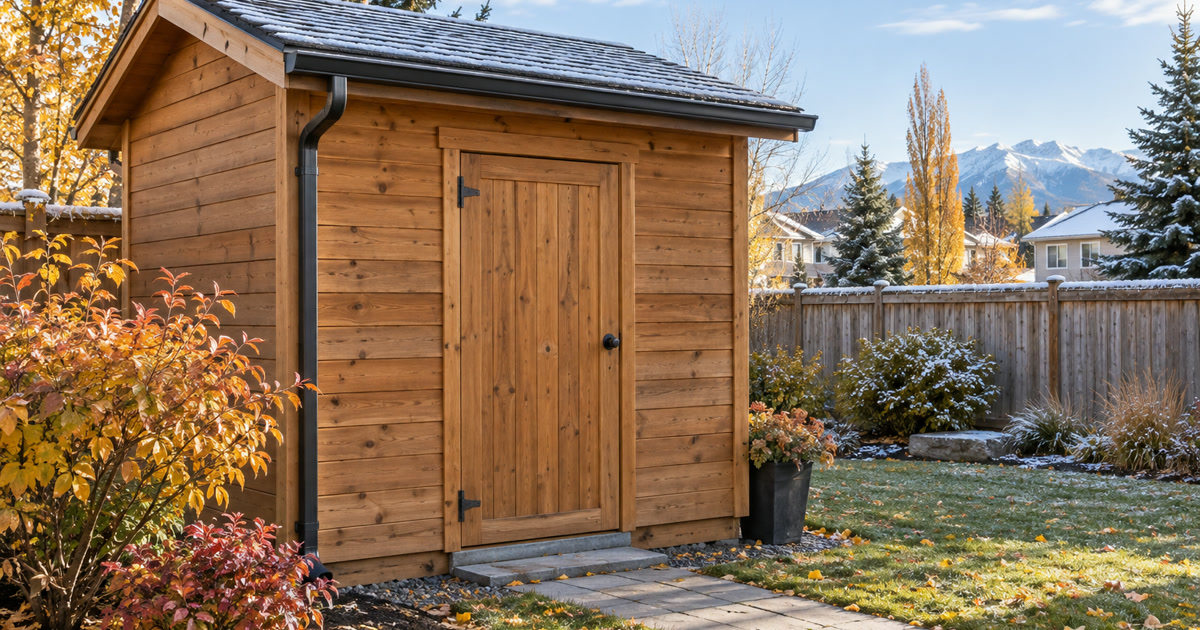
Your backyard shed works hard through a Calgary summer, then gets forgotten just as snow, wind, and freeze-thaw weather arrive. A short fall check can keep tools dry, doors usable, and small gaps from becoming a larger spring repair. Here is a practical checklist you can finish in an afternoon.
Start with the roof and the ground around the shed
Look at the roof from the ground on a dry day. Missing shingles, lifted edges, cracked panels, or a sagging roofline deserve attention before a heavy snowfall turns a small leak into wet insulation or warped shelves. Clear leaves and branches from the roof and from the ground beside the walls.
Then check where water goes when it rains or snow melts. A shed should not sit in a puddle or direct runoff toward a neighbour's property. Rake soil, gravel, or mulch so water moves away from the base. If a downspout from the house empties beside the shed, extend it so it does not soak the wall or foundation blocks.
The City of Calgary's fall home-maintenance guidance also recommends checking roofing materials and keeping vents clear before winter. That is sound advice for a detached shed as well as the main house.
Clear the vents and seal only the gaps that need it
Sheds need airflow. Brush away leaves, spiderwebs, and debris from existing vents, but do not permanently block them with tape or insulation. Stale air trapped in a closed shed is an easy way to find rusted tools or mildew in spring.
Next, inspect the corners, trim, door frame, and window frame. Small openings near the floor can let wind-driven snow and pests into a backyard shed. Refasten loose trim and use exterior-rated caulk for narrow, stationary cracks. For a larger gap, damaged siding, soft wood, or a door that no longer closes squarely, our technician can repair the underlying issue instead of merely hiding it with caulk.
Focus on the bottom of the door. If the sweep is worn or daylight shows underneath, replace the weatherstrip. It helps keep out drifting snow in exposed Alberta yards and reduces the grit that blows in during a chinook.
Give the door and hardware a winter check
Open and close the shed door several times before the weather changes. Calgary freeze-thaw cycles can make a slightly sticking door much worse once moisture gets into the frame.
- Tighten loose hinge screws and check that the latch lines up without forcing it.
- Lubricate hinges and the latch lightly with a product intended for exterior hardware; wipe away excess so it does not collect dust.
- Replace cracked handles, corroded hinges, or a damaged hasp before you need to access the shed in winter.
- If the door drags, inspect the threshold and frame for swelling or rot rather than shaving off the door blindly.
In older Calgary communities such as Acadia, Haysboro, or Brentwood, simple wood-shed repairs can prevent a door-frame problem from spreading into the wall. In newer neighbourhoods, check prefabricated resin or metal sheds for loose fasteners after a windy season.
Empty, dry, and store the right things
Take out anything that will be damaged by cold, moisture, or a leak. Over winter, this usually means batteries, paint, adhesives, electronics, fabric cushions, and any liquid product that says it must not freeze. Do not store fuel or hazardous products in a way that ignores their label directions.
For the things that stay:
- Sweep out soil, grass clippings, and leaves before rodents can nest in them.
- Put cardboard boxes, fertilizer bags, and tools on shelves or a raised pallet rather than directly on the floor.
- Make sure shovels, rakes, and seasonal tools are dry before hanging them up.
- Use sealed bins for birdseed, grass seed, and similar materials that attract pests.
If your shed has an outdoor tap, hose, or irrigation connection nearby, follow the City's seasonal water checklist: disconnect hoses, close the indoor shut-off, and drain outdoor faucets before freezing weather. If an outdoor faucet drips, won't shut off fully, or was cracked by last winter's frost, our technician can repair or replace it before the cold sets in. Irrigation systems are best winterized by an irrigation company.
Check snow access before the first storm
You do not need to clear every flake from a shed roof. But after a heavy Calgary snowfall, look for unusually deep, uneven, or packed snow and any new roof sagging. Keep the path to the door clear enough that you can reach the shed safely, especially if you keep snow tools inside.
Also plan where snow will go. The City of Calgary requires property owners to clear adjacent public sidewalks within 24 hours after snowfall ends, and private snow should stay on the owner's property. Do not pile snow against the shed wall or in a spot that sends spring melt toward it. This is particularly worth planning in compact lots in communities like Mahogany, Evanston, and Seton.
Know when a Calgary handyman can help
A fall shed check is an easy DIY job when it is just cleaning, tightening, and organizing. Call for help when you find loose or rotted trim, a leaking roof edge, a sagging door, damaged siding, or drainage that needs a practical fix. If you are changing the shed's size or location, check the City's current rules first: the City notes that sheds over 10 m² generally need a building permit, and smaller sheds still have placement and drainage requirements.
Related Calgary Home Guides
- How to Protect Exposed Basement Pipes Before a Calgary Winter
- Garage Floor Drain Winter Prep: A Calgary Homeowner's Checklist
- Outdoor Faucet Leaking After Winter? A Calgary Spring Checklist
Frequently Asked Questions
When should I winterize my shed in Calgary?
Early to mid fall, before the first heavy snowfall. A dry day in September or October gives you time to check the roof, clear vents, fix the door sweep, and move cold-sensitive items out before freeze-thaw weather starts.
What shouldn't I store in a shed over a Calgary winter?
Bring in anything that can be damaged by freezing or moisture, such as batteries, paint, adhesives, electronics, fabric cushions, and liquids labelled do-not-freeze. Follow label directions for fuel and other hazardous products.
Should I seal all the vents in my shed for winter?
No. Sheds need airflow, and blocking vents traps moist air that leads to rusted tools and mildew. Clear debris from existing vents and seal only gaps near the floor, trim, and door where snow and pests get in.
Do I need a permit for a shed in Calgary?
According to the City of Calgary, sheds over 10 m² generally need a building permit, and smaller sheds still have placement and drainage requirements. Check the City's current rules before you build, enlarge, or move a shed.
A dry, usable shed next spring starts now
For Calgary homeowners, the best shed winterization is simple: keep water away, keep the roof and vents clear, repair small gaps, and store belongings dry and off the floor. A little fall maintenance gives your shed a much better chance of opening cleanly when the snow is gone. Need an extra set of hands? Contact YOFF — our technician can rehang a sagging shed door, replace a worn door sweep and hardware, repair loose or rotted trim, and help with a fall backyard clean-up.
Rather have YOFF handle it?
We cover seasonal and more across Calgary and nearby communities — booked fast, done right. No Fix — No Fee.