Storm Door Maintenance in Calgary: A Fall Checklist for Winter
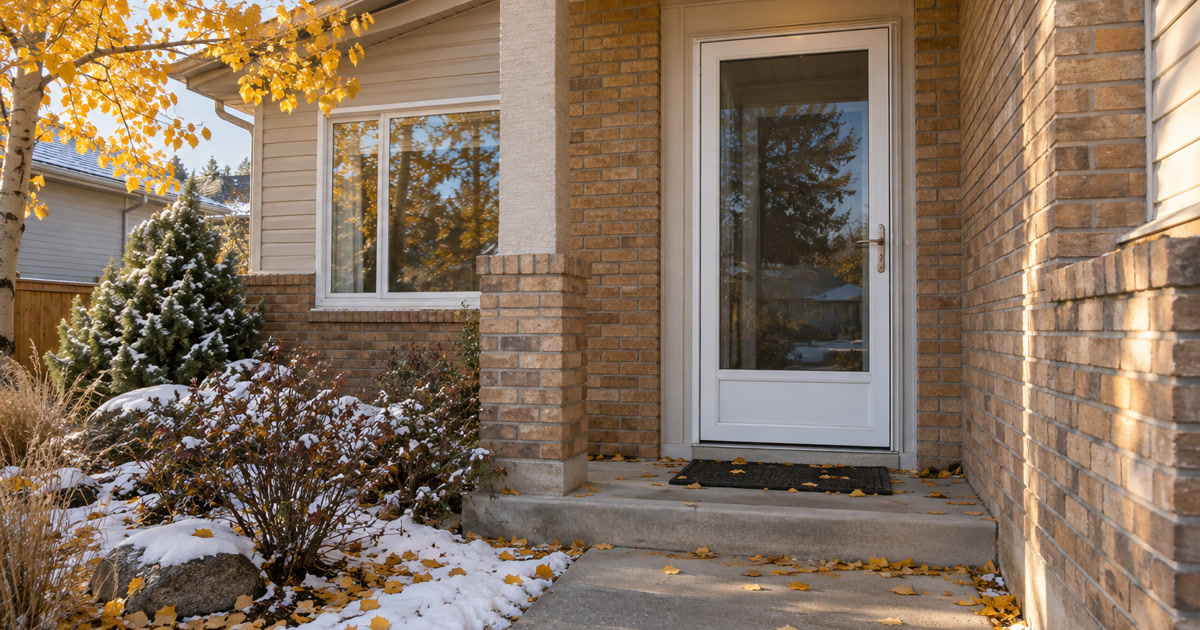
A storm door has a quiet but important job: it protects the main entry door from wind, dust, rain, and snow while helping the entrance feel less drafty. In Calgary, a door that worked smoothly in August can start slamming, sticking, or leaking cold air once fall weather arrives. A short inspection now can keep a small annoyance from becoming a damaged closer, torn screen, or loose frame in the middle of winter.
Start with a clean, dry frame
Before adjusting anything, open the storm door and clean the frame, threshold, and hinge side. Calgary wind can carry grit, dried leaves, and road dust into the narrow gaps where the door closes. That debris prevents a proper seal and can make the door scrape as it moves.
Use a vacuum with a narrow attachment or a soft brush to remove loose dirt. Then wipe the painted frame and threshold with a damp cloth and mild dish soap. Dry every surface before closing the door. Avoid heavy oil on the threshold: it attracts more dust and can make the entrance slippery.
While cleaning, look for:
- leaves, gravel, or old caulking caught at the bottom of the frame;
- paint chips or corrosion around screws and hinges;
- a bent door sweep or a threshold that no longer sits flat;
- gaps where the frame meets the exterior trim;
- a screen or glass insert that rattles in its channel.
Homes near an exposed street, alley, or open green space may need this simple cleanup more often. In areas such as Acadia, Brentwood, and Falconridge, a few minutes of cleaning can reveal whether the issue is just debris or a door that needs adjustment.
Test the closer before it starts slamming
The pneumatic closer is the small cylinder that controls how fast a storm door opens and closes. It works hard through Calgary temperature swings, especially at an entry that gets full sun during the day and cools quickly at night.
Open the door fully, then let it close without pushing it. It should close steadily, latch without a hard bang, and not stop short of the frame. Repeat the test a few times. If it behaves differently on each pass, inspect the closer brackets and mounting screws before turning the adjustment screw.
Most closers allow small speed changes. Check the manufacturer's instructions, then make a tiny adjustment—usually no more than a quarter-turn at a time—and test again. Do not force the adjustment screw past its normal range. If the cylinder is leaking oil, the rod is bent, or the door suddenly slams shut, the closer may need replacement rather than another adjustment.
For households with children, pets, or frequent deliveries, a controlled closer is also a practical safety check. A door that closes predictably is easier to use and less likely to catch a hand, a screen, or the main door behind it.
Check hinges, latch, and frame alignment
Stand inside your entryway and look at the gap around the closed storm door. The spacing should look even enough that the latch meets its strike plate without lifting, pushing, or pulling the door. A sagging door often rubs at the threshold, catches near the top, or needs a shove to latch.
Start with the simple fixes:
- Tighten visible hinge, handle, and closer-bracket screws by hand. Stop if a screw spins freely; an enlarged hole needs a proper repair, not a larger screw forced into the frame.
- Check that the latch meets the strike plate squarely. A small adjustment to the strike plate can sometimes restore a clean latch.
- Look for loose trim or separation where the storm-door frame is fastened to the house.
- Open the door slowly and listen for a scrape, click, or hinge squeak.
Seasonal movement is normal around Calgary homes, but a door that has suddenly gone badly out of square can point to a loose frame, damaged hinge, or movement around the entry. In older homes, especially where the entrance has seen repeated moisture or ice buildup, it is worth correcting the cause instead of repeatedly forcing the latch.
Inspect the weatherstripping and door sweep
Storm-door weatherstripping should be flexible, continuous, and in contact with the frame when the door is closed. Flattened or torn weatherstripping can let in dust and cold air even when the main entry door is shut properly.
Run your fingers along the seal and look for cracks, gaps at the corners, loose adhesive, or spots that have been compressed flat. Check the sweep at the bottom too. It should lightly meet the threshold without dragging hard enough to make the door difficult to close.
A simple daylight check helps. With the door closed, look from inside for visible light around the edges. You can also hold a thin sheet of paper against several points around the closed door; if it slides out freely everywhere, the seal or alignment deserves a closer look. This is especially useful before Calgary's colder weather settles in.
Do not fill moving parts of the frame with expanding foam. It can interfere with the door, hide a drainage issue, and make a future repair harder. Our technician can replace compatible weatherstripping, repair minor frame damage, and adjust the sweep so the door still operates smoothly.
Choose the right insert for the season
Many storm doors use interchangeable glass and screen inserts. Before cold weather arrives, make sure the glass insert is seated fully in its channel and secured according to the door's design. A loose insert can rattle in wind and allow moisture into places it does not belong.
If you are removing a screen insert, clean and dry it before storage. Store it flat or upright where it cannot bend, and keep small clips or fasteners in a labelled bag. In Haysboro, Bowness, and other mature Calgary neighbourhoods, where storm doors are often decades old, keeping the original hardware together saves a frustrating search next spring.
Use caution with large or heavy glass panels. If an insert feels awkward, cracked, or difficult to support, do not manage it alone. That is a sensible point to call for help rather than risk broken glass or a damaged door frame.
Keep water and snow away from the threshold
The base of the entry needs a clear route for rain and snowmelt to move away. Calgary chinooks can turn packed snow into water quickly, and a sudden overnight freeze can leave that moisture at the door threshold.
Keep mats, planters, and decorative items from trapping water directly against the door. After a snowfall, clear snow that has piled against the lower frame. Look for water marks on the interior trim, soft flooring, peeling paint, or a recurring wet spot near the sill. Those signs are not just a storm-door cleaning issue; they may need a broader check of the entry, surrounding trim, or exterior grade.
Clearing that small area after storms is easier than dealing with repeated moisture at the front entrance. It also helps the door sweep and closer do their jobs without pushing through packed snow or ice.
When a Calgary handyman is the right call
Basic cleaning, screw checks, and a careful closer adjustment are reasonable homeowner tasks. Stop and arrange professional help if you find:
- cracked glass, a damaged screen frame, or sharp exposed edges;
- a bent closer, leaking cylinder, or door that slams despite adjustment;
- a storm door that will not latch, drags heavily, or has dropped on its hinges;
- soft, swollen, or deteriorating trim around the entry;
- persistent water entering around the threshold;
- a loose frame or hardware that will not hold securely.
YOFF handles practical handyman work such as storm-door adjustments, weatherstripping replacement, closer replacement, and entry trim repairs. If the issue involves significant structural damage or specialized work, we'll tell you plainly and help you identify the right next step.
Related Calgary Home Guides
- Garage Door Maintenance in Calgary: A Homeowner's DIY Guide
- Sliding Patio Door Maintenance in Calgary: Stop the Sticking
- Sump Pump Maintenance in Calgary: Get Ready for Storm Season
Frequently Asked Questions
Why does my storm door slam shut?
A slamming storm door usually means the pneumatic closer needs adjustment or has worn out. Check the brackets and mounting screws first, then turn the closer's adjustment screw a quarter-turn at a time. If the cylinder leaks oil or the rod is bent, the closer needs replacing.
How do I stop drafts around my storm door?
Inspect the weatherstripping and door sweep for cracks, flattened spots, or gaps at the corners, and replace worn sections. Do a daylight check from inside, or slide a sheet of paper around the closed door to find weak spots. Avoid filling moving parts with expanding foam.
Should I switch my storm door to the glass insert for winter?
If your door has interchangeable inserts, swap to the glass panel before cold weather and make sure it's fully seated so it doesn't rattle in the wind. Clean and dry the screen before storing it flat or upright, and bag the clips so they're easy to find in spring.
When should I call a handyman for my storm door?
Call for help if the glass is cracked, the closer is bent or leaking, the door has dropped on its hinges or won't latch, the trim is soft or swollen, or water keeps getting in at the threshold.
A small fall task with a big payoff
Put storm-door maintenance on your Calgary fall checklist before winter routines take over: clean the frame, test the closer, tighten hardware, inspect the seals, and clear the threshold. This straightforward task helps the entry feel quieter, more secure, and better protected from the season ahead.
If your storm door sticks, slams, leaks a draft, or will not latch, book a storm door repair with YOFF — our technician can adjust or replace the closer, rehang a sagging door, and replace worn weatherstripping and sweeps anywhere in Calgary.
Rather have YOFF handle it?
We cover seasonal and more across Calgary and nearby communities — booked fast, done right. No Fix — No Fee.