Exterior Handrail Safety Check in Calgary: Fix Loose Rails
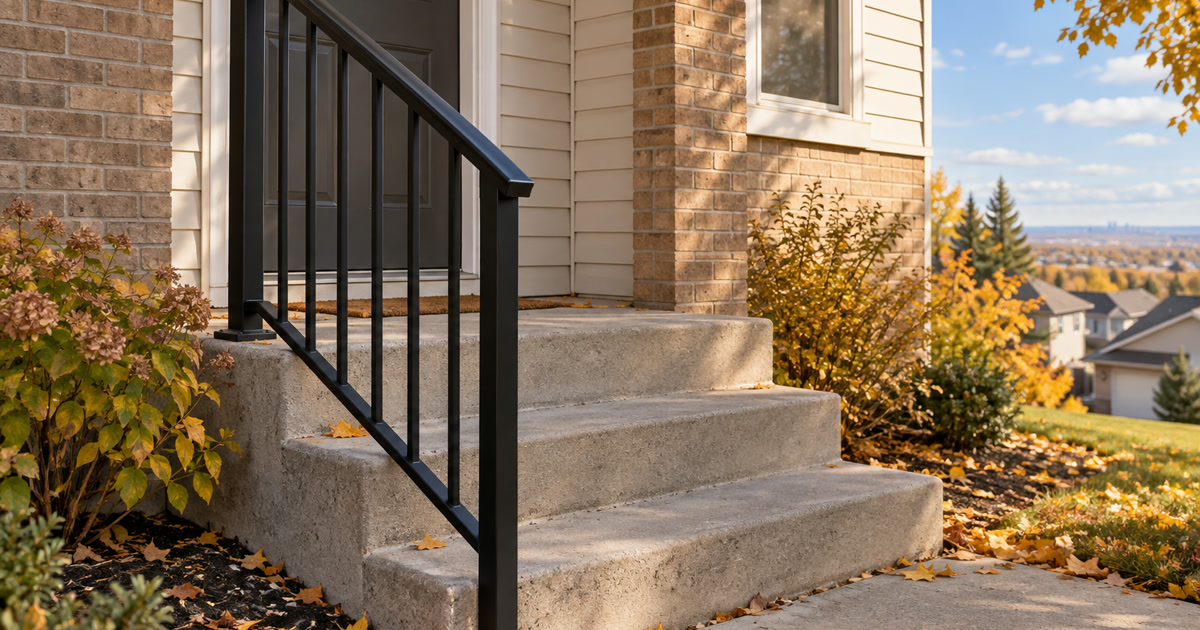
A loose exterior handrail is easy to overlook in September. Then Calgary gets its first slick morning, someone grabs the rail on the way down, and the wobble suddenly matters. A short inspection now can uncover loose fasteners, soft wood, corroded brackets, and shifting posts before snow and ice make access harder.
This guide covers the homeowner checks that are safe to do yourself, the warning signs that need a professional repair, and the Alberta safety context to keep in mind before winter.
Why exterior handrails deserve a Calgary fall check
Outdoor steps take a beating from sun, wind, rain, snow, road grit, and rapid freeze-thaw changes. Moisture can work into an unsealed wood rail or around a fastener; a cold snap can then widen the problem. Chinook weather adds another challenge: melting snow can run into connection points, then refreeze overnight.
That matters most at the front walk, side entrance, deck stairs, and basement stairwell. In established Calgary neighbourhoods such as Haysboro, Acadia, and Brentwood, older wood rails may have been repaired more than once, sometimes with fasteners that no longer bite firmly into the framing. Newer homes can have the same issue when a deck post settles or a bracket was attached only to trim.
The City of Calgary says balconies, decks, porches, stairs, and fences must be well maintained under its Community Standards Bylaw. Alberta's homeowner guidance also calls for exterior stairs and railings to be kept in good condition. This is sensible maintenance, not a project to leave until the first icy day.
Know the difference: handrail, guard, and decorative rail
Before tightening anything, identify what you are looking at:
- Handrail: the graspable rail beside a run of stairs. It gives a person something secure to hold while going up or down.
- Guard (often called a railing): the barrier along an open edge of a deck, landing, or stair. It helps prevent a fall from the side.
- Decorative trim: a short rail or accent that may not be connected strongly enough to function as safety hardware.
Alberta guidance for exterior home stairs says that stairs with more than three risers need a handrail on at least one side. Open stair sides can also need a guard, depending on the drop beside them. If you are replacing a rail, changing the stair layout, or building a new deck, verify the current requirements with the City rather than copying a neighbour's installation. A repair is a good time to discover that a decorative rail was never a usable handrail.
Five-minute Calgary handrail safety check
Choose a dry day with good daylight. Wear gloves and do not lean your full body weight on a rail that already looks damaged.
1. Test for movement without yanking
Place one hand near each end of the rail and apply light pressure in different directions. A sound handrail should feel solid at every bracket and post. A small creak is worth investigating; visible movement, a rotating bracket, or a post that shifts at the base is not a "wait until spring" issue for an entryway.
Do not use the rail as a pull-up bar to test it. If it is already compromised, a hard pull can make the damage worse or cause a fall.
2. Inspect every connection point
Look where the rail meets the wall, post, stair stringer, or deck frame. Watch for:
- missing, loose, or rust-stained screws and bolts;
- brackets pulling away from siding, brick, or wood;
- widened holes around fasteners;
- cracked welds on metal rails;
- a post that no longer sits plumb;
- a rail attached to thin trim instead of solid framing.
Dry conditions and windblown grit can wear coatings over time, while pooled moisture at a connection can cause corrosion. If a screw simply spins in a stripped hole, tightening it again is not a reliable repair. The material behind the fastener needs assessment.
3. Check wood for rot and splitting
Use the handle of a screwdriver to gently tap the bottom of wood posts and the underside of the rail. Sound wood feels firm. Soft spots, flaking fibres, dark staining, deep cracks, or a screwdriver that sinks into the surface can point to decay.
Pay close attention to the bottom of posts near grade. Across Alberta, snow piled beside a porch can keep that area wet long after the rest of the wood looks dry. A fresh coat of paint does not fix rot inside a load-bearing rail post.
4. Look at the stairs and landing too
A secure rail cannot compensate for a failing step. Check that treads are not loose, uneven, bowed, or separating from the stringer. Sweep away leaves and gravel so you can see cracks and fasteners clearly. On concrete steps, look for spalling, heaving, or a handrail base plate that has lifted from the slab.
If water routinely drains across the stairs, correct that at the source before winter. A downspout extension, minor grading change, or repositioned splash pad may keep meltwater from refreezing right where your family needs footing.
5. Confirm that the rail is actually easy to use
Stand on the steps and slide a gloved hand along the rail. It should be continuous and comfortable to grasp, without sharp edges, splinters, protruding screws, or a planter blocking the approach. This is especially useful for homes with a narrow side entrance or a basement walkout, where bags, bins, and snow shovels can crowd the route.
Simple maintenance you can do safely
If the structure is sound, basic upkeep can extend the life of an exterior handrail:
- Wash off dirt, leaf residue, and road grit with mild soap and water; rinse and let the rail dry fully.
- Touch up damaged paint or exterior stain before moisture gets into bare wood.
- Tighten accessible fasteners only when the bracket, post, and surrounding material are firm and undamaged.
- Replace a missing plastic end cap or loose decorative cover so water cannot sit inside a hollow metal rail.
- Keep the bottom of the stairs, landing, and drainage path clear before each snowfall.
Use exterior-rated hardware that suits the rail material. Mixing the wrong metal fastener with an existing metal rail can encourage corrosion. When in doubt, remove one old fastener and match it at a local hardware store, or ask our technician to supply the right hardware.
When a DIY tightening job is not enough
Call for help rather than trying to patch a safety-critical connection when you find any of the following:
- a rail pulls away from brick, stucco, or siding;
- a wood post is soft, split, or loose at the base;
- concrete around a base plate is cracked or lifting;
- metal is rusted through or a weld is cracked;
- the stairs themselves are shifting, sinking, or breaking apart;
- the rail is missing where stairs have several risers;
- you are not sure whether a proposed repair meets local requirements.
These jobs may need new blocking behind a wall, a properly anchored post, concrete repair, or a replacement section. Our technician can handle many straightforward exterior rail repairs, while major structural, engineered, or code-sensitive work may call for the right specialized contractor and permits. The important part is not disguising a loose rail with another screw.
A fall routine for Calgary homes
Add handrails to the same fall walk-around as outdoor faucets, downspouts, and weatherstripping. Check front and back steps before the first prolonged snow, then repeat the quick movement test after a major chinook or a heavy wet snowfall. In communities such as Falconridge, Cranston, and Aspen Woods, it is also worth checking less-used side gates and deck exits; those are the routes that tend to get discovered only when the main entrance is blocked.
Keep a bag of traction material where it is easy to reach, clear snow promptly, and keep the rail visible rather than burying it under a snowbank. A secure handrail and a clear path work together: neither one is a substitute for the other during winter.
Related Calgary Home Guides
- Exterior Caulking in Calgary: Fall Guide to Sealing Small Gaps
- Kitchen Sink Cabinet Leak Check in Calgary: A Pre-Winter Guide
- Move-Out Cleaning: What Landlords Actually Check
Frequently Asked Questions
How do I know if my outdoor handrail is unsafe?
Apply light pressure near each end of the rail in different directions. Visible movement, a bracket that rotates, a post that shifts at the base, or soft and split wood are all signs it needs repair. Do not yank on a rail that already looks damaged.
Do outdoor stairs need a handrail in Alberta?
Alberta guidance for exterior home stairs says stairs with more than three risers need a handrail on at least one side, and open sides may also need a guard depending on the drop. If you are replacing a rail or changing the stairs, confirm the current requirements with the City of Calgary first.
Can I just tighten the screws on a loose handrail?
Only if the bracket, post, and material behind the fastener are solid. If a screw spins in a stripped hole, or the rail is pulling out of brick, stucco, or siding, another screw will not make it safe. That connection needs proper repair, sometimes with new blocking or a re-anchored post.
When is the best time to check exterior handrails in Calgary?
Early fall, before the first icy mornings, is ideal. Check again after a major chinook or a heavy wet snowfall, since freeze-thaw cycles can loosen fasteners and let moisture into wood.
Keep the way home secure
Exterior stairs should feel uneventful. A solid, graspable rail, sound steps, and controlled drainage make the trip from driveway to door safer for everyone visiting your home. Spend a few minutes checking them now, and arrange a repair before Alberta winter turns a minor wobble into a dangerous surprise.
Is your front-step rail wobbling or a post going soft? A YOFF technician can re-secure a loose handrail, replace a rotted rail section or post, swap corroded brackets, and fix loose stair treads. Contact YOFF to book a visit before the first icy morning.
Sources
Rather have YOFF handle it?
We cover seasonal and more across Calgary and nearby communities — booked fast, done right. No Fix — No Fee.