Garden Hose Winterization in Calgary: Drain, Disconnect, Store
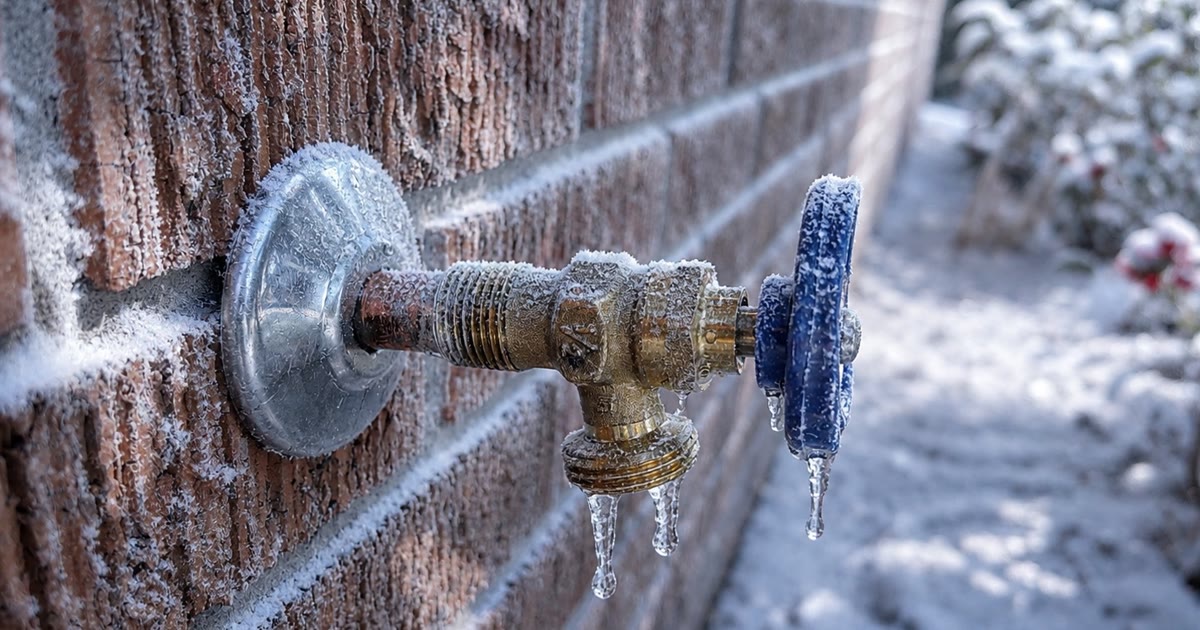
Every September in Calgary, a familiar window quietly closes: the first frost typically lands in mid- to late September. If your garden hose is still connected and full of water on that morning, the freeze can crack the hose itself, split the hose bib, and send water back toward the house where you can't see it. The good news is that winterizing a garden hose takes about ten minutes and costs nothing — skipping it can mean opening a wall in spring.
Why a frozen hose is a bigger problem than it looks
A garden hose is just a rubber tube, so it's easy to think the worst case is a cracked hose you replace next spring. In reality, the hose is usually the weak link that saves a more expensive part — or fails alongside it. When water freezes, it expands by roughly 9%, and that expansion pushes outward with enough force to split hoses, fittings, and even brass connections.
The real risk is the chain reaction. A frozen hose blocks the shut-off valve and traps a column of water inside the pipe that runs through the exterior wall. When that water freezes, the burst can happen inside the wall — behind siding or drywall — where you won't notice the leak until the spring thaw. By then, the damage is done, and a cheap hose has turned into a water-damage claim.
Step one: shut off the water and disconnect everything
Start at the source, not the hose. Find the interior shut-off valve that feeds your outdoor tap — most homes have a small isolation valve in the basement, usually on the wall directly behind the hose bib. Turn it off, then go outside and open the faucet fully to drain the short run of pipe between the valve and the spout. Leave the faucet open through winter so any leftover water has somewhere to expand.
Only after the line is drained should you disconnect the hose. Unscrew it by hand, and if it's stuck, use two wrenches — one on the hose fitting and one on the faucet — so you don't twist the bib off the wall. This is a common spring repair call: a homeowner yanked a frozen hose off, and the whole frost-free tap came with it.
Drain and coil the hose properly
Once disconnected, the hose still holds water, and that's what splits it. Here's the reliable order:
- Drain by gravity. Hold one end low and walk the length of the hose, letting water run out the low end as you go.
- Blow it out for a clean job. A short burst of compressed air from the spray end clears the last of the water. No compressor? Draining by hand and storing indoors is usually enough.
- Coil loosely. Tight, kinked coils hold water in the low loops. A loose coil around a hose reel lets air circulate.
- Drain any attachments. Nozzles, spray guns and splitters hold water too. Remove them, give them a shake, and store them together.
If you're short on time and want this handled for you, our technician can drain and store your hoses as part of an outdoor faucet winterizing visit.
Where to store hoses for a Calgary winter
Where the hose lives from October to April matters as much as how you drained it. An unheated garage still drops well below freezing through a January cold snap, so a garage shelf is only safe if you've truly emptied the hose. The gold standard is an insulated basement or heated mudroom, where a trace of leftover water simply won't freeze.
If indoor storage isn't an option, coil the drained hose off the ground on a wall-mounted reel, cover it loosely, and make sure it isn't holding water in any low loop. Avoid leaving it flat on the driveway, where snowmelt and freeze-thaw cycles will soak and re-freeze it all winter long. Rubber hoses tolerate cold better than vinyl ones, which turn brittle and crack the moment you move them in January.
Choose the right hose for Calgary's climate
If you're replacing a hose anyway, think about what our temperature swings actually do to the material. Vinyl hoses are cheap, but they stiffen badly in cold and split at the first sign of frost. Rubber hoses stay flexible far below zero and last much longer. Reinforced hoses with solid brass fittings hold up best through years of Alberta freeze-thaw cycles.
Whatever you buy, the habit matters more than the material: disconnect and drain it every fall before that first hard freeze rolls through the city.
What to do if you forgot and it's already frozen
If you discover a frozen hose or hose bib mid-winter, do not force it. Don't turn the tap, don't pull the hose, and don't pour hot water on frozen brass — the temperature shock can crack it. Instead, shut off the interior isolation valve if you can, leave the faucet open, and let things thaw naturally as the temperature climbs. Then check for leaks the moment it melts.
If you see water where it shouldn't be — inside the wall, on the basement ceiling, or pooling at the foundation — treat it as an active leak and get it looked at before the thaw turns a small split into a flood.
Related Calgary Home Guides
- Sprinkler Winterization in Calgary: When to Book a Blowout
- Washing Machine Hose Replacement in Calgary: Prevent a Flood
- Basement Floor Drain Smell in Calgary? Causes and a Quick Fix
Frequently Asked Questions
When should I disconnect my garden hose in Calgary?
Do it before the first frost, which usually arrives in mid- to late September. If a cold night is in the forecast earlier, disconnect that day rather than waiting.
Can I leave my garden hose in the garage over winter?
Yes, if it's completely drained. An unheated Calgary garage still drops well below freezing, so any water left in a low loop can freeze and split the hose. A basement or heated mudroom is the safest spot.
Do I need to disconnect the hose from a frost-free tap?
Yes. A frost-free tap only drains itself when nothing is attached. A connected hose traps water in the valve, where it can freeze and crack the pipe inside the wall.
What should I do if my hose is frozen to the tap?
Don't force it, twist it or pour hot water on it. Shut the indoor isolation valve if you can, leave the faucet open, and let it thaw naturally. Then check for leaks inside the wall and on the basement ceiling.
The bottom line
Winterizing a garden hose in Calgary is a ten-minute job that protects your hose, your hose bib, and the pipe inside your wall. The first frost in mid- to late September is your deadline: shut off the interior valve, drain the line, disconnect, empty the hose, and store it somewhere it can't freeze.
If you'd rather have it done right before the first freeze, book YOFF's outdoor faucet service: our technician shuts off and drains the line, disconnects and stores the hose, and repairs or replaces a dripping or cracked hose bib (outdoor faucet service from $105) — so you're not scrambling the morning the thermometer dips below zero in Calgary.
Rather have YOFF handle it?
We cover seasonal and more across Calgary and nearby communities — booked fast, done right. No Fix — No Fee.