Sprinkler Winterization in Calgary: When to Book a Blowout
Every September, the same quiet countdown starts: your lawn's irrigation system is full of water, and the first hard freeze is only weeks away. Miss the window and the water inside those buried pipes turns to ice, expands, and splits the lines you spent the summer happily watering with. The good news is that a proper blowout — clearing the water out of the system with compressed air — is usually a short job and costs a fraction of a spring repair.
Why Calgary's climate is hard on sprinkler systems
At Calgary's elevation, summer can flip to freeze almost without warning. The first fall frost typically arrives in mid-to-late September, and in some years and in the colder low-lying spots around the city and the foothills it comes earlier. That's sooner than many newcomers expect, and it's exactly why irrigation companies here book their blowout season for late September to early October — before the first hard freeze, not after it.
It's not just one freeze that does the damage. Chinooks swing the temperature back and forth across freezing all winter, creating repeated freeze-thaw cycles. Water that survives a single cold night as ice can still crack a fitting on the fourth or fifth cycle. The shallowest parts of your system — the backflow preventer, the valve manifolds, the risers near each head — freeze first because they're closest to the surface and least insulated.
What a blowout actually does
A sprinkler blowout isn't a cleaning, and it isn't a "flush." It's removing water. Here's the idea in plain terms:
- Shut off the water supply to the irrigation system at the main valve.
- Drain the backflow preventer and any above-ground components manually.
- Blow compressed air through each zone using a high-volume, low-pressure compressor until nothing but air mist comes out of the heads.
- Repeat zone by zone until every line runs dry, then leave the system valves set to winter positions.
For a typical residential system, the whole job usually takes about an hour in the hands of someone who's done it before. That's why it's one of the best-value seasonal services a homeowner can schedule — the alternative is a cracked manifold or split lateral line discovered in April, when the snow melts and the system is switched back on.
When to book in Calgary
The usual local advice is consistent: late September to early October, before the first hard freeze. Because the first frost can show up as early as mid-September, the safest move is to have your blowout done in the last half of September rather than gambling on October's weather.
A few practical markers that signal it's time:
- Leaves are turning and nights are regularly dipping below 5°C — the soil is cooling, and shallow lines are next.
- You've stopped watering the lawn for the season, or you're about to.
- Forecasts show frost warnings for the Calgary area — don't wait until the heads are already iced over.
If a hard freeze hits before the blowout, all is not lost, but the risk climbs fast. A frozen backflow preventer or valve manifold is among the most common spring irrigation repairs, and not a cheap one.
DIY vs. calling for help
A blowout can technically be done by a homeowner, but it's one of the few yard jobs where the tool matters more than the effort. Here's the honest tradeoff:
You need a real high-volume compressor. A small workshop compressor or an air-tire inflator won't move enough air volume to push water out of long runs. Irrigation blowouts need high cubic-feet-per-minute (CFM) flow at low, controlled pressure — commonly around 50 PSI or less for standard residential systems (check your system's specifications). Too much pressure, and you can blow fittings apart or crack older PVC.
Backflow preventers need care. Irrigation systems connected to the city water supply use a backflow preventer to protect drinking water, and these assemblies freeze and split easily. Draining them correctly — with the right shut-off sequence and draining the ball valves — is where DIY jobs most often go wrong.
If you have a compressor that can hold the needed CFM and you're comfortable with the valve sequence, a careful DIY blowout is possible. If you're unsure about pressure, CFM, or your backflow setup, it's a job worth handing to someone who does it every fall. That means an irrigation company — they do blowouts every fall and carry the right compressor.
What happens if you skip it
The math on skipping a blowout is brutal and one-sided. A fall blowout is a small, predictable seasonal cost. The spring repair bill for freeze damage — replacing a split manifold, digging up and splicing a cracked lateral line, or rebuilding a shattered backflow preventer — runs far higher, and that's before you factor in a lawn that can't be watered until the fix is done in the middle of Alberta's short growing season.
The pattern repeats every spring: systems that were blown out in the fall start up clean in May, and the ones that weren't get a repair visit instead. Neighbourhoods with older irrigation lines — including mature areas like Brentwood, Haysboro, and Acadia — tend to have more brittle fittings that crack more readily, so the stakes there are even higher.
Related Calgary Home Guides
- Garden Hose Winterization in Calgary: Drain, Disconnect, Store
- AC Startup Guide Calgary: Prep Your Cooling Before the Heat
- Asphalt Driveway Sealing in Calgary: Fall Crack Repair Guide
Frequently Asked Questions
When should I blow out my sprinkler system in Calgary?
Aim for late September to early October, before the first hard freeze. Because frost can arrive by mid-September in some years, booking in the second half of September is the safer choice.
What PSI should I use to blow out sprinklers?
Standard residential systems are usually blown out at 50 PSI or less. What matters more is a compressor with high air volume (CFM) so it can push water out of long runs. Too much pressure can blow fittings apart or crack older PVC.
Can I winterize my sprinkler system myself?
It is possible if you have a high-volume compressor and you understand the valve sequence, especially for the backflow preventer. If you are unsure about pressure, air volume, or your backflow setup, it is worth having it done by someone who does blowouts every fall.
What happens if I don't blow out my sprinklers before winter?
Water left in the lines can freeze, expand, and crack pipes, valve manifolds, and the backflow preventer. Chinook freeze-thaw cycles make repeated damage more likely. The spring repair usually costs far more than a fall blowout.
The bottom line
If your Calgary home has an irrigation system, put the blowout on your fall checklist the same week you book your furnace inspection and winterize your outdoor faucets. In a city where the first frost can land before the leaves are done falling, leaving water in the ground is a gamble that rarely pays off. Book it late September, clear every zone down to dry, and your system will come out of an Alberta winter ready for spring.
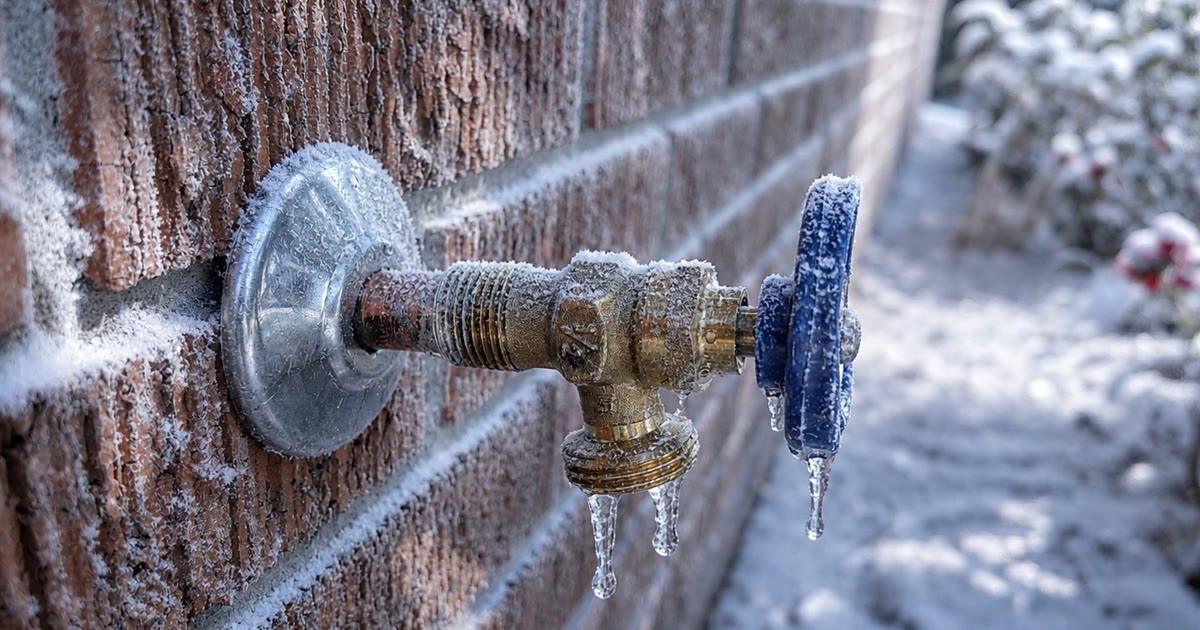
Need a hand getting the yard ready for winter? YOFF handles the water side outside your walls: our technician can shut off and drain your outdoor faucets, repair or replace a leaking or frost-damaged hose bib (outdoor faucet service from $105), and help with other fall handyman jobs across Calgary. Book a visit and we'll make sure your yard is buttoned up before the first hard freeze.
Rather have YOFF handle it?
We cover seasonal and more across Calgary and nearby communities — booked fast, done right. No Fix — No Fee.